
Best Places to See Fall Colors in China
Autumn brings some of China’s most beautiful landscapes, from the golden forests of Kanas and Hemu to Jiuzhaigou’s colorful lakes, red-leaf mountains in Sichuan and the Great Wall surrounded by autumn foliage. For photographers, the variety is especially rewarding, with forests, alpine lakes, snow mountains, traditional villages and desert poplars all offering very different scenes.
The best place to go depends heavily on when you travel. China’s fall-color season stretches from September into November, with different regions reaching their best colors at different times.
Here are some of the best places to see fall colors in China, including typical viewing times, photography highlights and practical advice for planning your trip.
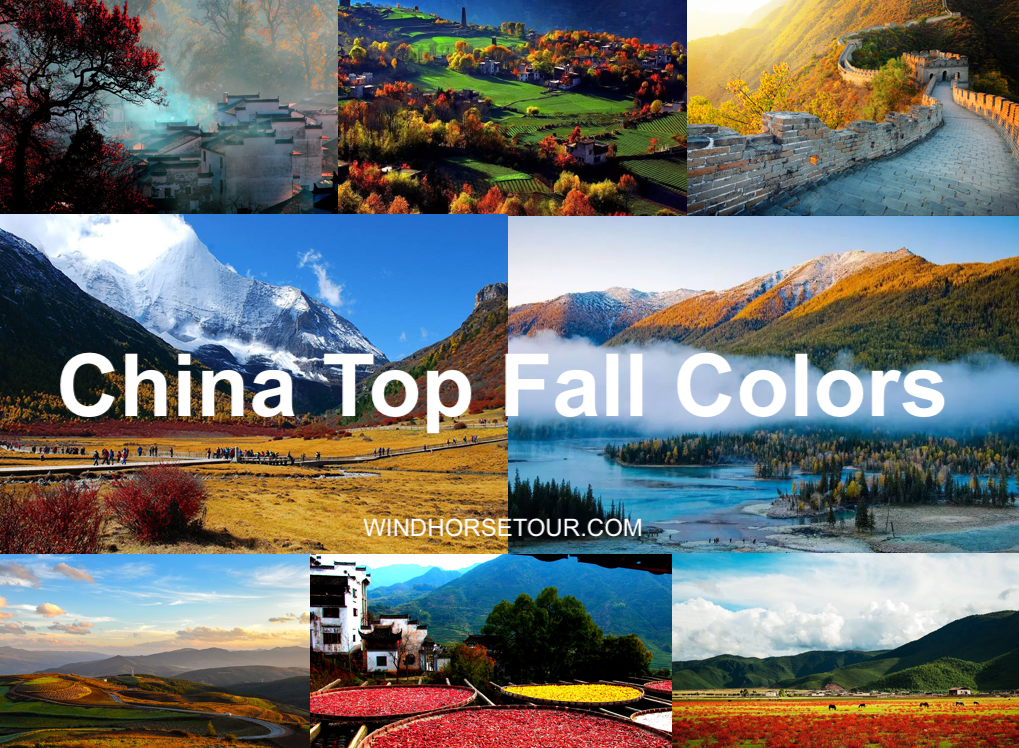
Table of Contents
When Is the Best Time to See Fall Colors in China?
The fall-color season in China generally stretches from mid-September to late November.
Northern and high-altitude destinations change first. Kanas and Hemu can already be golden in September, while many mountain destinations in Sichuan and northern China reach their best colors during October. Farther south, some autumn landscapes continue well into November, including Tengchong’s famous ginkgo season.
| Typical Period | Fall Color Destinations to Consider |
|---|---|
| Mid to late September | Kanas & Hemu |
| Late September to October | Daocheng Yading, western Sichuan |
| Early to mid-October | Ejina Poplar Forest |
| Mid to late October | Jiuzhaigou, Guangwu Mountain, Great Wall, Zhangjiajie |
| Late October to early November | Fragrant Hills, Huangshan, Tachuan |
| Mid to late November | Tengchong Ginkgo Village |
These are typical planning windows. Peak foliage can shift from year to year, especially in mountain areas, so check seasonal conditions closer to your travel dates.
Jiuzhaigou, Sichuan
Best time for fall colors: Mid to early of November
If fall colors are a major reason for your trip, Jiuzhaigou would be one of our first recommendations.
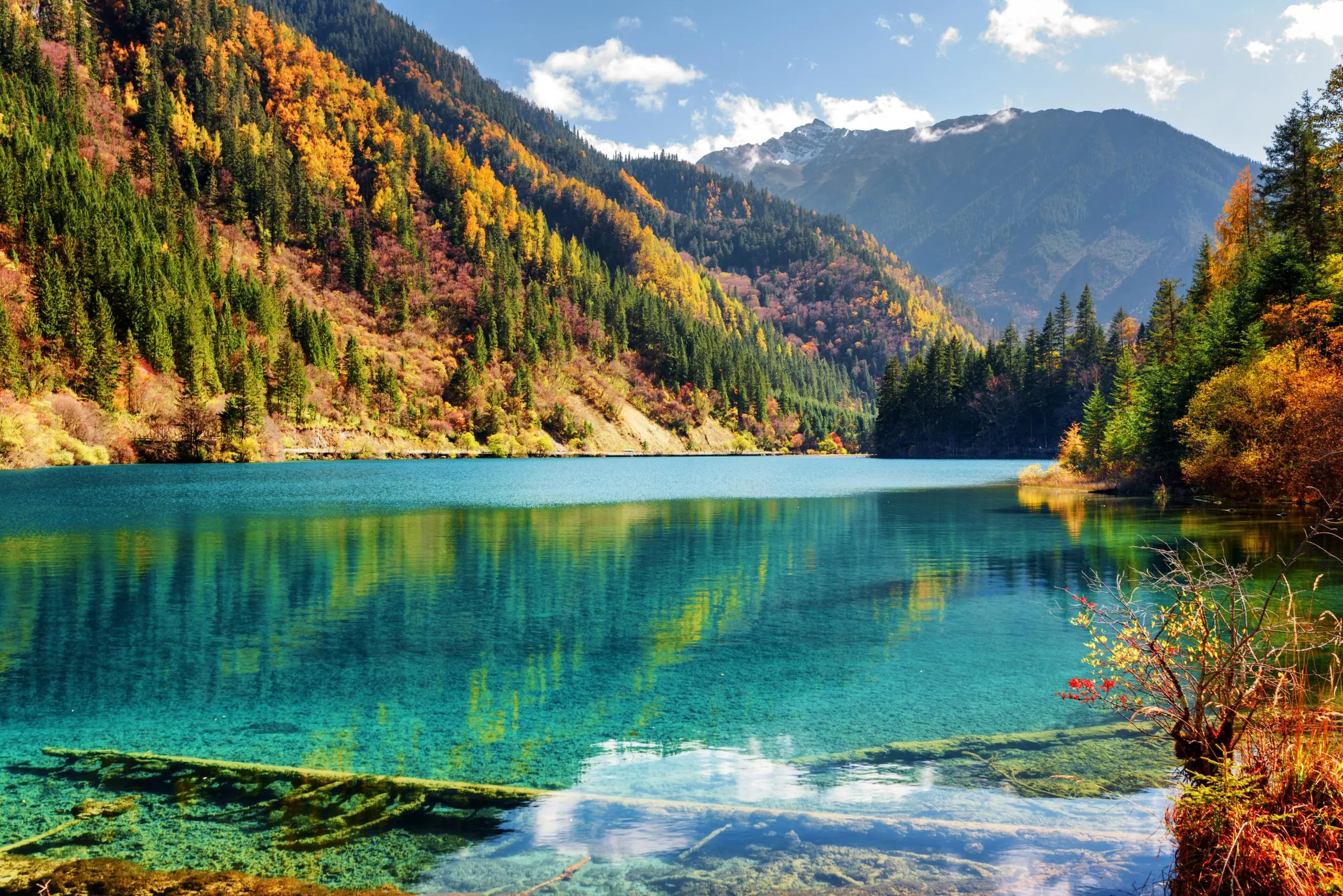
In autumn, yellow, orange and red forest surrounds intensely blue and turquoise lakes, with waterfalls and mountain scenery adding more layers of color. On calm days, the lakes can mirror the surrounding foliage almost perfectly.
Five Flower Lake is particularly famous for its colors, but autumn scenery appears throughout the valleys. Mirror Lake, Tiger Lake and the Shuzheng Lakes also offer beautiful combinations of water, forest and reflections.
Jiuzhaigou is now easier to include in a wider Sichuan trip, with improved transportation connections from Chengdu to the Jiuzhaigou-Huanglong region.
Photography highlights: Colorful forest reflected in turquoise lakes, Five Flower Lake, Mirror Lake, waterfalls and mountain landscapes.
For transportation, sightseeing and practical trip planning, see our Jiuzhaigou Travel Guide.
Normally, Jiuzhaigou tours are combined with Huanglong. You can reach the Jiuzhaigou area from Chengdu by high-speed train.
Kanas & Hemu, Xinjiang
Best time for fall colors: Mid-September to early October
Northern Xinjiang is one of the first major regions in China to reach its autumn colors.
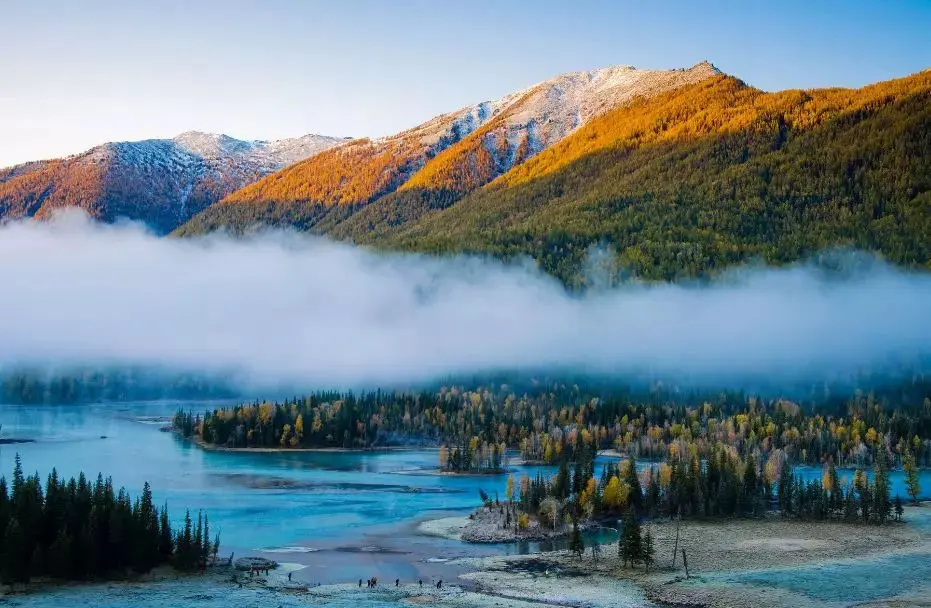
Around Kanas, birch and larch forests turn shades of yellow and gold against blue-green water, evergreen forest and the Altay Mountains. Nearby Hemu adds wooden houses, open grasslands and a broad valley surrounded by golden forest.
Hemu is especially beautiful in the early morning. Cool autumn mornings can bring mist over the village and surrounding hills, while low sunlight gradually illuminates the forest and wooden houses.
The autumn season here is relatively short. By the time many destinations in central China are approaching their strongest colors, Kanas may already be heading toward winter.
Photography highlights: Kanas Lake, Moon Bay, golden birch forests, Hemu Village, morning mist and Altay mountain scenery.
Good to know: September weather can change quickly in northern Xinjiang, and early snow is possible. Accommodation and transportation should be arranged ahead during the peak autumn period.
Explore Kanas Lake and its autumn scenery as part of a wider northern Xinjiang tour through the Altay region.
Guangwu Mountain, Sichuan
Best time for fall colors: Late October to early November
Guangwu Mountain is less internationally known than Jiuzhaigou, but for autumn foliage it deserves a place among China’s outstanding destinations.
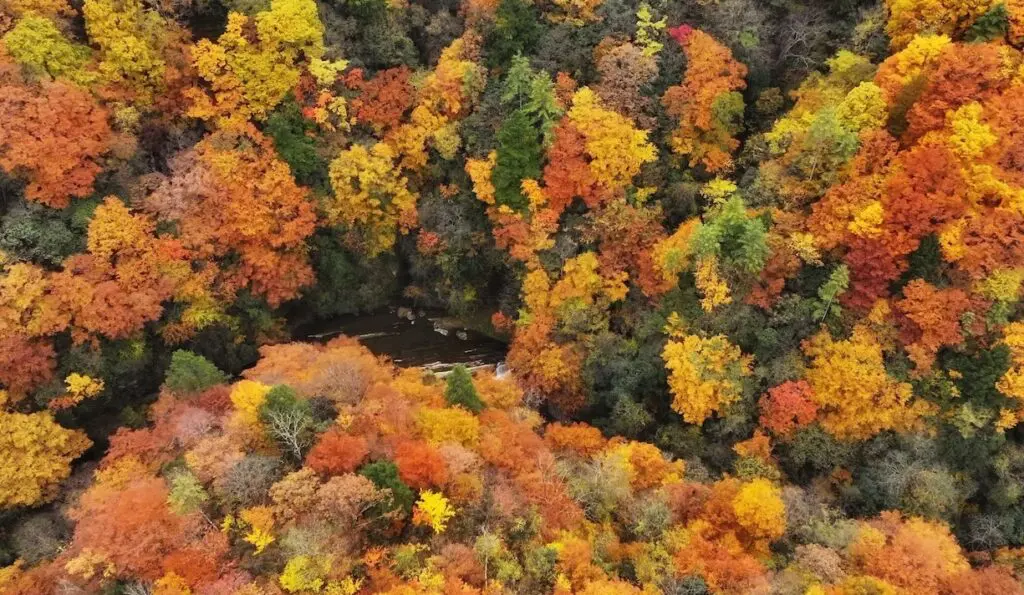
Located in northeastern Sichuan near the border with Shaanxi, the mountain area is covered by extensive deciduous forest. As temperatures fall, the landscape develops layers of yellow, orange, crimson and deep red.
Around Micang Mountain, colorful forest stretches across the mountain slopes. Streams, waterfalls, pools and frequent mist add variety, while areas such as Eighteen Moon Lake offer beautiful combinations of red leaves and water.
Colors also change gradually with altitude, giving the region a longer progression of autumn scenery.
Photography highlights: Extensive red-leaf forests, forest streams, reflections, waterfalls and misty mountain scenery.
Good to know: For the best fall colors, focus your visit on Micang Mountain and Eighteen Moon Lake within the wider Guangwu Mountain area.
Combine with: Chengdu, northern Sichuan or an overland journey through Sichuan and Shaanxi.
Ejina Poplar Forest, Inner Mongolia
Best time for fall colors: Early to mid-October
Ejina offers one of China’s most distinctive autumn landscapes.
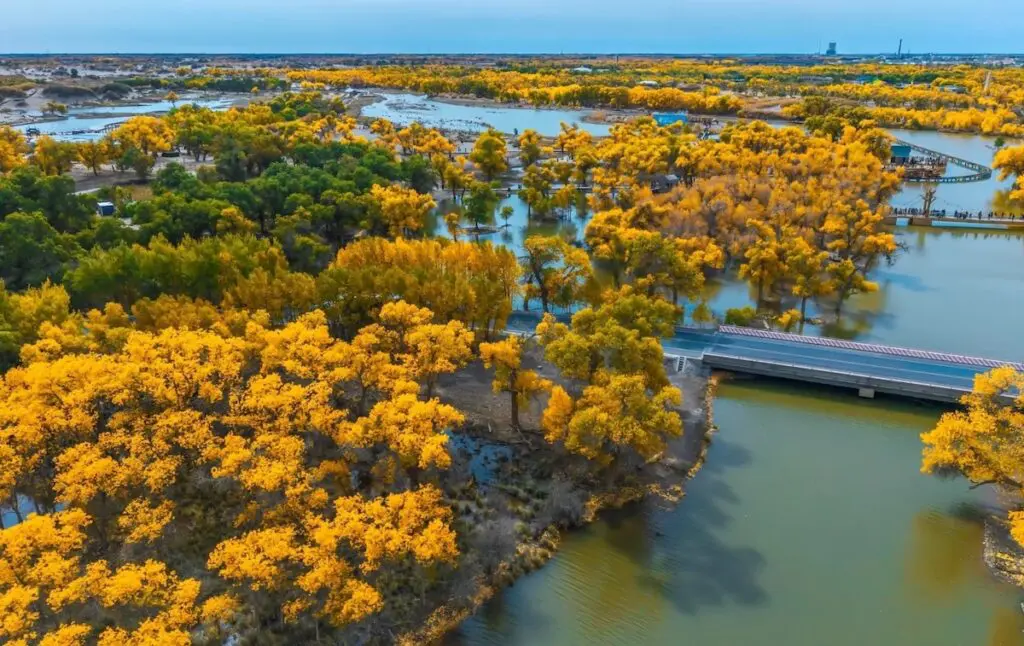
For a short period each year, its desert poplar forests turn brilliant gold against blue skies, waterways, sand dunes and the surrounding Gobi landscape.
Golden Populus euphratica trees can be photographed reflected in still water, clustered along desert waterways or standing against open sand. Early morning and late afternoon bring particularly warm light to the golden forest.
The season is short, so choosing the right dates is important.
Photography highlights: Golden desert poplars, reflections, ancient trees, sand and open Gobi landscapes.
Good to know: The golden season overlaps closely with China’s National Day holiday in early October. If possible, plan outside October 1–7.
Combine with: A dedicated Inner Mongolia or northwest China journey.
Daocheng Yading, Sichuan
Best time for fall colors: October, especially mid to late October
Daocheng Yading combines autumn color with some of western China’s most dramatic high-altitude scenery.
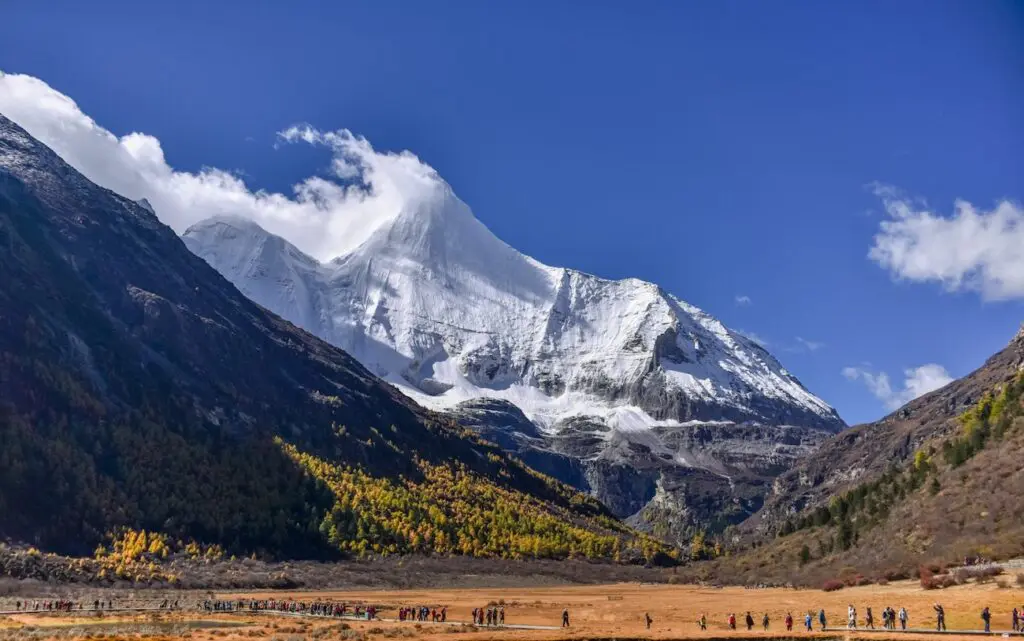
Golden alpine forests and meadows sit beneath three sacred snow-covered peaks, while clear streams and glacial lakes add blue and green to the landscape. Around Daocheng, rows of poplar trees can turn brilliant yellow, creating a different scene from the mountains inside Yading Nature Reserve.
Inside the reserve, autumn colors appear around Chonggu Temple, Pearl Lake and the lower valleys, with snow peaks rising behind the forest.
Photography highlights: Golden forest beneath snow peaks, Pearl Lake, Chonggu Temple, Luorong Pasture and autumn poplars around Daocheng.
Good to know: Yading is at high altitude, and some of its best-known viewpoints require walking. Include enough time into the itinerary for acclimatization.
See our Daocheng Yading Travel Guide for more detailed planning information.
Check out our Daocheng Yading tours, which also include visits to some highlights in Western Sichuan.
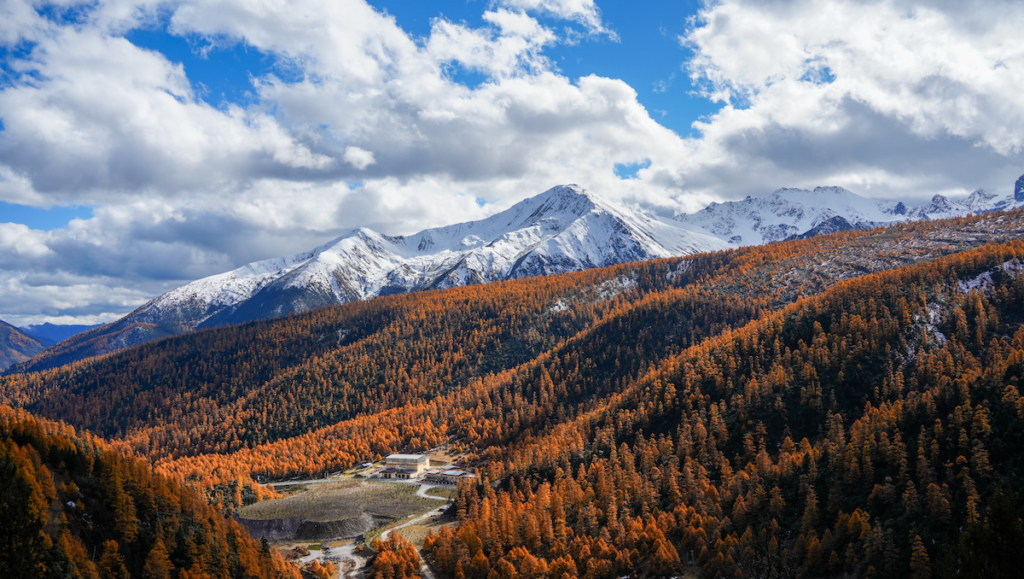
Western Sichuan: Bipenggou, Miyaluo & Mountain Valleys
Best time for fall colors: October
Western Sichuan is particularly rewarding for travelers who want to experience autumn scenery as part of a road journey.
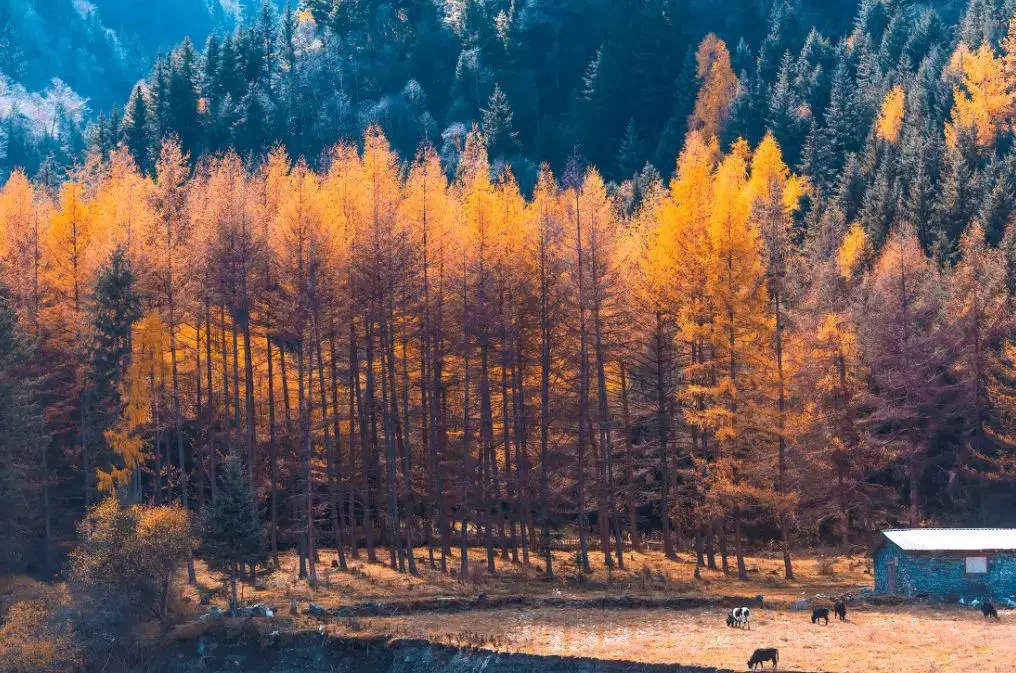
Around Bipenggou and Miyaluo, forests turn yellow, orange and red beneath high mountains. Lakes, streams, Tibetan and Qiang villages and, on clear days, snow-covered peaks create constantly changing scenery along the route.
Miyaluo has long been known for its red leaves, while Bipenggou combines autumn forest with lakes and dramatic mountain scenery. Travelers with more time can continue deeper into western Sichuan, where the changing elevation creates different autumn landscapes across the valleys.
Photography highlights: Red and golden forests, mountain lakes, snow peaks, Tibetan and Qiang villages and scenic roads.
Good to know: Foliage timing varies with elevation, even between relatively close valleys.
Combine with: Chengdu, Siguniang Mountain, Danba, Xinduqiao or Daocheng Yading.
The Great Wall, Beijing
Best time for fall colors: Mid-October to early November
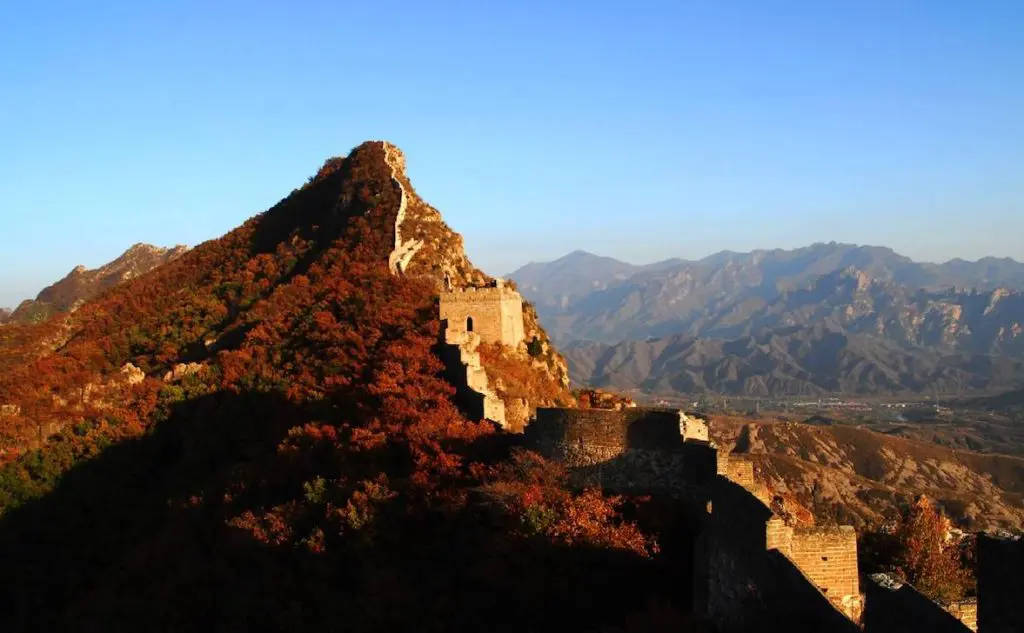
Few autumn landscapes are as unmistakably Chinese as the Great Wall winding across mountains covered in red, orange and gold.
Different sections offer different experiences. Mutianyu combines beautiful scenery with convenient access from Beijing, while Jinshanling offers long mountain views and watchtowers stretching across the ridgelines, making it particularly rewarding for hiking and landscape photography.
The Wall creates a natural visual line through layers of autumn-covered mountains, and the clearer skies common in autumn can bring excellent long-distance views.
Photography highlights: Watchtowers, Great Wall ridgelines and panoramic views across autumn-covered mountains.
Good to know: Visit on a weekday if possible during the autumn peak.
The Great Wall is easy to include in a first trip to China, especially on a classic Beijing, Xi’an and Shanghai itinerary.
Tengchong Ginkgo Village, Yunnan
Best time for fall colors: Mid to late November
Tengchong extends China’s autumn-color season well into November.
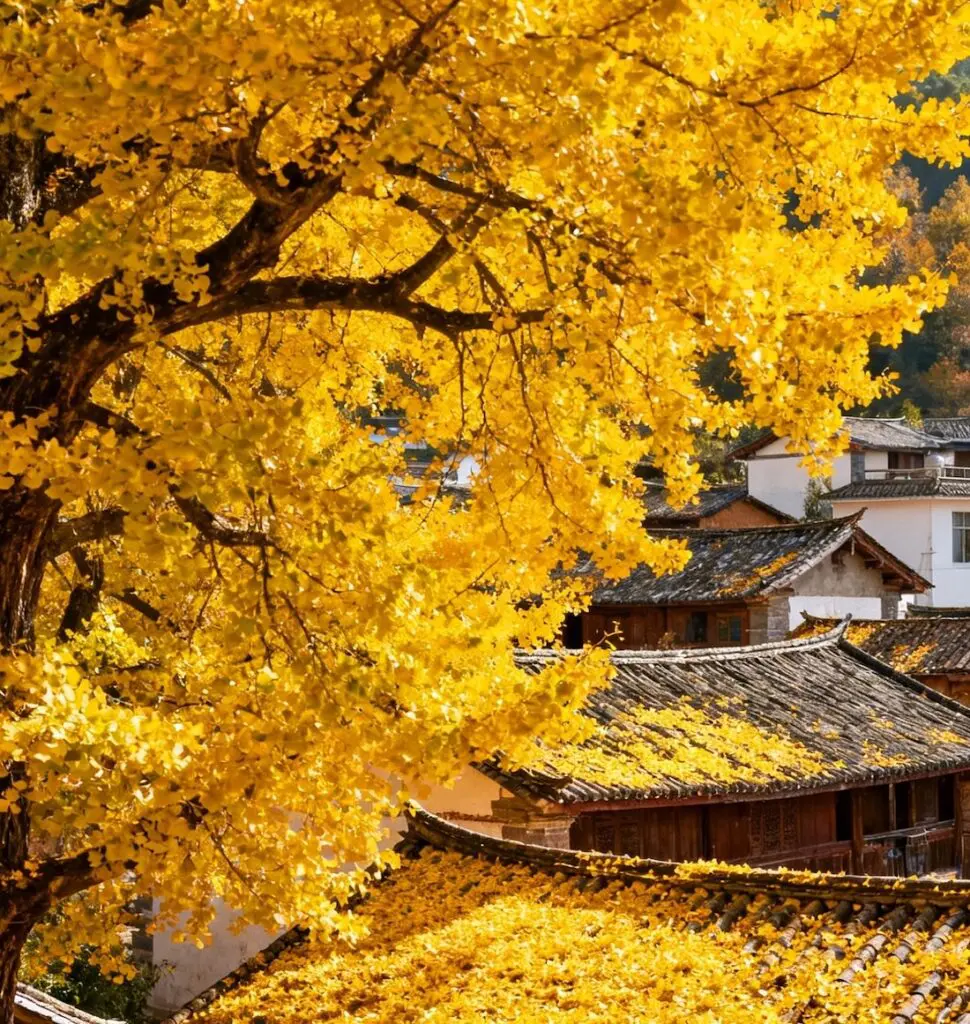
Jiangdong Ginkgo Village near Tengchong is known for thousands of ginkgo trees growing among traditional houses and village lanes. As the trees turn yellow, fallen leaves cover courtyards, rooftops and stone paths in gold.
The scenery is intimate and atmospheric, with ancient trees, rural homes and local village life all becoming part of the photographs.
Photography highlights: Golden ginkgo trees, leaf-covered village lanes and courtyards, traditional houses and rural life.
Good to know: The golden period is popular and relatively short. Staying nearby makes it easier to photograph the village early in the morning.
Combine with: Tengchong, Heshun Ancient Town and a wider western Yunnan journey.
Tachuan, Anhui
Best time for fall colors: Late October to mid-November
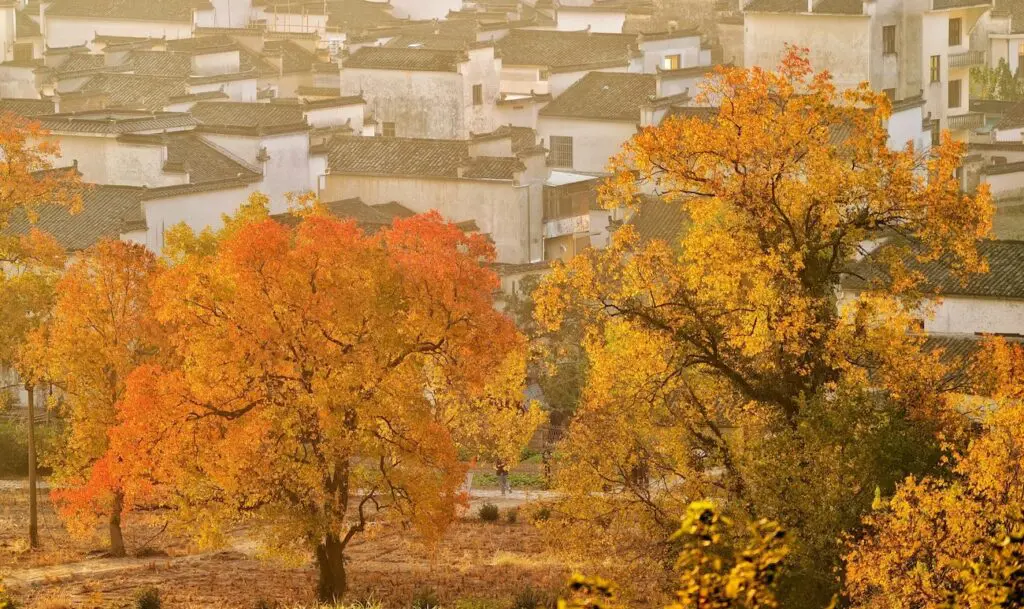
Tachuan is one of the best choices for combining autumn foliage with traditional Chinese village scenery.
Located close to Hongcun in southern Anhui, the village is surrounded by Chinese tallow trees that change from green to yellow, orange and red. White-walled, grey-tiled Huizhou houses appear between the trees, creating a landscape especially popular with photographers.
Early mornings can be beautiful when mist settles around the village and surrounding hills.
Photography highlights: Colorful Chinese tallow trees, Huizhou houses, village panoramas and morning mist.
Good to know: A mixture of green, yellow, orange and red can create some of the most interesting photographs, so the experience isn’t dependent on every tree reaching the same stage.
Combine with: Hongcun, Xidi and Mountain Huangshan.
Huangshan, Anhui
Best time for autumn scenery: October to November
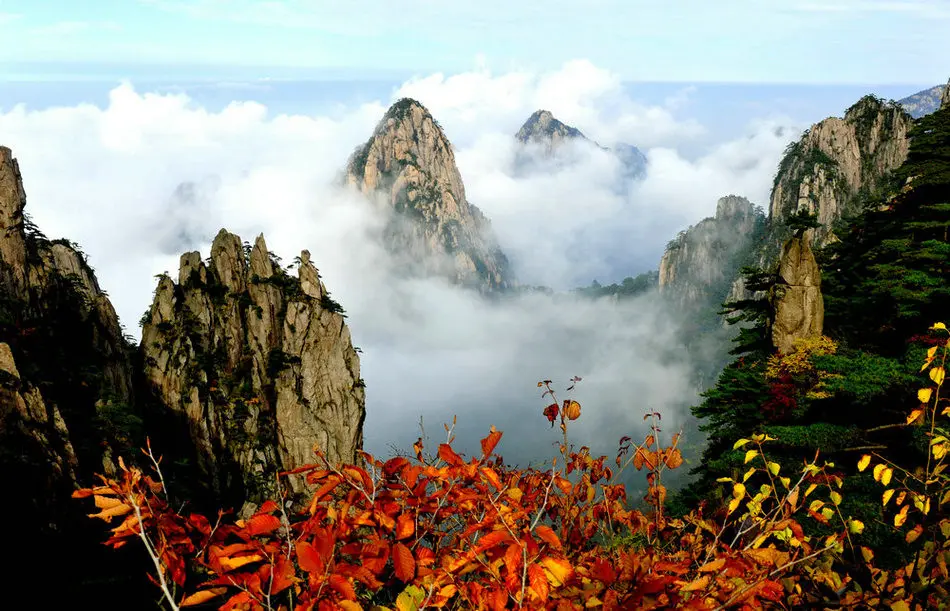
Autumn adds another layer to Huangshan’s granite peaks and famous pine trees.
Red and yellow foliage appears across the mountains, while changing clouds reveal and conceal patches of forest between rock formations. On the right day, autumn colors, granite peaks, pine trees and Huangshan’s famous sea of clouds can all become part of the same composition.
Staying overnight on the mountain gives photographers a better chance to experience sunrise and changing light.
Photography highlights: Granite peaks, pine trees, autumn foliage, sunrise and sea-of-clouds landscapes.
Good to know: Cloud and mist are often part of Huangshan’s appeal, so an overcast forecast doesn’t necessarily mean poor photography conditions.
Combine with: Hongcun, Xidi and Tachuan for an autumn journey through southern Anhui. Check our Huangshan tour.
Fragrant Hills, Beijing
Best time for fall colors: Late October to early November
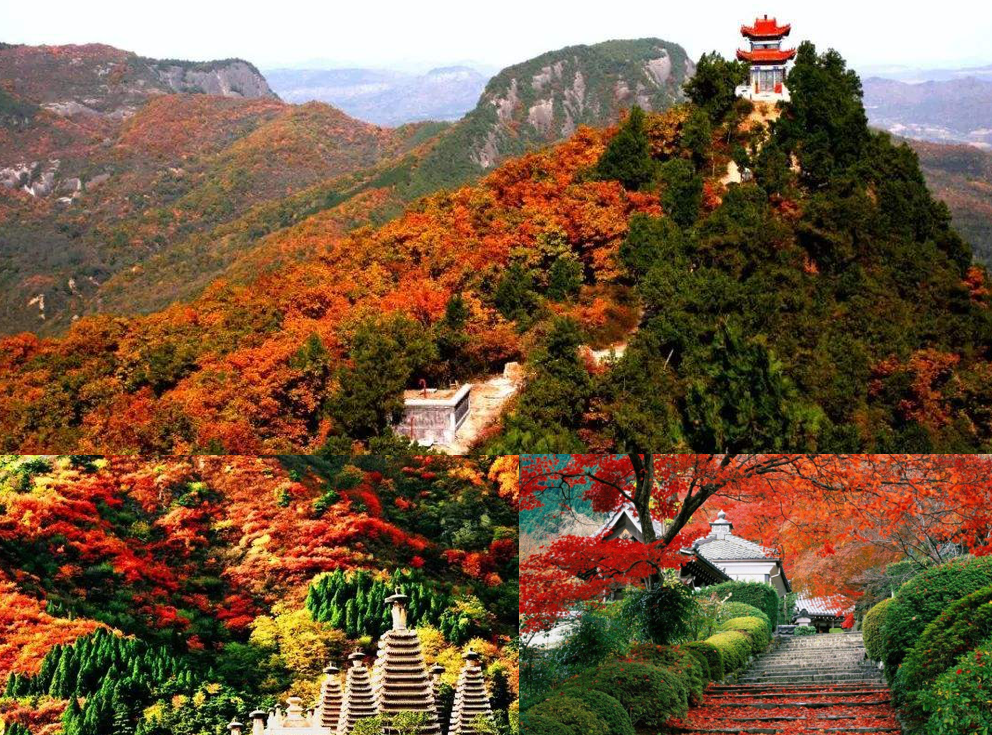
Fragrant Hills, or Xiangshan, is Beijing’s classic red-leaf destination.
The forested hillsides are especially known for smoke trees, whose leaves turn shades of crimson and red as temperatures drop. Ginkgo, maple and other trees add yellow and orange, while traditional pavilions and temples provide additional photographic interest.
Its popularity is the main consideration during peak color.
Photography highlights: Red smoke-tree hillsides, traditional architecture and layers of autumn forest.
Good to know: Visit on a weekday and arrive early if possible.
Combine with: The Great Wall and Beijing’s ginkgo-lined parks and historic sites.
Shangri-La, Yunnan
Best time for autumn scenery: October
Shangri-La’s autumn beauty comes from its wider highland landscape.
Around Pudacuo National Park and the surrounding countryside, forests turn yellow and gold, alpine grasslands change color and clear days can reveal distant snow mountains beneath deep blue skies.
Tibetan villages, monasteries and local culture also form part of the landscape, giving the region a character very different from China’s forest-focused foliage destinations.
Photography highlights: Alpine lakes, golden grasslands, autumn forest, Tibetan villages and snow mountains.
Shangri-La can form part of a longer Yunnan tour, combined with Lijiang, Tiger Leaping Gorge and Meili Snow Mountain.
Zhangjiajie, Hunan
Best time for autumn scenery: October to early November
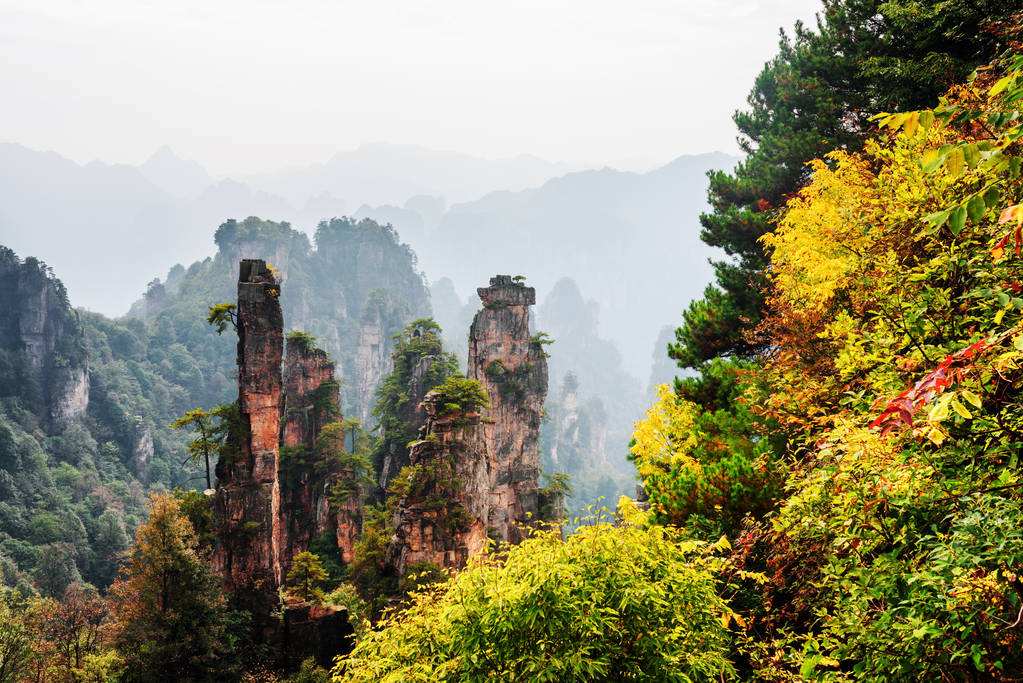
Zhangjiajie’s sandstone pillars are spectacular throughout the year, but autumn brings warmer colors to the forests covering the mountains.
Mist after rain can drift between sandstone pillars while yellow, orange and red foliage appears on the slopes below. Golden Whip Stream offers a more intimate forest environment, while Yuanjiajie and Tianzi Mountain provide the classic elevated views.
Photography highlights: Sandstone pillars rising through autumn forest, misty mountains, Tianzi Mountain and Golden Whip Stream.
Good to know: Autumn also brings comfortable temperatures for walking through the scenic areas.
Explore our Zhangjiajie tours for ways to combine the national park with Tianmen Mountain, Fenghuang and nearby destinations.
More Beautiful Autumn Landscapes for Photographers
Some of China’s most photogenic autumn landscapes are shaped by harvests, villages and river scenery as well as foliage.
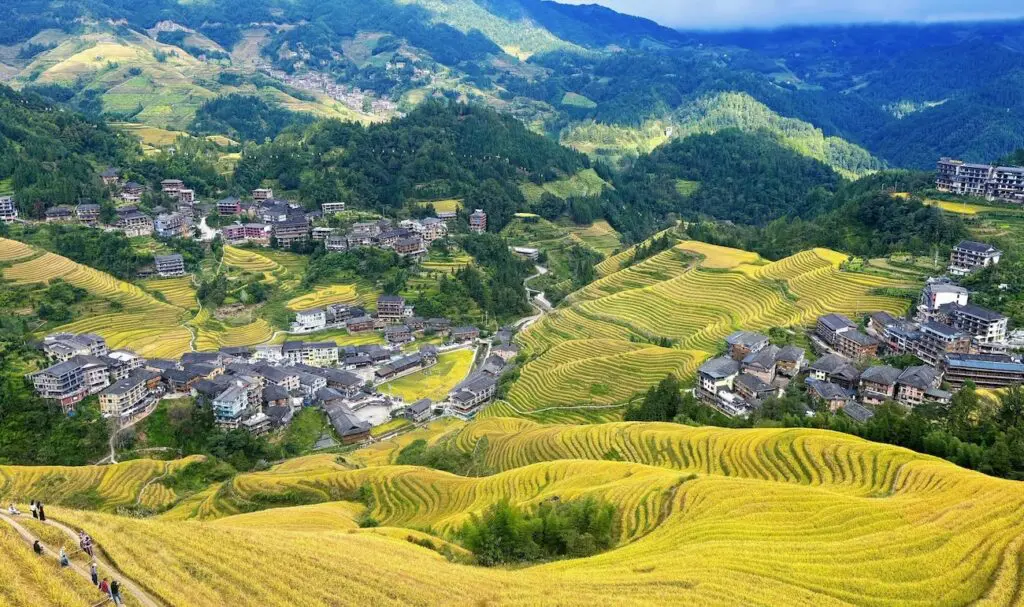
Longji Rice Terraces near Guilin
Around late September and early October, ripening rice turns the Longji terraces from green to gold before harvest. Layered fields and mountain villages make this one of southern China’s most distinctive seasonal landscapes.
Wuyuan in Anhui
Wuyuan is especially photogenic in autumn for its traditional villages, countryside and seasonal harvest scenes. It is a good choice for travelers interested in rural life, traditional architecture and cultural photography.
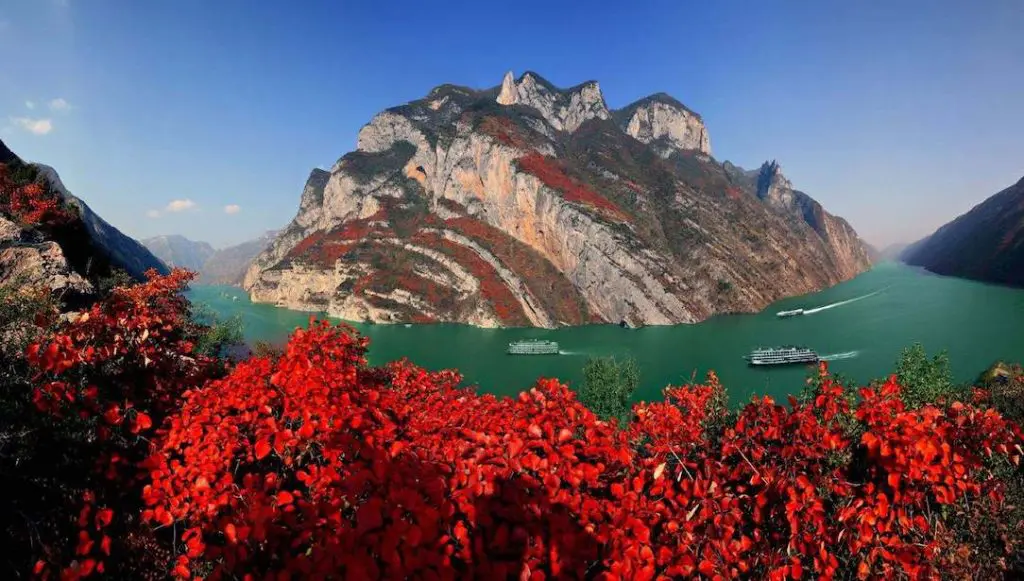
Yangtze Three Gorges
The Three Gorges develop attractive colors later in autumn, particularly around Wu Gorge and the smaller tributary valleys. A Yangtze River cruise gives travelers the opportunity to experience the seasonal scenery from the river.
Which Fall-Color Destination Is Right for You?
The best choice depends on your travel dates and the landscapes you’d most like to experience or photograph.
| If You Want… | Consider… |
|---|---|
| Foliage, turquoise lakes & reflections | Jiuzhaigou |
| Golden forests in September | Kanas & Hemu |
| Extensive red-leaf forests | Guangwu Mountain |
| Golden trees & desert landscapes | Ejina Poplar Forest |
| Snow mountains & alpine autumn scenery | Daocheng Yading or western Sichuan |
| An iconic Chinese landscape | Great Wall |
| Golden ginkgo trees | Tengchong Ginkgo Village |
| Traditional villages & foliage | Tachuan |
| Mountains, clouds & autumn color | Huangshan |
| Classic Beijing red leaves | Fragrant Hills |
| Tibetan plateau landscapes | Shangri-La |
| Sandstone peaks & autumn forest | Zhangjiajie |
If your travel dates are fixed, start with the destinations that typically have good autumn conditions during that period.
How to Plan a Fall-Color Trip in China
Many of China’s best fall-color destinations can be incorporated into a wider China itinerary.
For a first trip, Beijing is one of the easiest places to add a seasonal experience. You can visit the Great Wall in autumn while following a classic route through Beijing, Xi’an and Shanghai. With more time, Jiuzhaigou can add a much stronger nature and foliage component.
For a trip with autumn scenery as a major focus, Sichuan offers particularly good possibilities. Chengdu, Jiuzhaigou and western Sichuan can combine colorful lakes, mountain forests, snow peaks and Tibetan landscapes within one journey.
For dedicated landscape photographers, destinations with shorter seasonal windows may deserve to shape the itinerary. Kanas and Hemu are strongest earlier in the season, while Guangwu Mountain and Ejina require careful October timing.
Some combinations that work particularly well include:
Classic Sichuan tour with Jiuzhaigou
A well-planned Sichuan trip covering the region’s highlights, including Jiuzhaigou’s beautiful fall colors.
Beijing + Yangtze Cruise + Shanghai
A classic China journey combining Beijing’s historic highlights, autumn scenery along the Yangtze River, and modern Shanghai.
Huangshan + Hongcun + Tachuan
Mountain scenery, traditional Huizhou villages and late-autumn foliage.
Kanas + Hemu + Northern Xinjiang
Recommended tour: 8 days Xinjiang Kanas Lake & Hemu Village Tour
A September journey built around golden forests and Altay mountain scenery.
Avoid China’s National Day Holiday If You Can
China’s National Day holiday, October 1–7, is one of the busiest travel periods of the year. If your dates are flexible, we recommend traveling before or after the holiday. If you travel during this period, book transportation, hotels and popular attractions well in advance.
Peak fall colors can also shift from year to year, so some flexibility with your travel dates can help.
Our private China tours can be customized around your travel dates, seasonal scenery and other places you’d like to visit.
FAQs About Fall Colors in China
When is the best time to see fall colors in China?
The main fall-color season generally runs from mid-September through November. Northern and high-altitude destinations such as Kanas change first, many Sichuan and northern China destinations peak during October, and some southern destinations remain colorful into November.
Where are the best fall colors in China?
Jiuzhaigou, Kanas and Hemu, Guangwu Mountain, Ejina Poplar Forest, western Sichuan and the Great Wall are among our top choices. For later autumn, Tachuan and Tengchong Ginkgo Village offer very different village and foliage landscapes.
Where can I see fall colors in China in September?
Kanas and Hemu in northern Xinjiang are among the best September choices, with forests typically beginning to turn gold from mid-September. Some high-altitude areas of western China also begin changing early in the season.
Where can I see fall colors in China in October?
October offers the widest choice. Depending on your dates, consider Jiuzhaigou, Daocheng Yading, western Sichuan, Guangwu Mountain, Ejina, Zhangjiajie and the Great Wall. Early and late October can produce very different conditions, so exact dates matter.
Where can I see fall colors in China in November?
Tengchong Ginkgo Village, Tachuan and Huangshan are good November choices. Beijing can also retain attractive autumn colors around the beginning of November, depending on the year’s weather.
Planning an Autumn Trip to China?
If autumn scenery is part of your China plans, tell us when you’re traveling and the places you’d most like to see. Our local team can help you choose destinations that fit the season and combine them with the other places you want to experience in China.
Based in Chengdu and operating since 2007, WindhorseTour specializes in private and tailor-made journeys across China.
Related tours
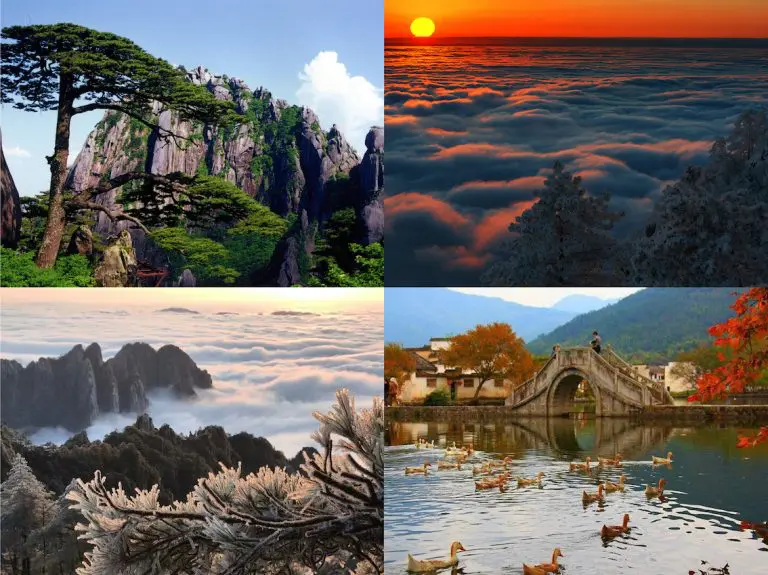

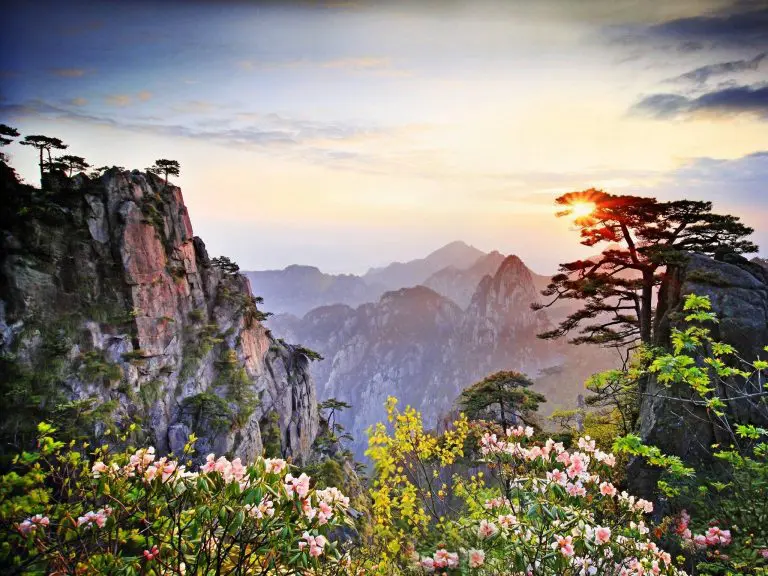
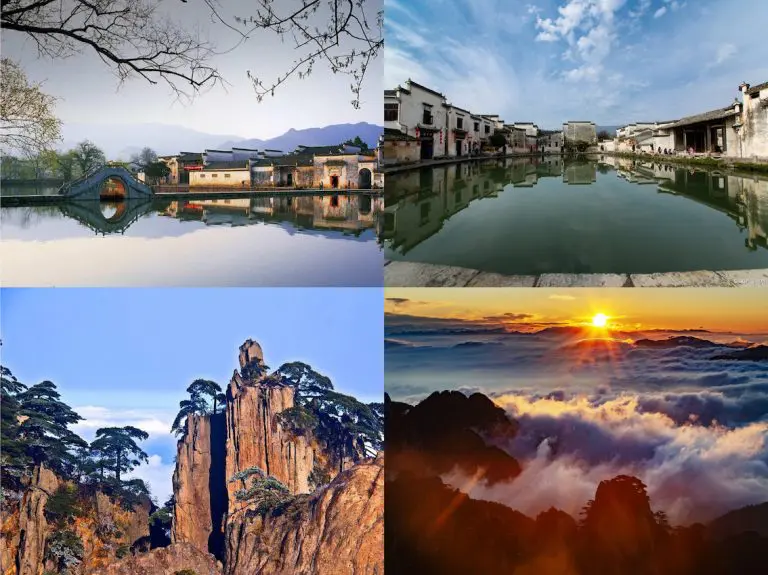
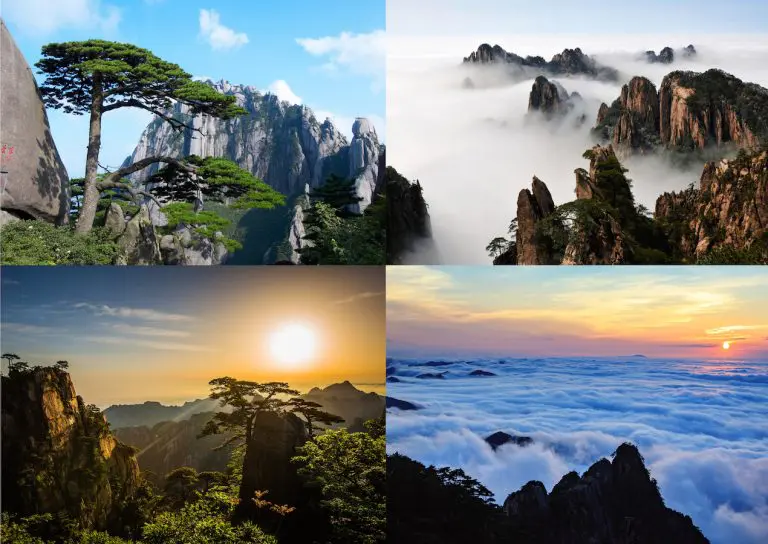
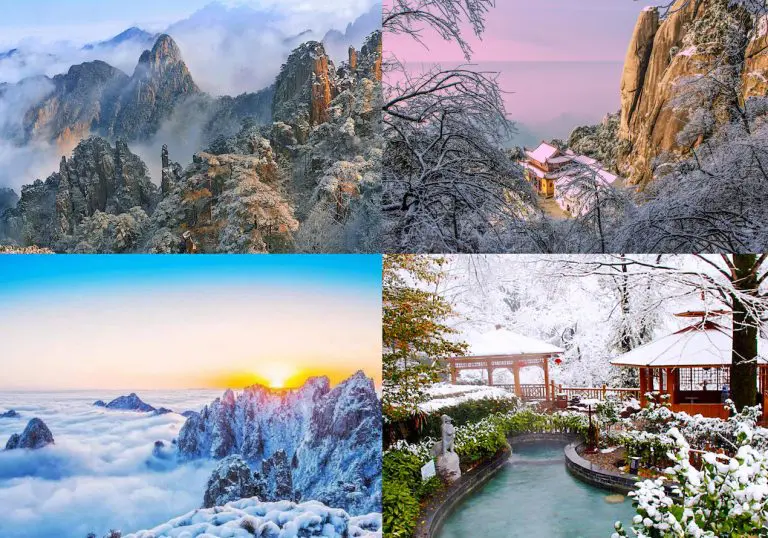
Join this 3 day Mount Huangshan Tour to explore China's most scenic mountain and its nearby UNESCO sites. Hike among dramatic granite peaks, ancient pine forests, and magical sea of clouds on Mount Huangshan, then visit the picturesque Hongcun Village to experience authentic Huizhou architecture and culture.
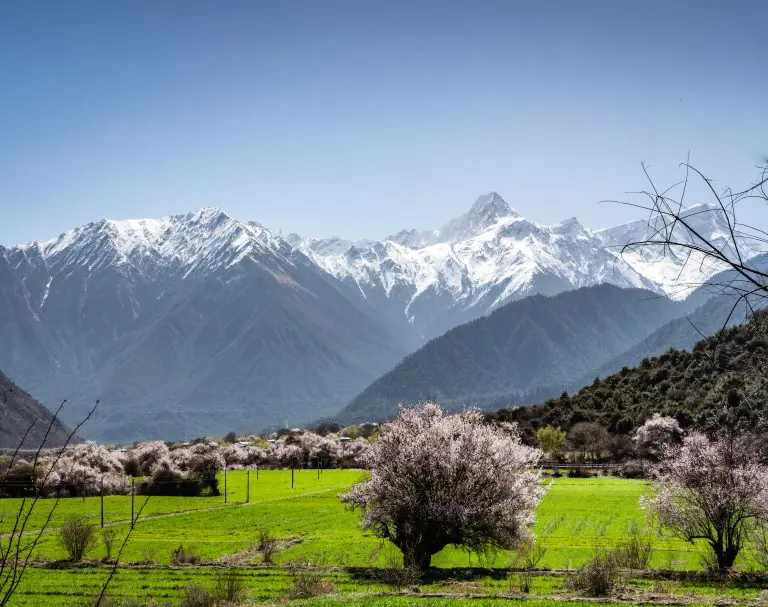
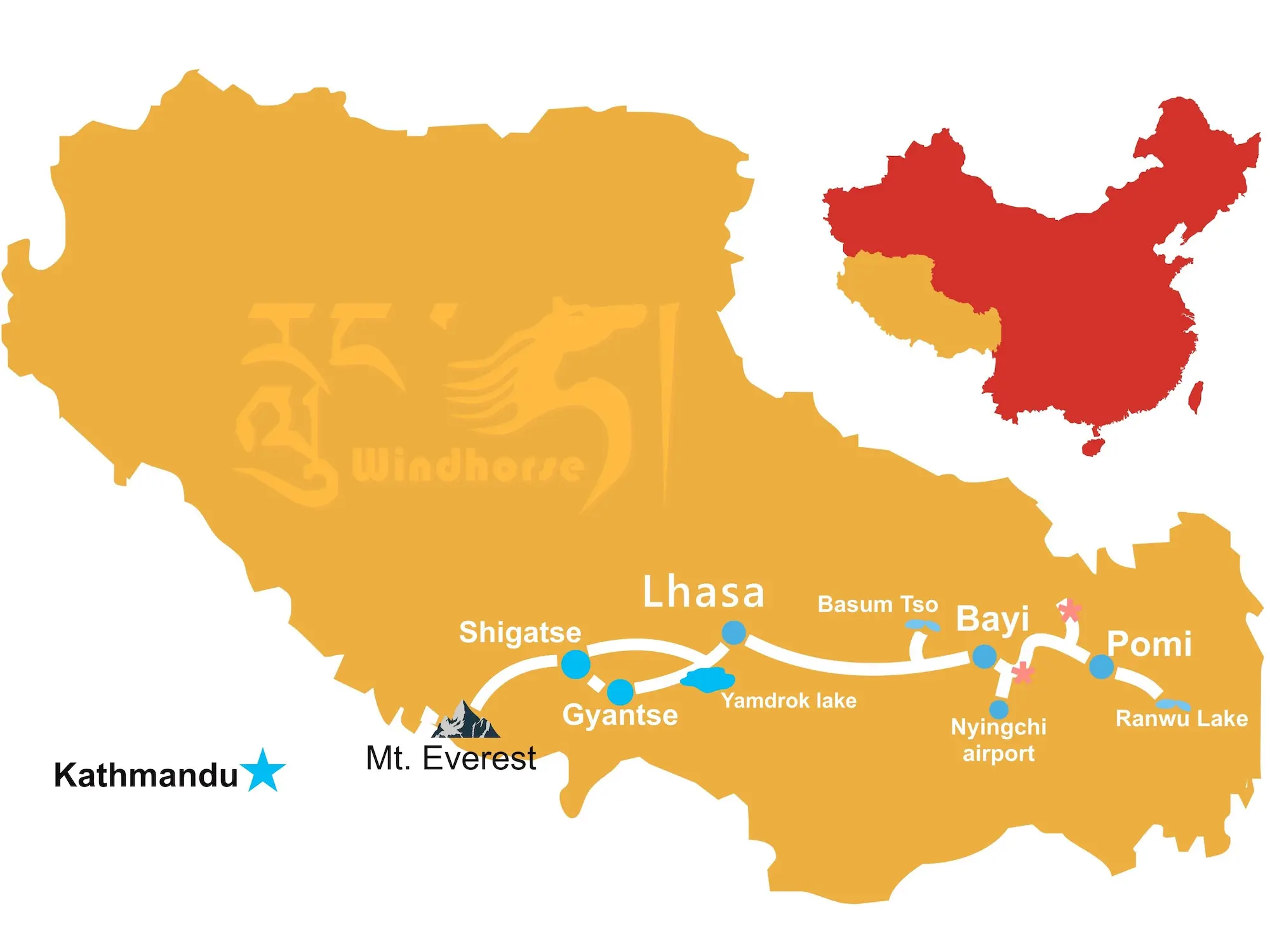
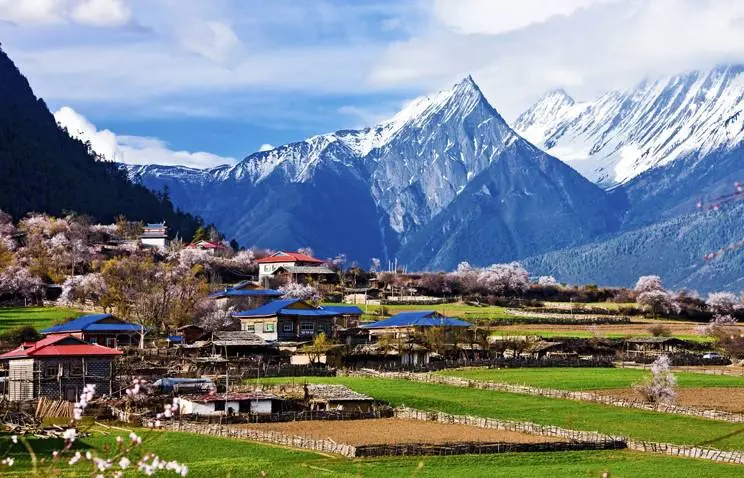


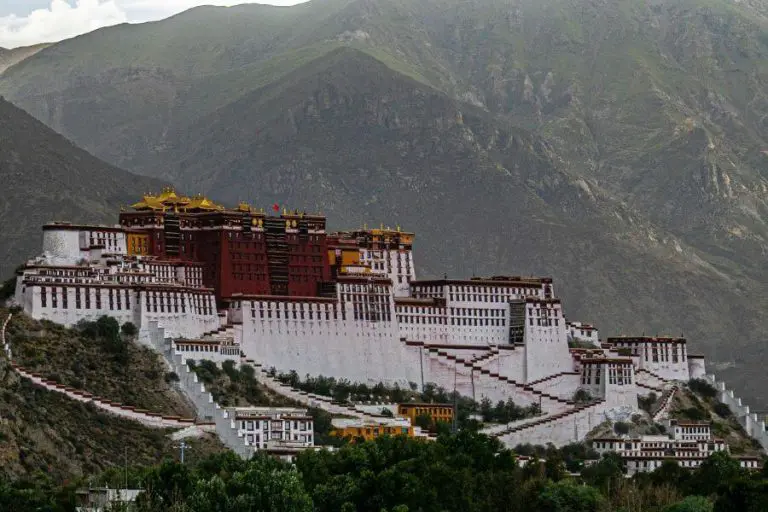

Experience the best of Tibet in spring on this 2 week Tibet tour. Join Nyingchi’s Peach Blossom Festival, explore Bomi Peach blossom valley, Ranwu Lake, visit Lhasa’s Potala Palace and monasteries, and overland trip to Everest Base Camp for stunning Himalayan views.
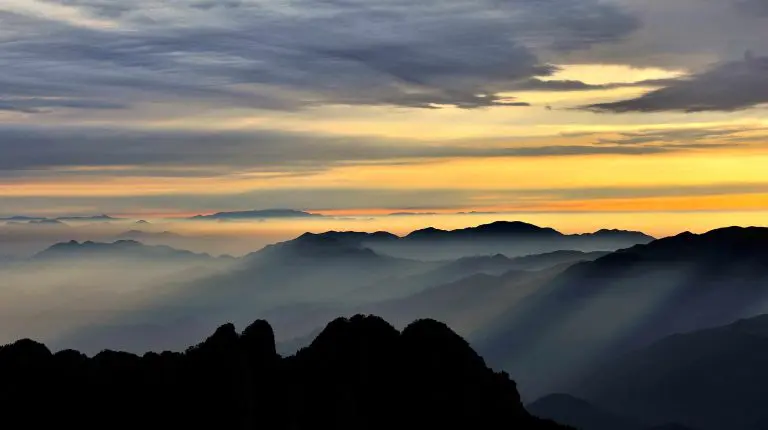
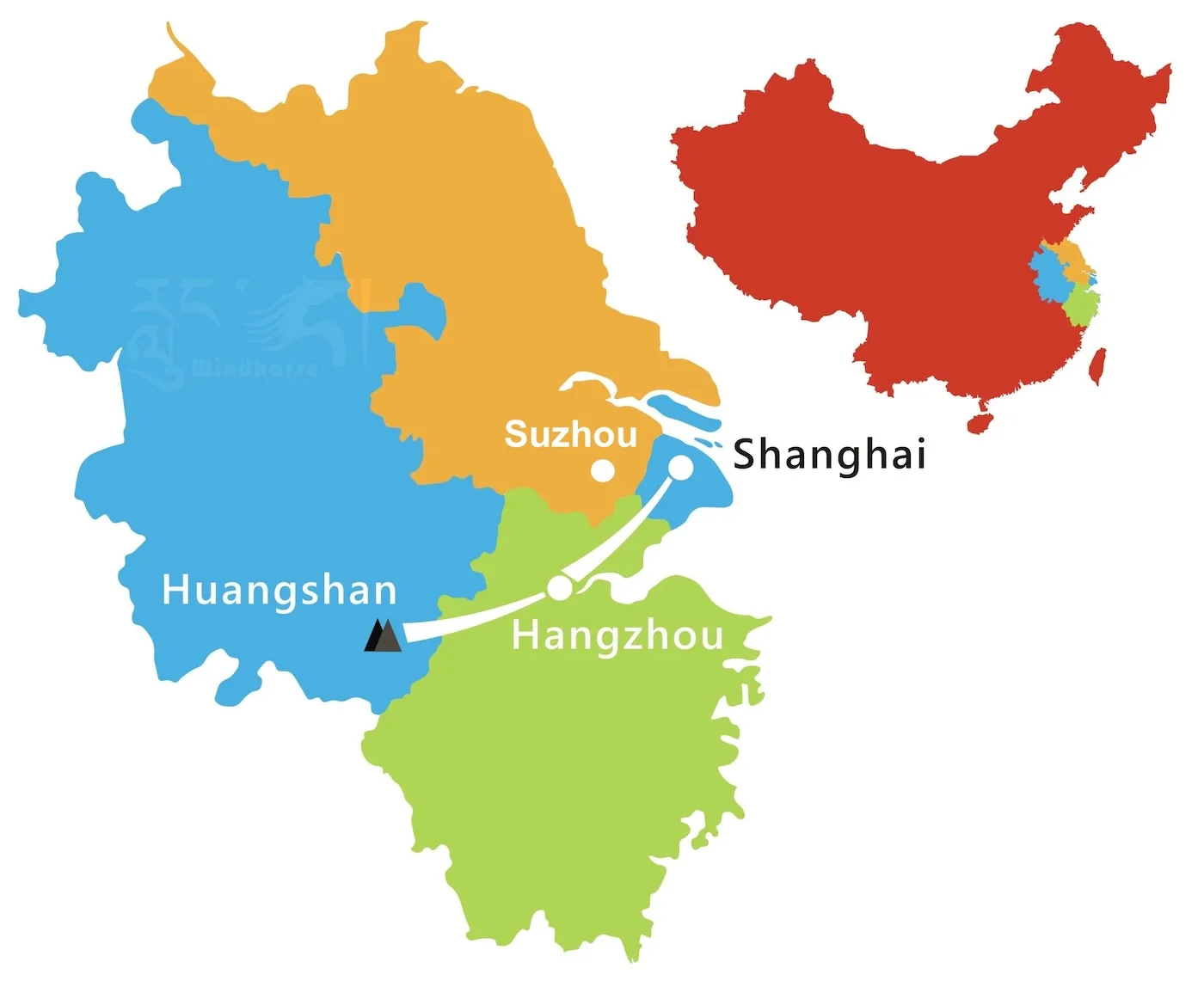
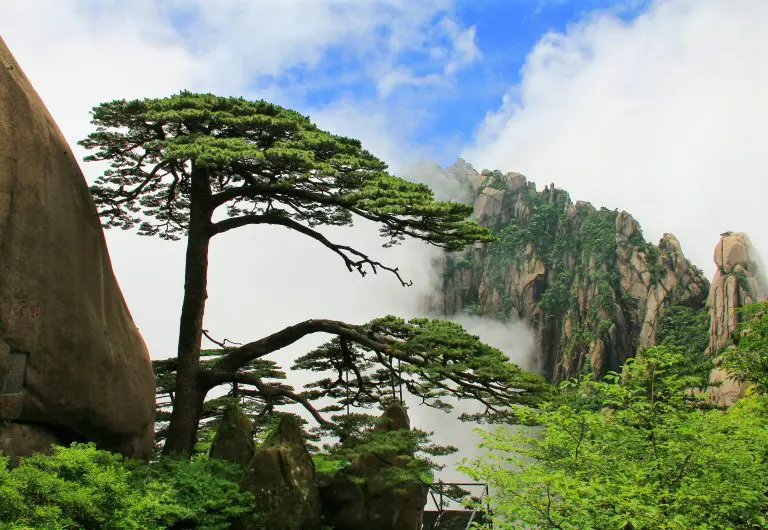

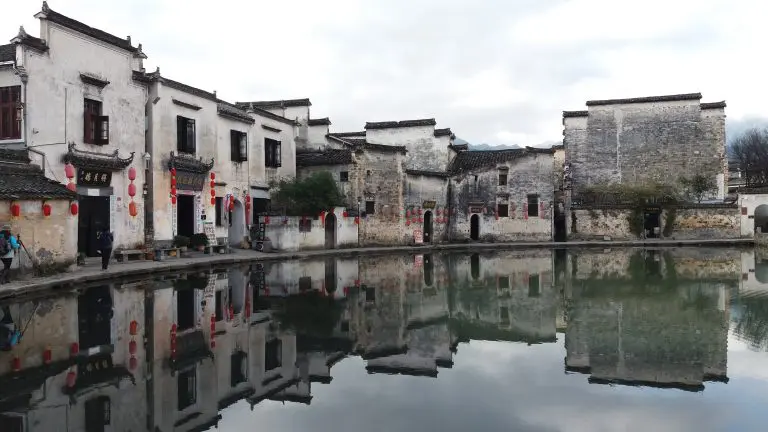
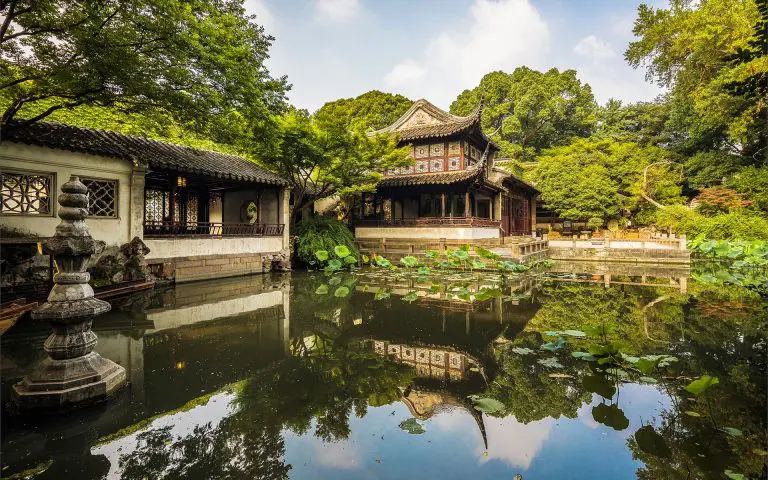
This one week long Shanghai and Hangzhou tour to Mount Huangshan covers Shanghai city highlights, West Lake in Hangzhou, Mount Huangshan scenery with sunrise views, and the historic village of Hongcun, combining city sightseeing with classic landscapes.