
Top Things to Do on Sichuan–Tibet Highway Southern Route (G318)
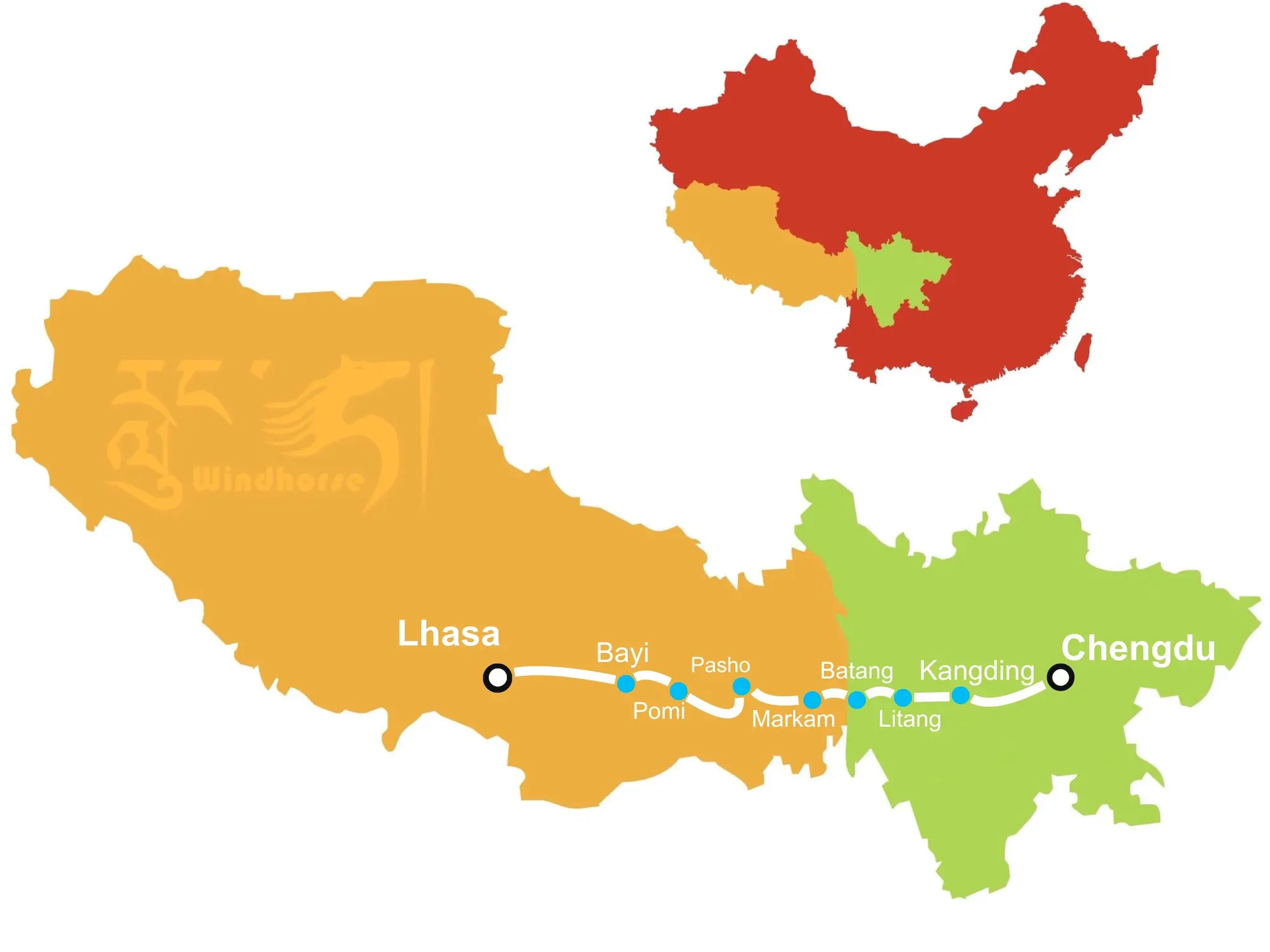
The China National Highway 318 (G318) is one of the most legendary roads in the world, a 5,476 km route stretching from Shanghai on the east coast all the way to the border Zhangmu of Tibet Nepal. However, the most famous and breathtaking stretch is the Sichuan–Tibet Highway Southern Route. This overland segment stretches over 2,142 km from Chengdu to Lhasa. Often called the “Heavenly Road,” this spectacular portion winds through the Sichuan Basin, the rugged Hengduan Mountains, and the eastern edge of the Tibetan Plateau before reaching the spiritual heart of Tibet – Lhasa.
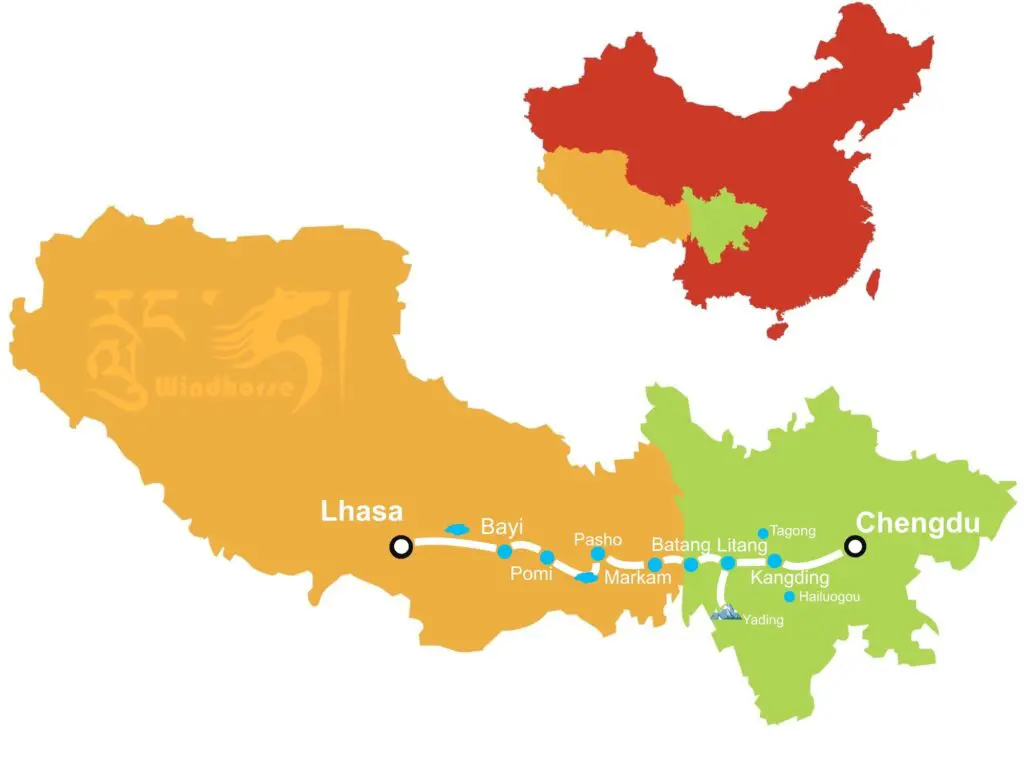
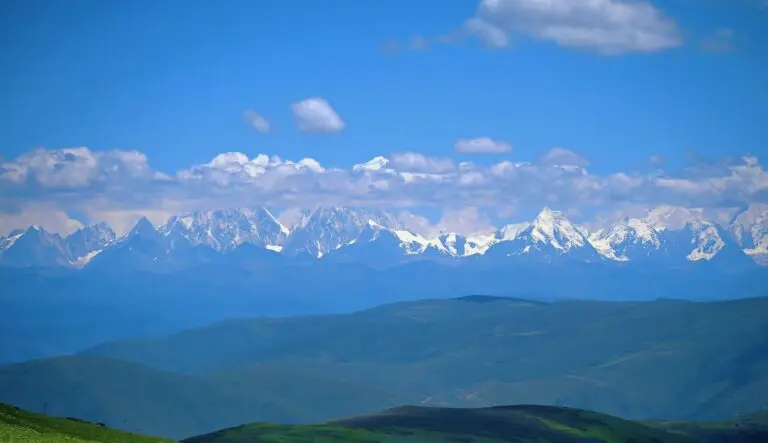
Compared with culture heart of Kham Tibetan Region on the Sichuan–Tibet Highway northern route G317, the G318 southern route is renowned for its majestic, diverse landscapes from towering snow peaks, deep river gorges, sacred turquoise lakes to temperate forests, making it the ultimate choice for photographers and adventure travelers seeking dramatic natural beauty.
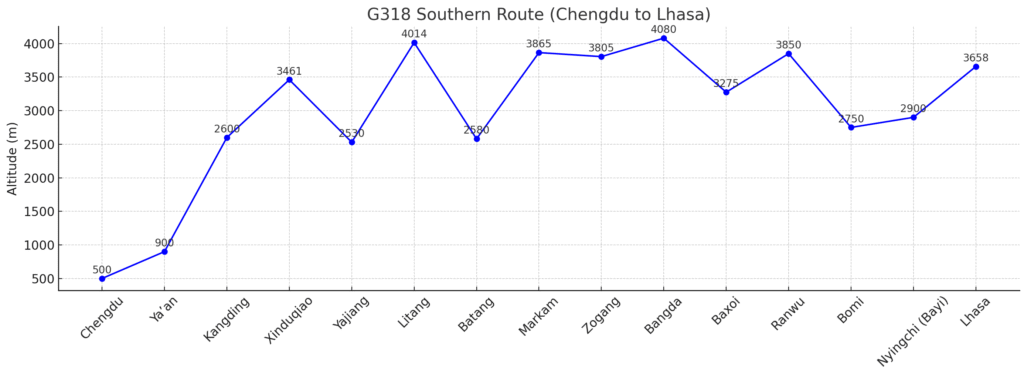
Here are the top stops, essential experiences, and recommended detours along this legendary overland journey.
Table of Contents
1. Chengdu (500 m) – Gateway to the Tibetan Plateau
Your journey along the Sichuan–Tibet Highway begins in Chengdu, the vibrant capital of Sichuan Province, a city where ancient culture meets modern charm. Known for its giant pandas, spicy cuisine, and laid-back lifestyle, Chengdu is the perfect place to adjust before heading into the mountains in the west. Spend a day or two exploring its highlights.
Things to Do & Tips:
- Visit the Chengdu Panda Base to meet China’s giant pandas.
- Enjoy authentic Sichuan hotpot and local street snacks.
- Visit Wuhou Shrine and Jinli Ancient Street for a taste of traditional Sichuan heritage.
- Visit Jinsha Museum or Sanxingdui for fascinating glimpses into Sichuan’s mysterious Bronze Age civilization.
2. Kangding (2,600 m) – Songs of the Mountains and Gateway to Kham Tibet
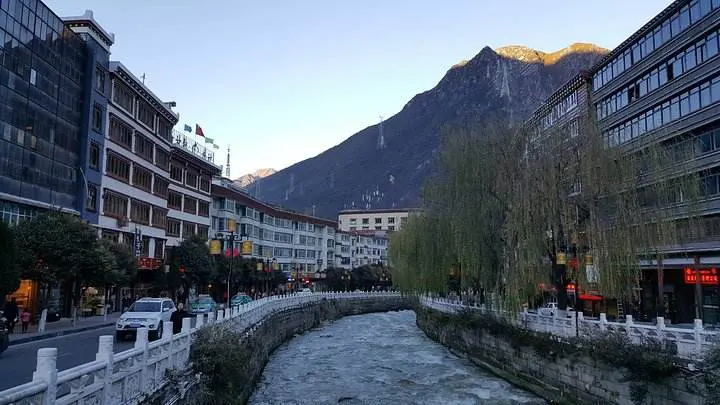
As you leave the Chengdu Plain, the G318 Highway climbs sharply into the Hengduan Mountains and reaches Kangding, a romantic mountain town immortalized in the folk song “Love Song of Kangding.” This is where the air turns cooler, the prayer flags start to appear, and the Sichuan–Tibet overland adventure truly begins.
Things to Do & Tips:
- Paoma Mountain: Ride the cable car or hike up for stunning views of Kangding Valley.
- Mugecuo Lake (Tagong Nature Reserve): A serene alpine lake surrounded by forests and peaks, perfect for a short walk or picnic.
- Kangding Hot Springs: Relax and acclimatize before tackling higher altitudes.
3. (Detour) Hailuogou Glacier Park (3,200-4,800 m) – Ice and Fire at the Foot of Mount Gongga
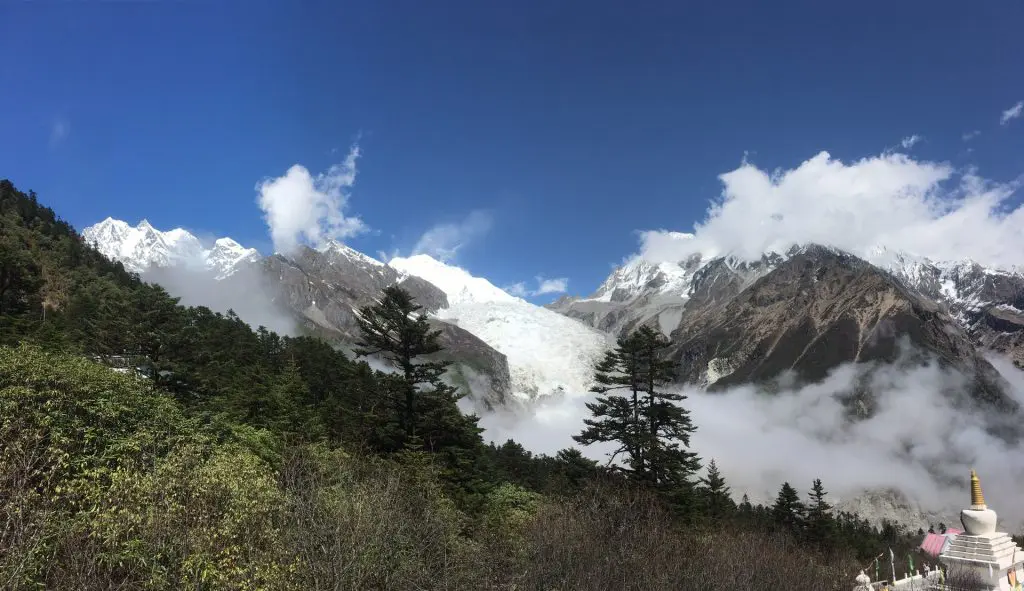
Located about 80 km south of Kangding in Moxi Town, Hailuogou Glacier National Park is the eastern gateway to Mount Gongga (7,556 m), the highest peak in Sichuan. Here, glaciers tumble into virgin forests, creating a dramatic world of ice and steam.
Things to Do:
- Take the cable car to Camp 3 for breathtaking views of the glacier tongue and snow peaks.
- Hike through ancient cedar forests shrouded in mist.
- Soak in forest hot springs while gazing up at Mount Gongga’s icy slopes.
- Best time to visit Hailuogou is winter in the snow world.
4. (Detour) Tagong (3,700 m) – Sacred Grasslands of Kham
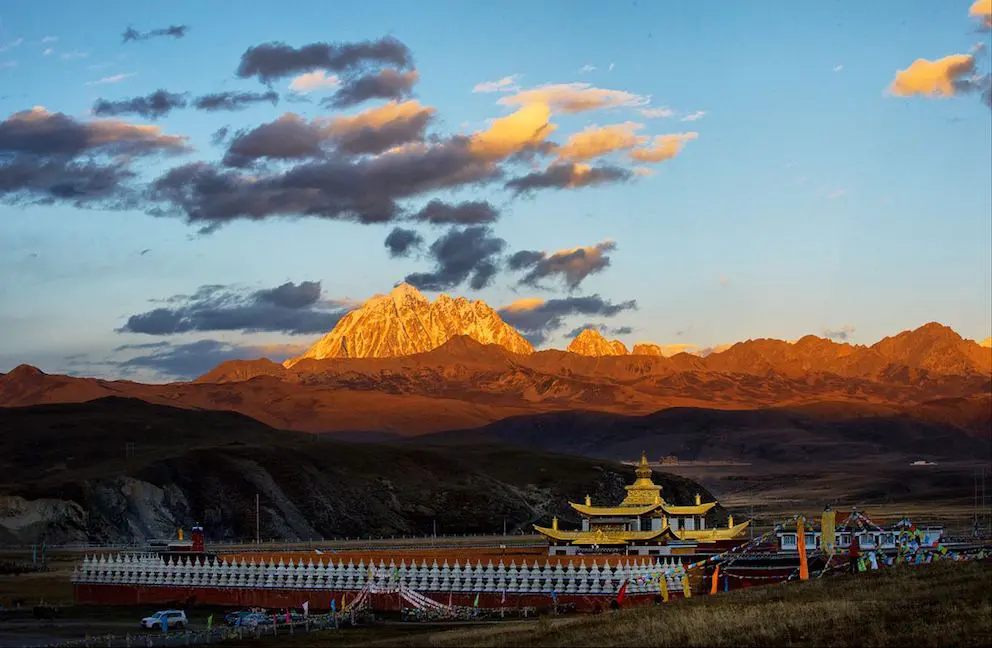
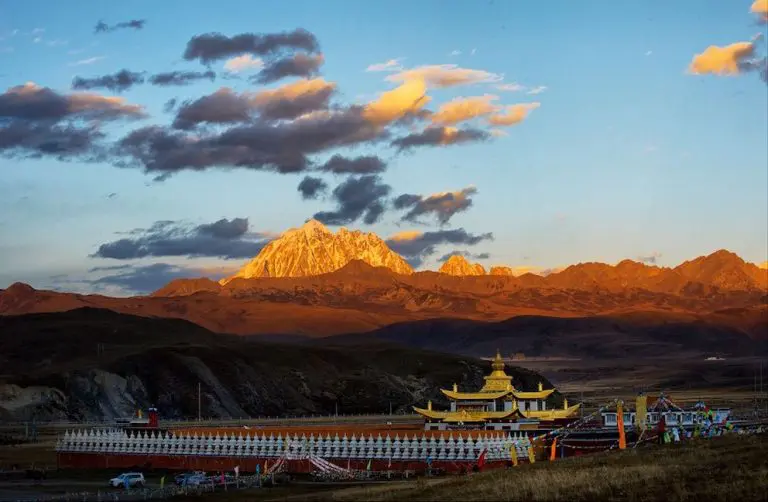
About 110 km northwest of Kangding, Tagong (“Land of Happiness” in Tibetan) offers vast alpine meadows beneath the sacred Mount Yala (5,820 m). It’s one of the best places along the G318 to experience authentic nomadic life and open Tibetan landscapes.
Things to Do:
- Visit Tagong Monastery, a revered Sakya temple and important pilgrimage site.
- See the gleaming Muya Golden Pagoda framed by endless grasslands.
- Ride horseback or simply wander the meadows dotted with yaks and prayer flags, enjoy the stunning view of Mount Yala in the distance.
- Nomadic Experience: Spend 1 or 2 days to with a local nomad family, help milk yaks, make butter tea, or share a traditional meal around the hearth to experience the warmth of Tibetan nomadic life on Tagong grassland.
5. Xinduqiao (3,460 m) – The Photographer’s Paradise
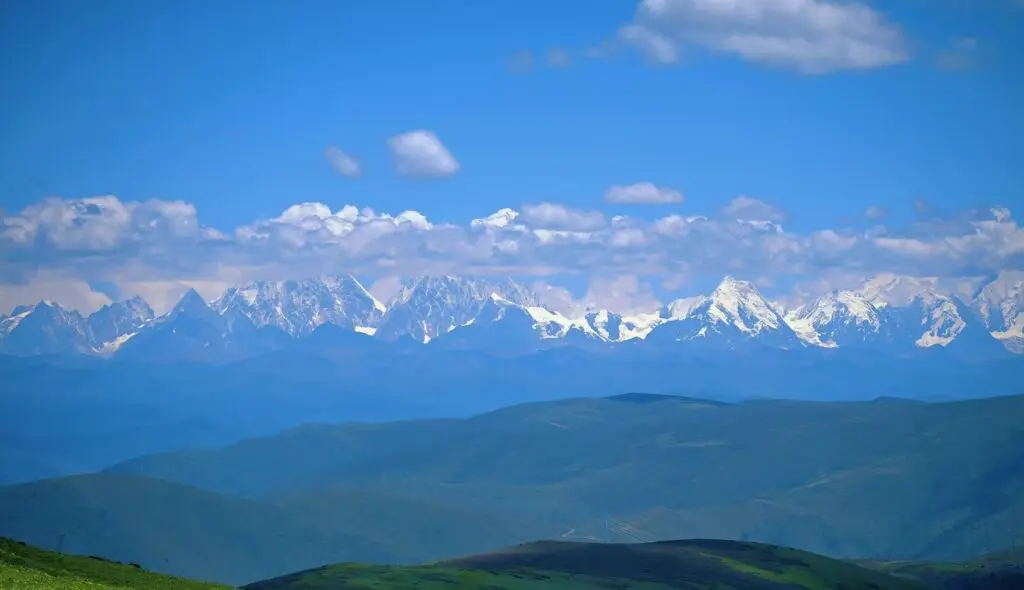
Just beyond Zheduo Mountain Pass (4,298 m), the road descends into the broad valley of Xinduqiao, often called the “Photographers’ Paradise.” The air feels clear and bright, and the scenery changes with every turn, white-walled Tibetan homes, grazing yaks, colorful prayer flags, and winding rivers reflecting the distant Gongga Snow Mountains. It’s one of the most scenic and photogenic stretches along the G318.
Things to Do:
- Capture sunrise and sunset over the Zheduo River Valley, when the light softens across meadows and mountain ridges.
- Photograph morning mists and prayer-flag bridges near the village.
- Stargaze on the open highland plains where the Milky Way is clearly visible.
- Best time to see the autumn foliage is mid October to early of November.
6. Yajiang (2,530 m) – Gateway to the Highlands and Perfect Overnight Stop
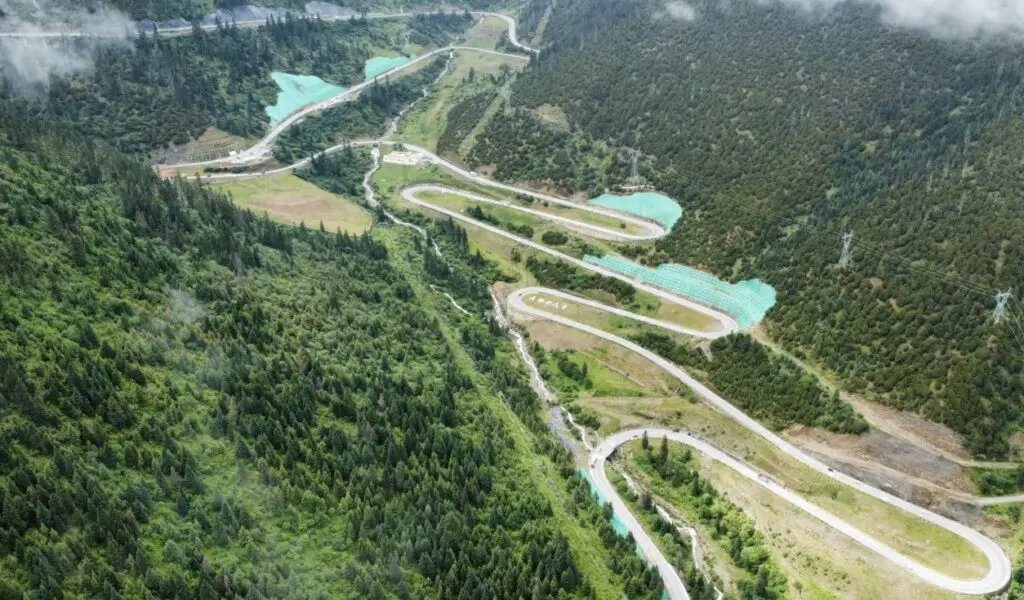
After leaving Xinduqiao, the G318 winds through mountain ridges before descending into Yajiang, a quiet Tibetan town nestled along the Yalong River. Surrounded by rolling hills and twisting roads, Yajiang marks the halfway point between Kangding and Litang and is widely regarded as the best place to stay overnight thanks to its moderate 2,530 m elevation, ideal for gradual altitude acclimatization before ascending to the 4,000 m plateau.
Things to Do:
- Stop at the Gao’er Temple Mountain Pass (Gao’er Si) for sweeping views of Mount Gongga and the Yalong Valley.
- Enjoy a relaxed evening in town and rest overnight to prepare for the long climb toward Litang the next day.
7. Litang (4,000 m) – High-Altitude Culture and Festivals
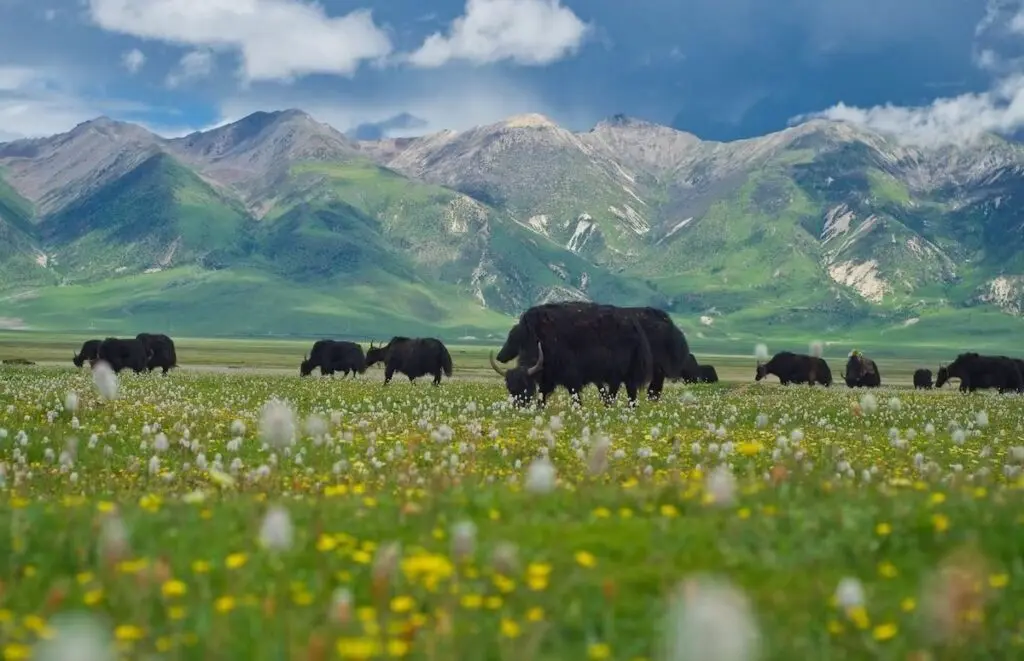
After the steady climb from Yajiang, the road opens onto the vast Litang Plateau, where the air feels thin and the horizon stretches endlessly. At over 4,000 m, Litang is one of the world’s highest towns and a cultural heart of Kham Tibet. It’s the birthplace of the 7th and 10th Dalai Lamas, and its strong monastic traditions and nomadic lifestyle offer a vivid window into high-altitude Tibetan culture.
Things to Do & Tips:
- Visit Litang Monastery, one of the largest Gelug monasteries in eastern Tibet.
- Attend the Litang Horse Racing Festival (early August) if you’re traveling in summer, the nomads gather from across Kham for days of horse races, music, and celebration.
- Enjoy the vast open Maoya grasslands dotted with yaks and herders.
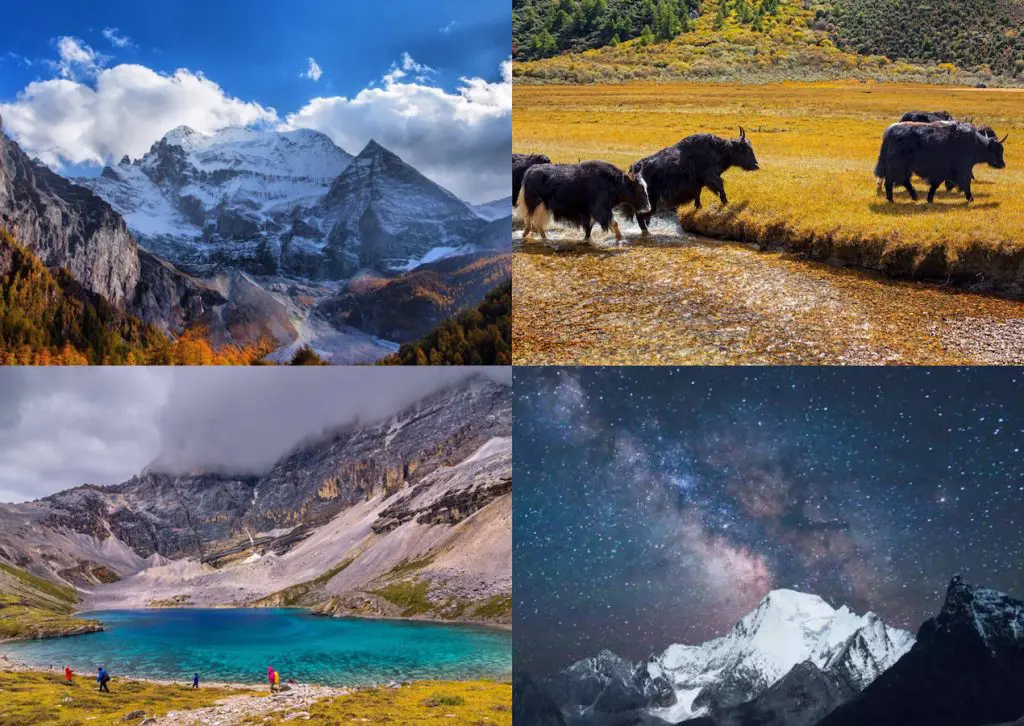
8. (Detour) Yading Nature Reserve (3,900 to 4,700 m) – “The Last Shangri-La”
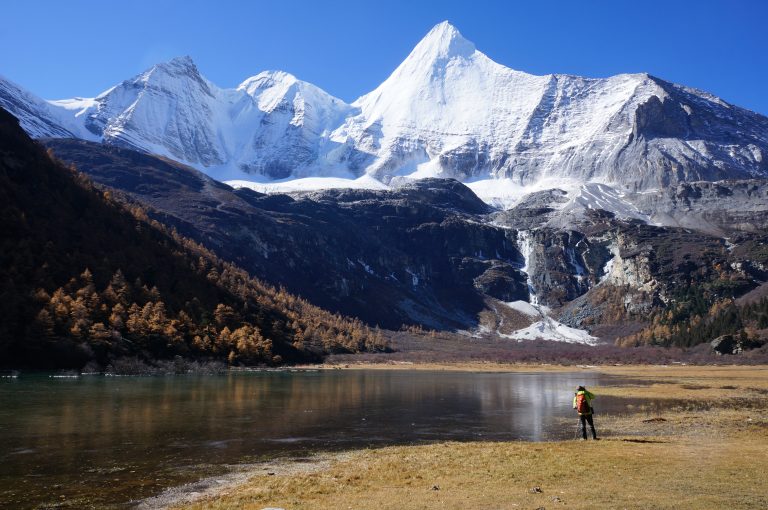
About 150 km south of Litang, the road leads to Daocheng–Yading Nature Reserve, often called “The Last Shangri-La” for its pristine beauty and spiritual aura. This protected area is surrounded by three sacred snow peaks, Chenrezig (Xiannairi), Jambeyang (Yangmaiyong), and Chanadorje (Xianuoduoji), revered by Tibetan pilgrims. With crystal lakes, alpine meadows, and winding trails, Yading offers one of the most breathtaking landscapes in all of China.
Things to Do & Tips:
- Hike to Pearl Lake, Milk Lake, Five-Color Lake, and Luorong Pasture beneath three snow-capped sacred peaks.
- Photograph the incredible alpine scenery and turquoise lakes.
- Best time to visit Yading Nature Reserve is from May to October, the autumn foliage at Yading is spectacular.
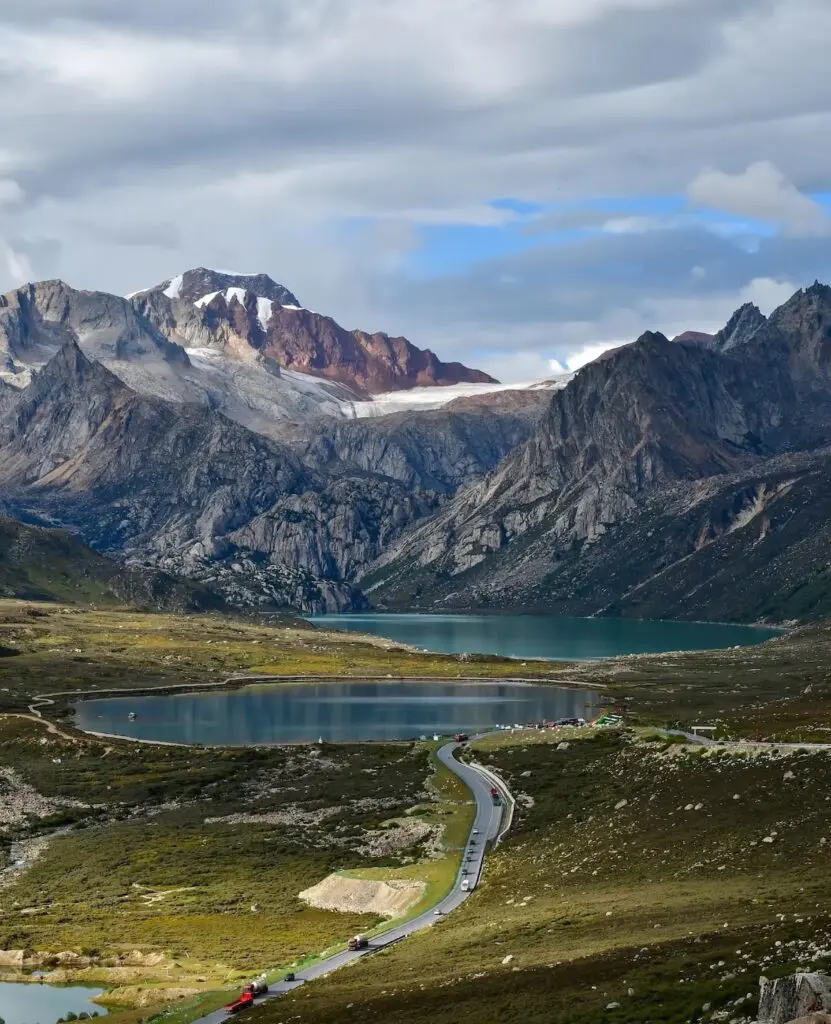
9. Batang (2,700 m) – Riverside Serenity and Ancient Monasteries
After exploring Litang or returning from the optional detour to Daocheng Yading Nature Reserve, the G318 continues westward over Haizi Mountain (4,500 m), a vast stone plateau dotted with glacial lakes and granite boulders. This stretch toward Batang is among the most scenic of the southern route. Along the way, you’ll pass the breathtaking Sister’s Lakes, two turquoise alpine lakes reflecting the surrounding snow peaks, before descending into the warmer, greener valley of Batang, the last major town in western Sichuan before entering Tibet.
Things to Do & Tips:
- Stop at Sister’s Lakes – Admire the twin alpine lakes shimmering beneath snow-capped peaks, a perfect spot for photos and short breaks.
- Optional off-road trip to Cuopugou Nature Reserve – Just 30 km from Batang, this hidden gem features turquoise lakes, snow peaks, and lush meadows. Often called “Little Yading”, it’s an ideal side trip for those seeking unspoiled nature and light alpine hiking.
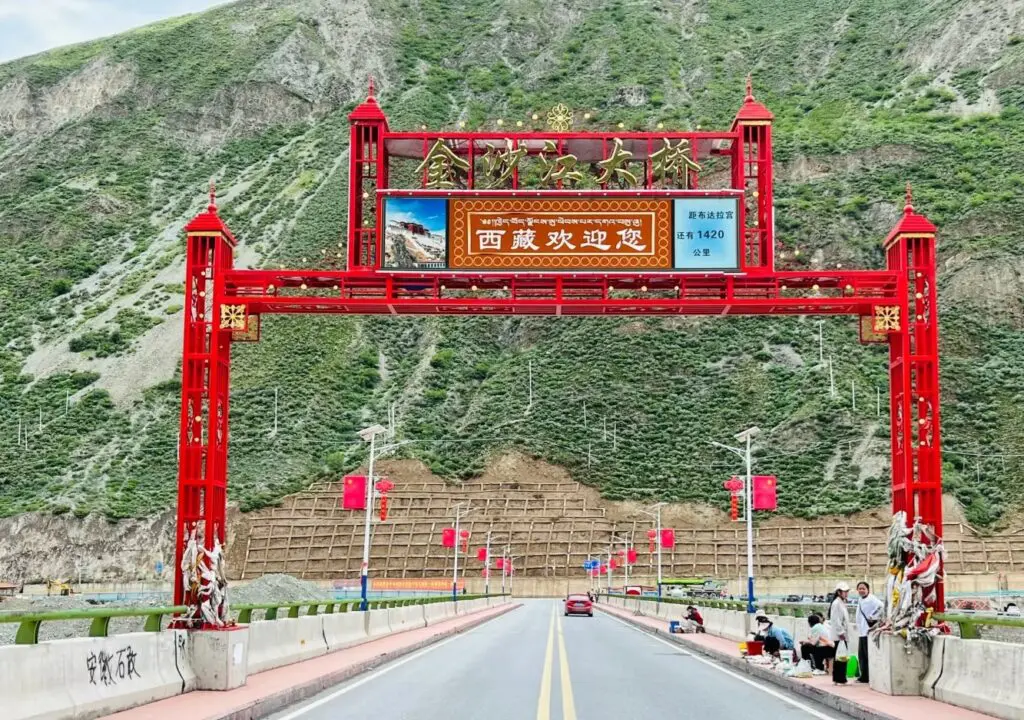
10. Markham (Mangkang, 3,870 m) – Gateway into Tibet
Leaving Batang, the G318 winds through terraced valleys before crossing the Jinsha River, the natural border between Sichuan and Tibet. Once across the bridge, you officially enter the Tibet Autonomous Region, where the landscape turns wilder and the colors more intense, deep river gorges, windswept ridges, and high plateaus that signal the start of Tibet’s frontier. Mangkang (Markham) serves as the first major stop within Tibet and an important junction linking the southern G318 and the northern G317 routes.
Things to Do & Tips:
- Stop at the Jinsha River Bridge – Take in the symbolic crossing point between Sichuan and Tibet, with panoramic views of the deep canyon below.
- Stroll through Markham Town – Visit local markets for Tibetan snacks and handmade goods, offering a first taste of life on the Tibetan Plateau.
- We normally recommend to stay at Rumei town near Markham for lower elevation.
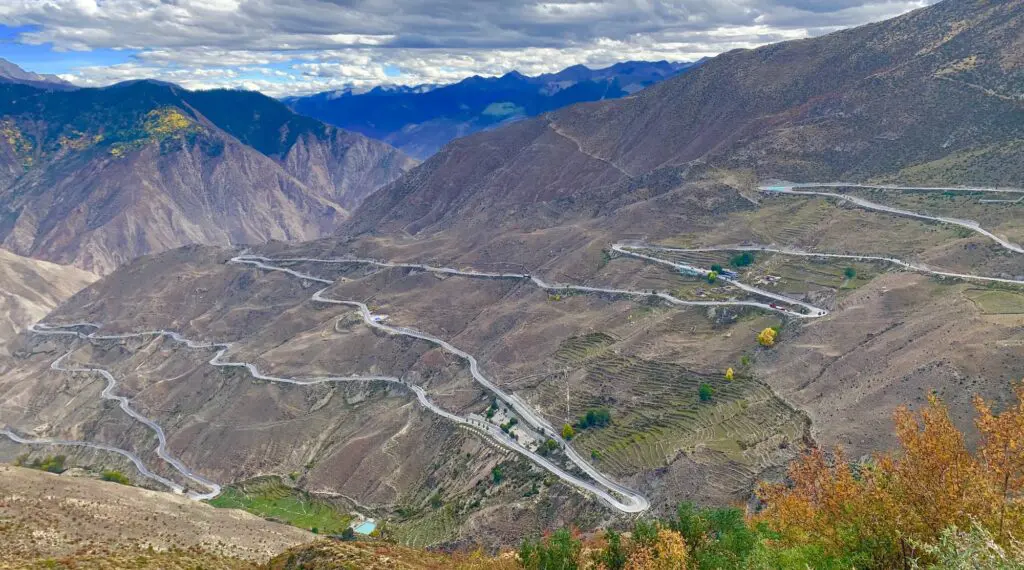
11. Nujiang 72 Turns – The Legendary Mountain Road
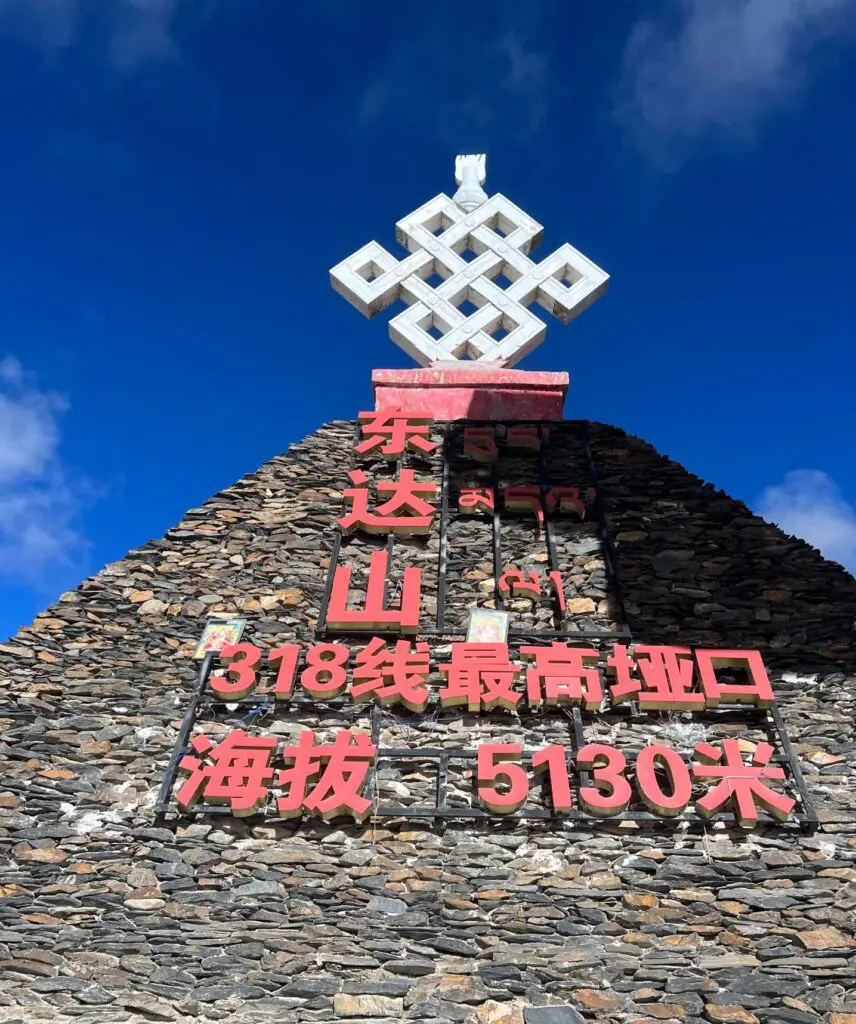
After leaving Markham, the G318 climbs over Dongda Mountain Pass (5,008 m), one of the highest points on the Sichuan–Tibet Highway southern route, before descending into Zuogong County and rising again toward Yela Mountain Pass (4,658 m).
From here begins the awe-inspiring “Nujiang 72 Turns”, a spectacular 10 km stretch that drops over 1,500 meters to the Nujiang River Valley (≈3,100 m) through 72 sharp switchbacks. It’s the most dramatic and iconic section of the entire Sichuan–Tibet Highway, combining dizzying engineering with breathtaking scenery.
Things to Do & Tips:
- Stop at Yela Mountain Observation Deck – Take in the sweeping view of the 72 bends winding down the canyon.
- Drive with care – Steep gradients, sharp curves, and rapidly changing weather make this both thrilling and technically demanding.
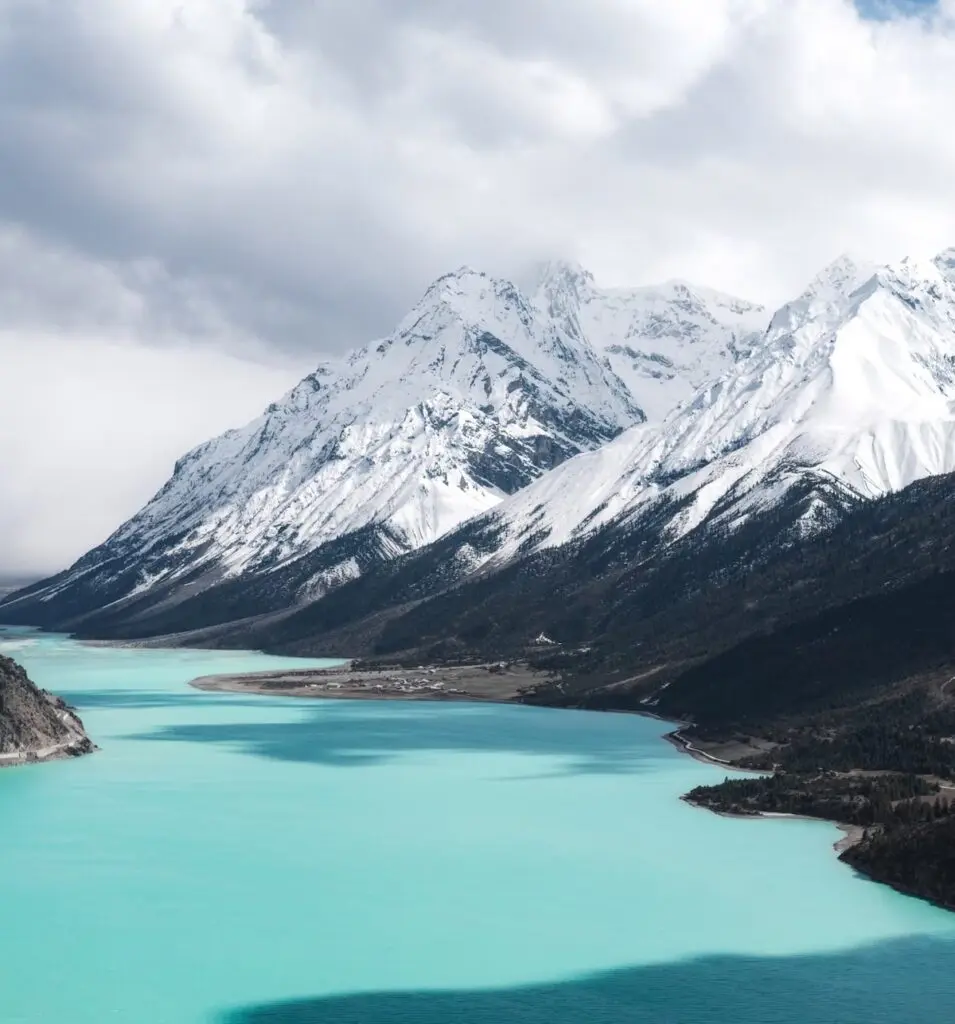
12. Ranwu Lake (3,850 m) – Gateway to Laigu Glacier
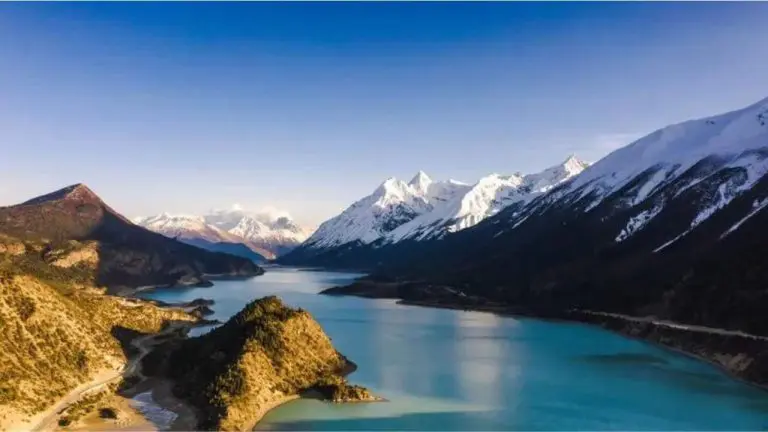
After descending from the Nujiang 72 Turns, the G318 opens into the tranquil valley of Ranwu Lake, the largest lake in eastern Tibet. Nestled beneath the snow-covered Gangrigabu Mountains, the lake is fed by meltwater from the spectacular Laigu Glacier. Its color transforms throughout the day, turquoise under clear skies, jade-green after rainfall, and deep blue at sunrise or sunset. Surrounded by snow peaks, dense forests, and highland meadows, Ranwu is one of the most photogenic locations along the Sichuan–Tibet Highway.
Things to Do & Tips:
- Take a side trip to Laigu Glacier,about 30 km west of Ranwu Town, where immense ice walls from several glaciers including the Yalong Glacier descend into the valley. Under clear light, the glacier’s dense, compacted ice reveals an ethereal blue glow, giving rise to its nickname, “the Blue Ice Kingdom.” best time to see the glacier is from January to March, when the ice color is most intense and you can walk on the ice.
- Visit Upper and Lower Ranwu Lakes to enjoy the scenery from different angles.
- Best time to visit Ranwu Lake is from March to May, when snowmelt turns the water a vibrant Tiffany blue, and the surrounding peaks are still capped in white.
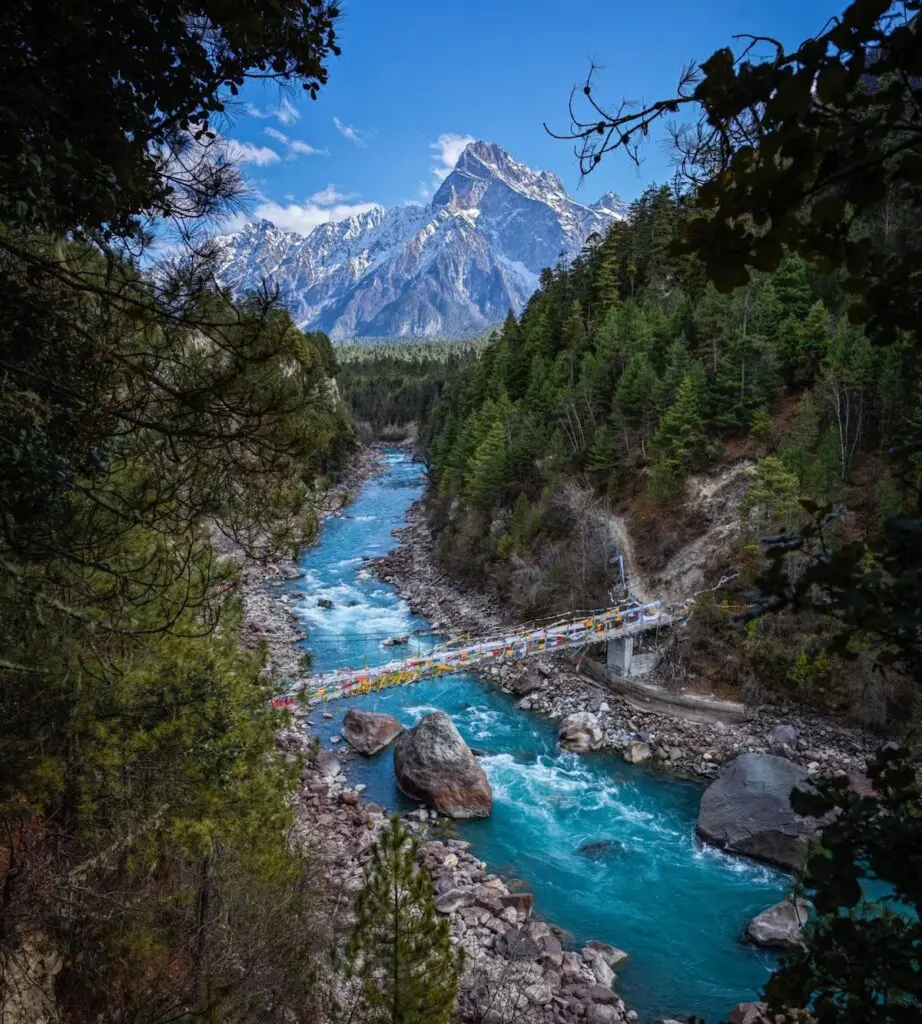
13. Ranwu to Bomi (2,750 m) – The Most Beautiful Drive on G318
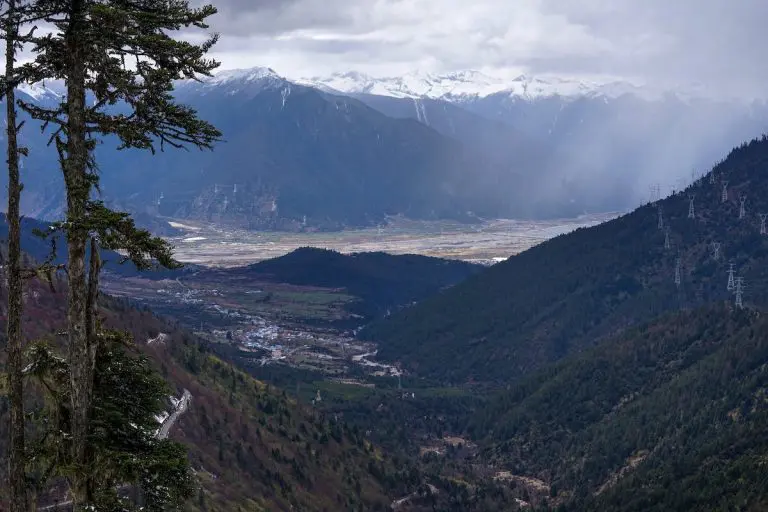
The drive from Ranwu to Bomi, roughly 130 km, is widely regarded as the most beautiful section of the entire Sichuan–Tibet Highway (G318). The road winds through the heart of the Parlung Tsangpo Valley, where every turn reveals a new masterpiece: turquoise rivers, snow-clad peaks, and dense cedar forests. As you descend from the high plateau toward Bomi, the scenery transforms from alpine glaciers to subtropical greenery, capturing the full range of Tibet’s natural beauty in just a few hours.
Things to Do & Tips:
- Midui Glacier (2,400 m): Take a short detour to visit one of the world’s lowest glaciers. Here, massive blue ice walls meet green forests and traditional Tibetan villages, offering excellent opportunities for photography.
- Photography the Parlung Tsangpo Valley: This scenic gorge offers deep valleys, forested cliffs, and distant snow peaks. The Xingkongxi Mid-Bridge is an excellent stop for panoramic views.
- Stop at Tongmai Bridge: Once considered one of the most challenging parts of the G318, it is now a safe and scenic viewpoint overlooking the Parlung River.
- Bomi Peach Blossom Valley (late March – early April): If traveling in early of Spring, consider adding an extra day to enjoy the Bomi Peach Blossom Valley, where thousands of blooming peach trees turn the valleys into a sea of pink beneath the snow-capped peaks.
- Best Time to Visit: Late March to October is the best season for clear roads and vibrant landscapes. Autumn (September to October) offers particularly clear skies and colorful forests, making it ideal for photography and sightseeing.
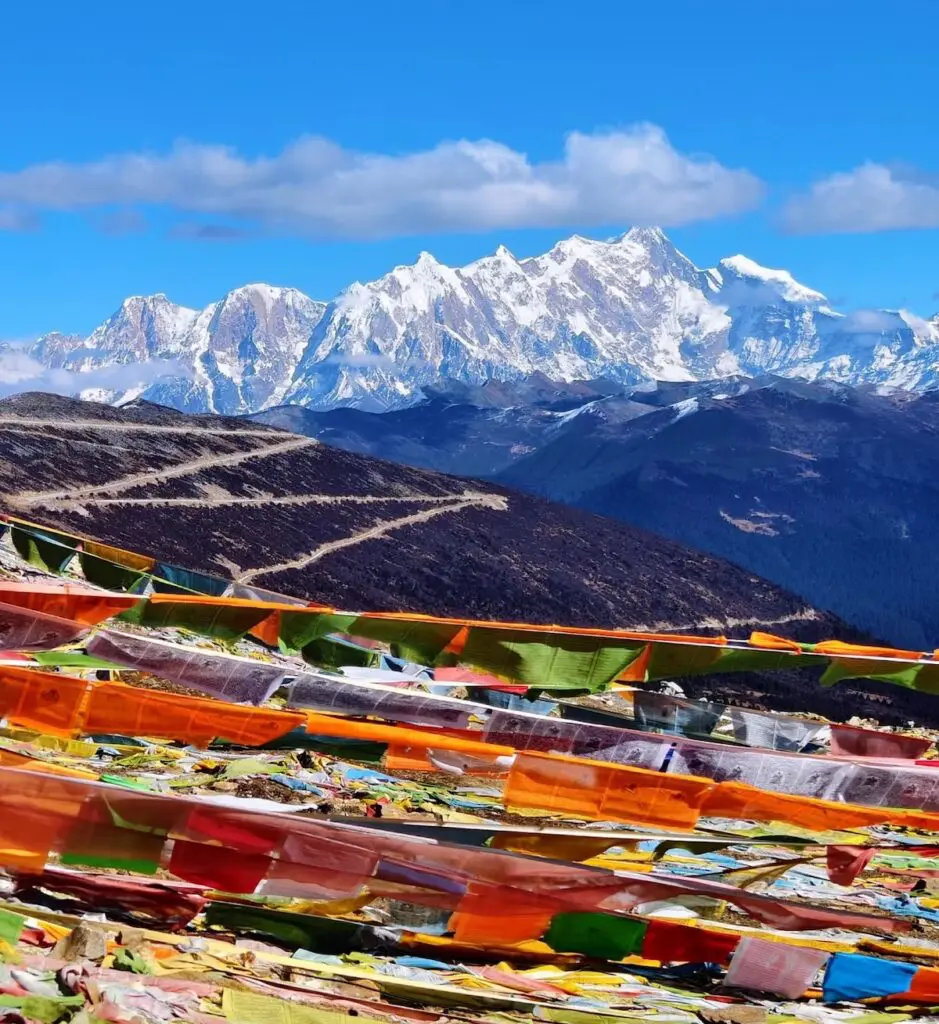
14. Lulang Forest Sea (3,700 m) – Alpine Meadows and Panoramic Views
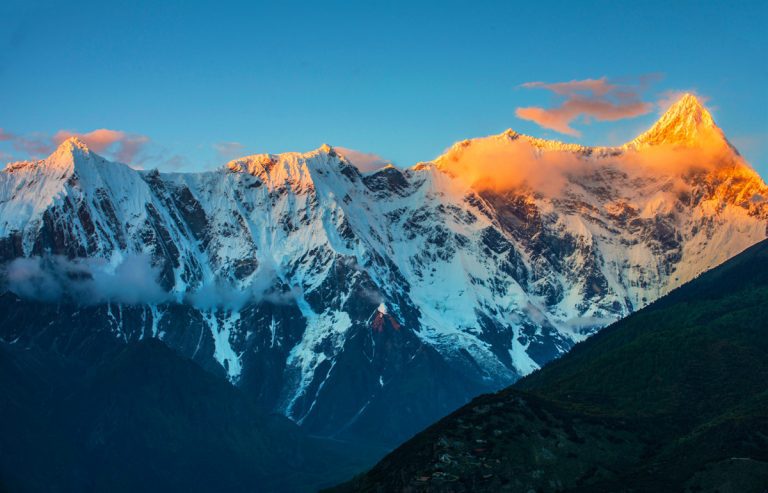
The drive from Bomi to Lulang is a gentle climb that follows the upper Niyang River. Forested mountains gradually open into wide, green meadows scattered with Tibetan villages, wooden houses, and grazing yaks. Known as the “Forest Sea,” Lulang is one of the most peaceful and picturesque valleys in eastern Tibet. On clear days, travelers can glimpse the majestic Namcha Barwa Peak (7,782 m) from Serkhyem La Pass, one of the most breathtaking viewpoints along the G318.
Things to Do & Tips:
- Optional stops at Lulang Town, nearby Tashigang Village, or stroll across the alpine meadows for closer views of local life and landscape.
- Stop to visit Lulang Forest Sea and enjoy the stunning mountain views.
- Try local specialty – a traditional stone-pot chicken stew with wild mushrooms.
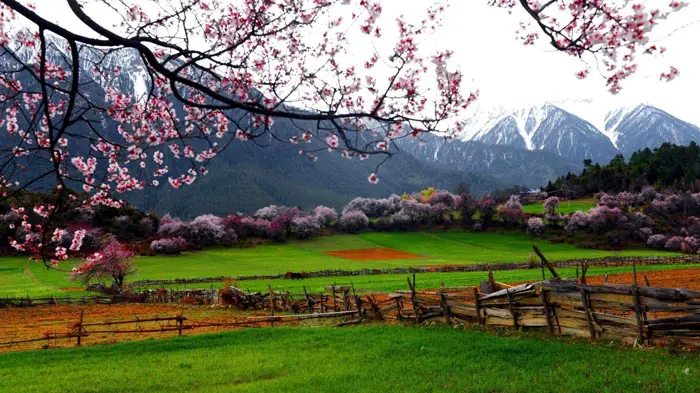
15. Nyingchi Bayi (2,900 m) – the Capital Town of Switzerland of Tibet
Descending from Lulang, the G318 follows the Niyang River valley into Bayi Town, the modern center of Nyingchi and one of the most comfortable stops on the way to Lhasa. The scenery softens here, alpine meadows give way to green river terraces, peach orchards, and cypress forests framed by distant snow peaks. With its lower altitude and mild climate, Bayi is an ideal place to rest and explore before continuing west.
Things to Do:
- Stop at the Serkhyem La Pass (Sejila pass) to see Namcha Barwa (7,782 m) if the skies are clear.
- Visit the Giant Cypress Forest (4 km from Bayi): See the 2,500-year-old Cypress King, surrounded by ancient trees and prayer flags.
- Nyingchi Peach Blossom Festival (late March – early April): Visit Gala Village to see the valleys painted pink beneath snow-capped ridges.
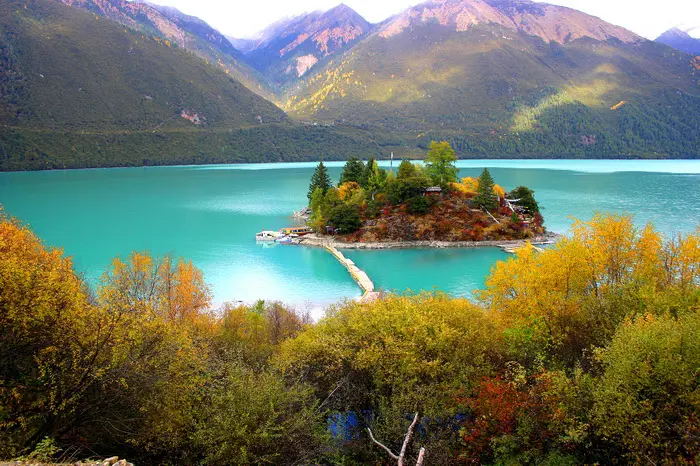
16. Nyingchi to Lhasa via Basum Tso – The Final Scenic Drive to Lhasa along G318
After leaving Nyingchi, the G318 Highway follows the gentle Niyang River Valley westward, winding through lush forests and small Tibetan villages before climbing steadily toward Mila Pass (5,013 m), the highest point on the southern route. As you cross the pass, the landscape transforms from alpine greenery to the golden, sun-drenched hills of the Lhasa River Valley, where fluttering prayer flags and vast open skies mark your approach to Lhasa, the holy capital of Tibet and the grand finale of your unforgettable Sichuan–Tibet Highway adventure.
Things to Do & Tips:
- Detour to Basum Tso (Draksum Tso): One of Tibet’s most sacred lakes and a revered pilgrimage site of the Nyingma school of Tibetan Buddhism. Cradled among snow-capped peaks and ancient pine forests, its turquoise waters mirror the mountains, creating a scene of profound beauty and calm.
- Stop at Mila Pass: Enjoy panoramic views and take photos at the highest point of the G318, where colorful prayer flags flutter in the wind against a Himalayan backdrop.
- Travel Option: As an alternative to the G318, you can take the new Lhasa–Nyingchi Expressway (G4218), which reduces the drive to around 5–6 hours.
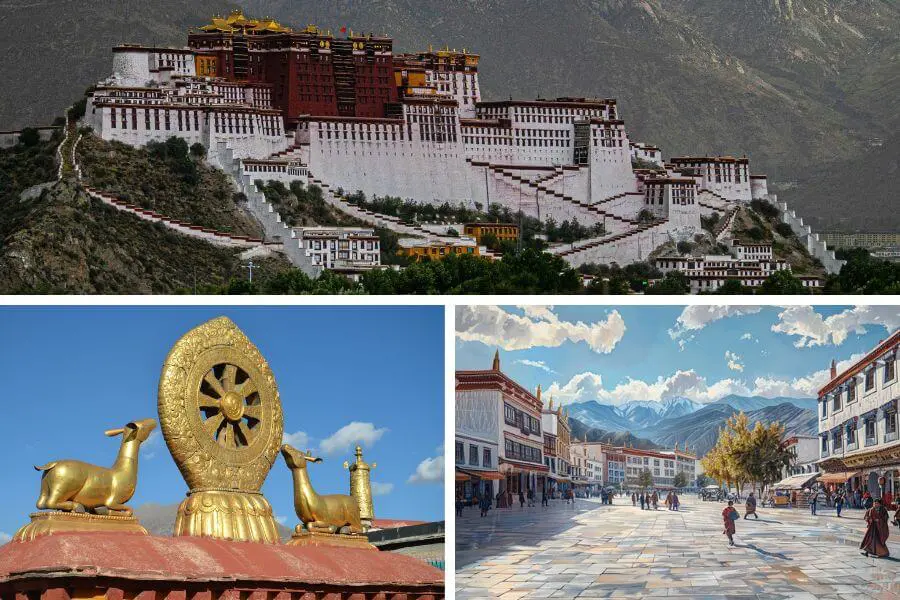
17. Lhasa (3,650 m) – The Holy City of Tibet
Your Sichuan–Tibet Highway journey concludes in Lhasa, the spiritual heart of Tibet and one of the world’s highest cities. Lhasa is not only the capital but also the living center of Tibetan Buddhism — where whitewashed old quarters, ancient monasteries, and pilgrims circling Barkhor Street bring centuries of devotion to life.
Plan to spend 2–3 days here to take in the city’s highlights and nearby attractions before continuing your travels into central or western Tibet, or flying or taking the train out to end this incredible overland adventure.
Things to Do:
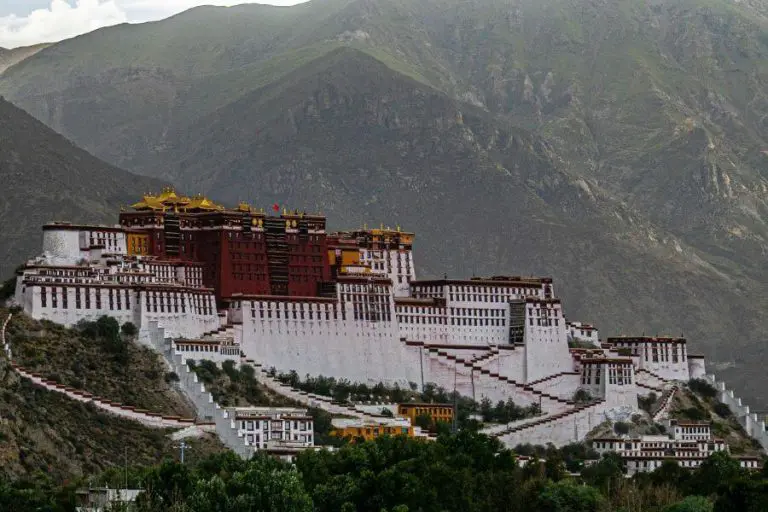
- Explore the Potala Palace, Jokhang Temple, and Barkhor Street: Discover the cultural and spiritual landmarks that define Lhasa.
- Visit Sera and Drepung Monasteries, important centers of Tibetan Buddhism.
- Excellent day trips from Lhasa: Ganden monastery, Drak Yerpa cave, Yamdrok tso Lake etc.
General Travel Tips for G318
- Best Season to Travel:
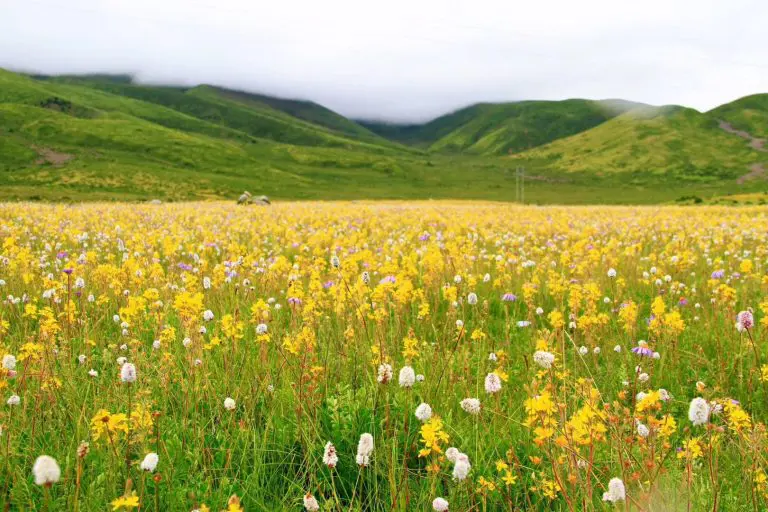
The best time to travel along the Sichuan–Tibet Highway Southern Route (G318) is from May to October, especially May–June and September–October, when the passes are clear and the weather is stable.
June to August brings lush meadows and blooming wildflowers but also summer rains, so allow 1–2 buffer days for flexibility on the schedule. September and October are the most rewarding months, with clear skies, colorful forests, and the best light for photography. - Altitude and Acclimatization:
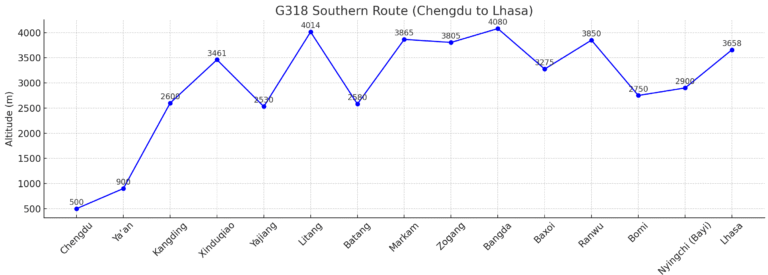
The G318 climbs from Chengdu’s lowland elevation of around 500 meters to over 5,000 meters at Mila Pass. Gradual acclimatization is crucial to avoid the high altitude sickness, plan overnight stays in mid-elevation towns like Kangding, Yajiang before continuing to higher places such as Litang. Drink plenty of water, avoid strenuous activity during the first few days, and rest whenever possible to reduce the risk of altitude sickness. - Travel Permits:
A Tibet Travel Permit (TTP) is required for all foreign travelers beyond Batang, as this marks entry into the Tibet Autonomous Region. The permit must be arranged in advance through a registered local travel agency. Independent travel is not permitted in Tibet, so plan your route and documents ahead of time to ensure a smooth journey.
- Packing Essentials:
Temperatures and conditions can change drastically along the G318, from humid Chengdu to the cold, thin air of the Tibetan Plateau. Bring layered clothing, including a down jacket, fleece, and windproof outer shell. Essentials also include sunscreen, UV sunglasses, lip balm, gloves, rain gear, and comfortable hiking shoes for monastery visits and short scenic walks. Carry snacks, extra batteries or power banks, and a refillable water bottle, as services can be sparse between towns.
- Road Conditions and Safety:
While the G318 is one of China’s most scenic highways, it’s also a challenging mountain route with sharp curves, steep climbs, and rapidly changing weather. Some sections can experience landslides or snowfall, especially in spring and mid summer. Always book your travel with reliable local travel agency like WindhorseTour, who assigns experienced Tibetan/ Sichuan driver familiar with local road conditions. Expect long driving days but frequent photo stops, every bend of the road reveals another breathtaking landscape.
Conclusion
The Sichuan–Tibet Highway Southern Route (G318) stands as one of the world’s most breathtaking overland journeys — a route that links Sichuan’s lush lowlands with Tibet’s vast high-altitude plateau. Stretching 2,142 kilometers from Chengdu to Lhasa, it crosses towering passes, turquoise lakes, and dramatic river gorges while weaving through the cultural heart of the Kham Tibet and vibrant towns like Kangding, Litang, Markham, and Bomi.
It’s a journey that seamlessly blends natural grandeur with deep cultural encounters — from visiting ancient monasteries and sacred mountains to sharing tea with nomad families on the grasslands or visiting a traditional home in Nyingchi’s Tibetan villages. For travelers seeking both adventure and spiritual connection, the G318 offers an unforgettable passage through the Himalayan wilderness and the living soul of Tibet.
Check out the detailed itinerary of our Sichuan-Tibet overland tour via Southern Route (G318) and contact us for the a free quote.
For a deeper cultural journey through eastern Tibet, explore our Kham Tibet Travel Guide.
Related tours
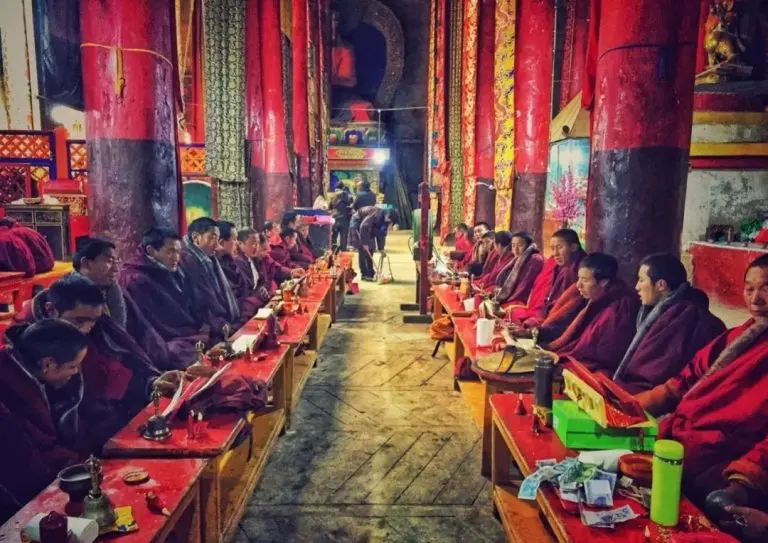
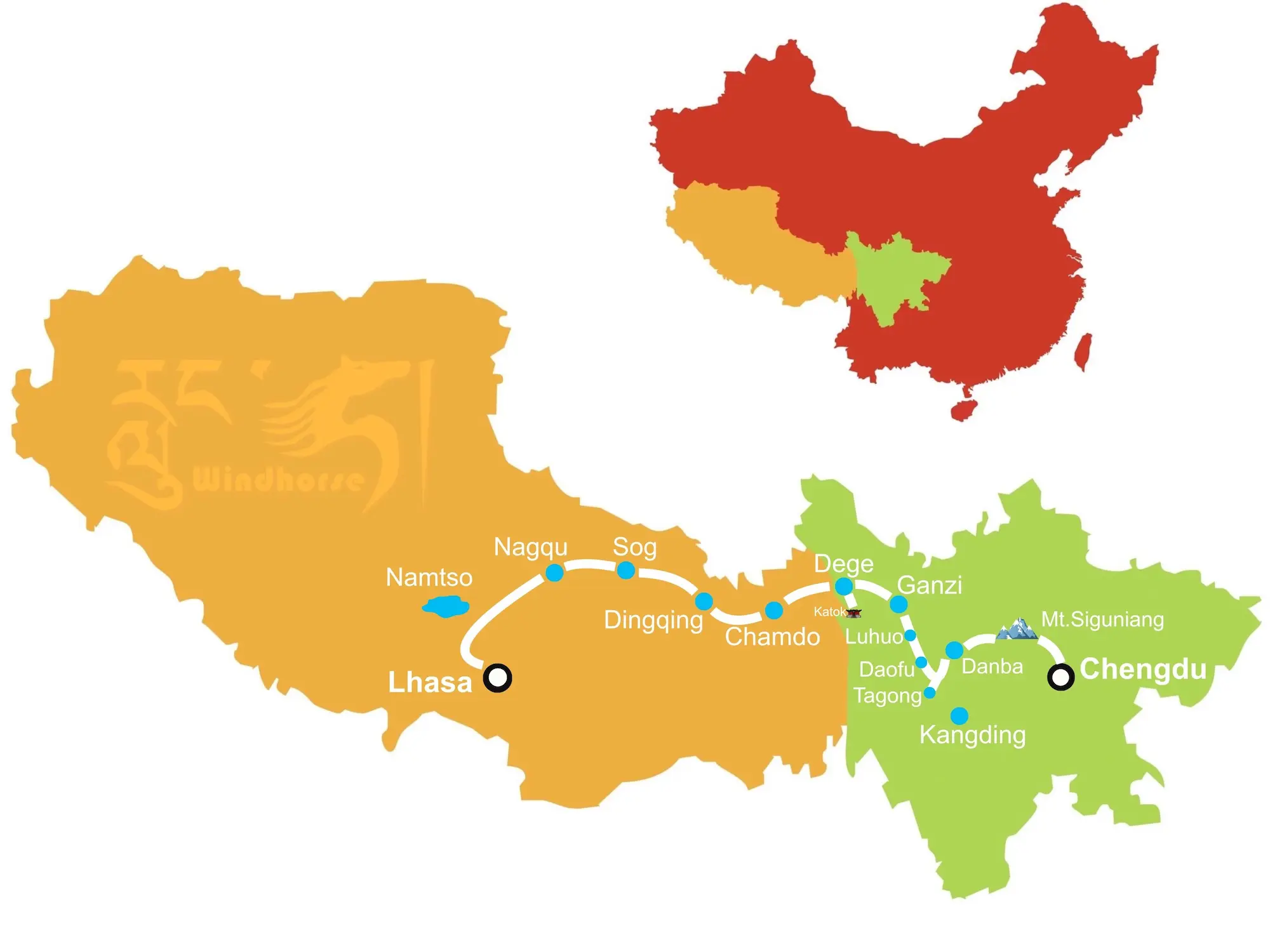
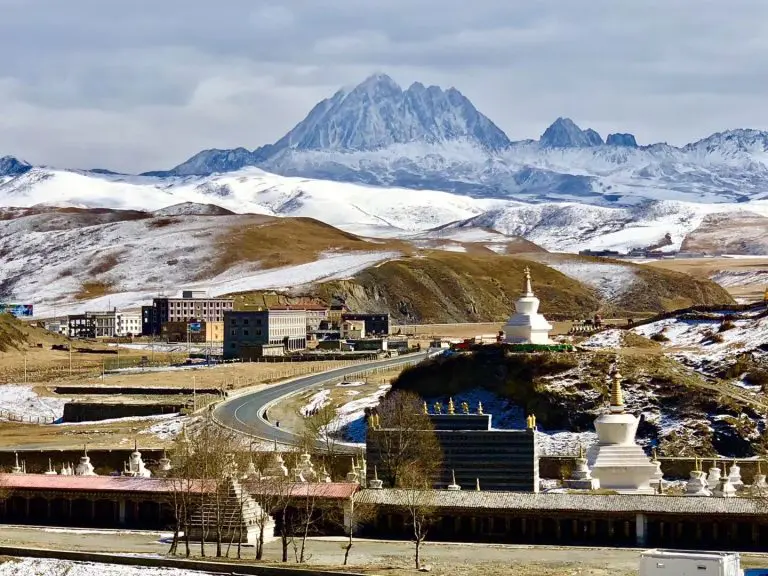
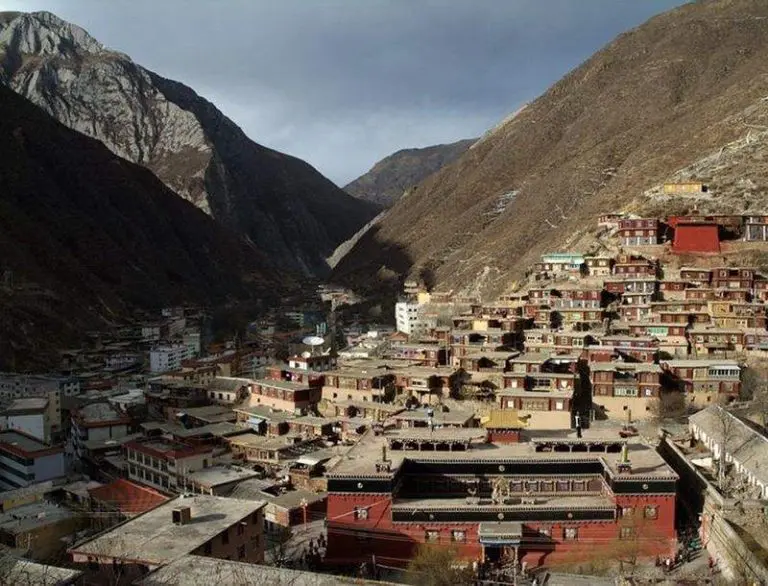
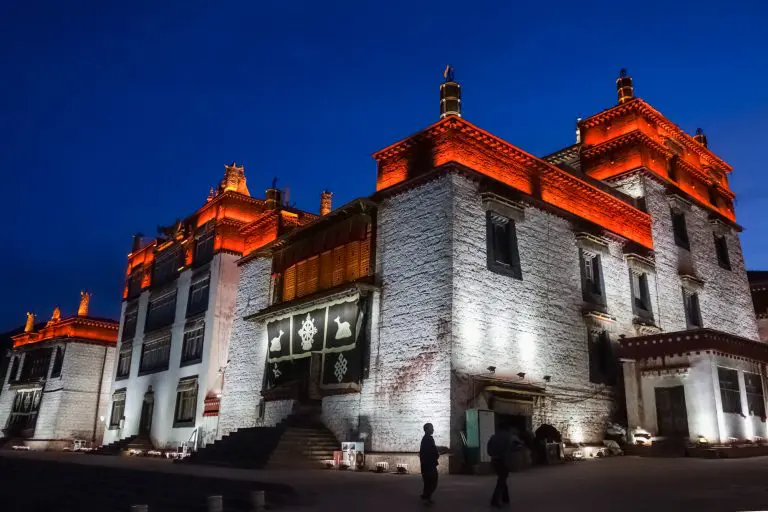
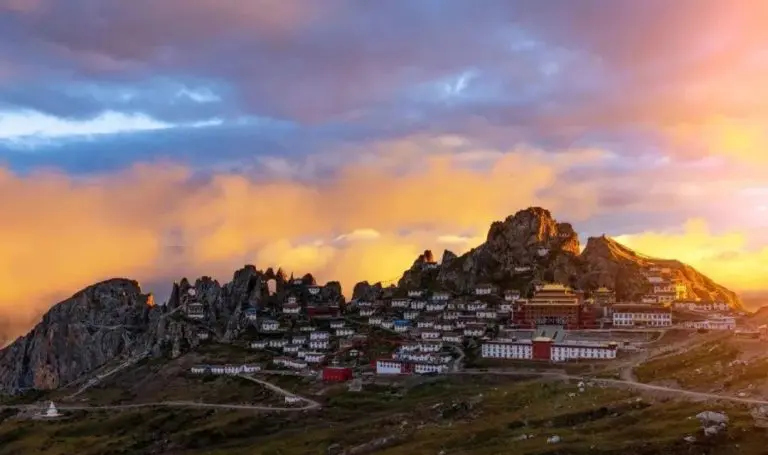
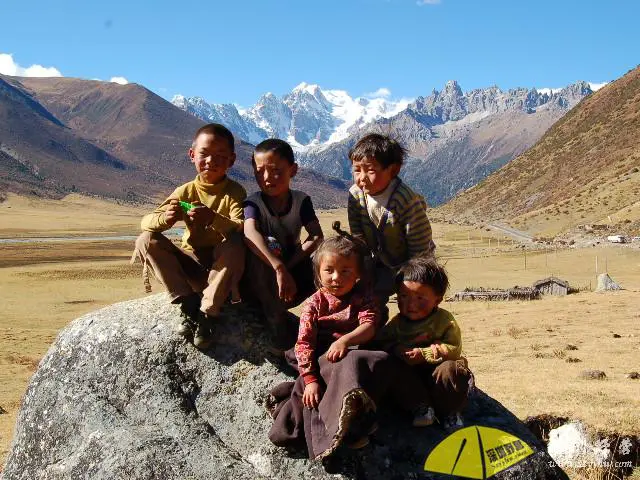
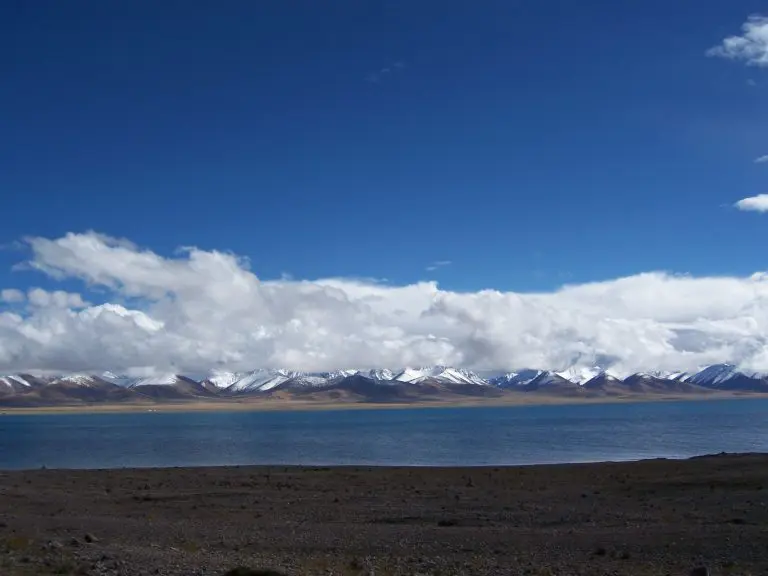
Discover the overland journey along the legendary Sichuan–Tibet Highway Northern Route (G317) from Chengdu to Lhasa. Travel through alpine valleys, ancient monasteries, and Tibetan villages, experiencing the stunning landscapes and rich culture of Kham and northern Tibet.
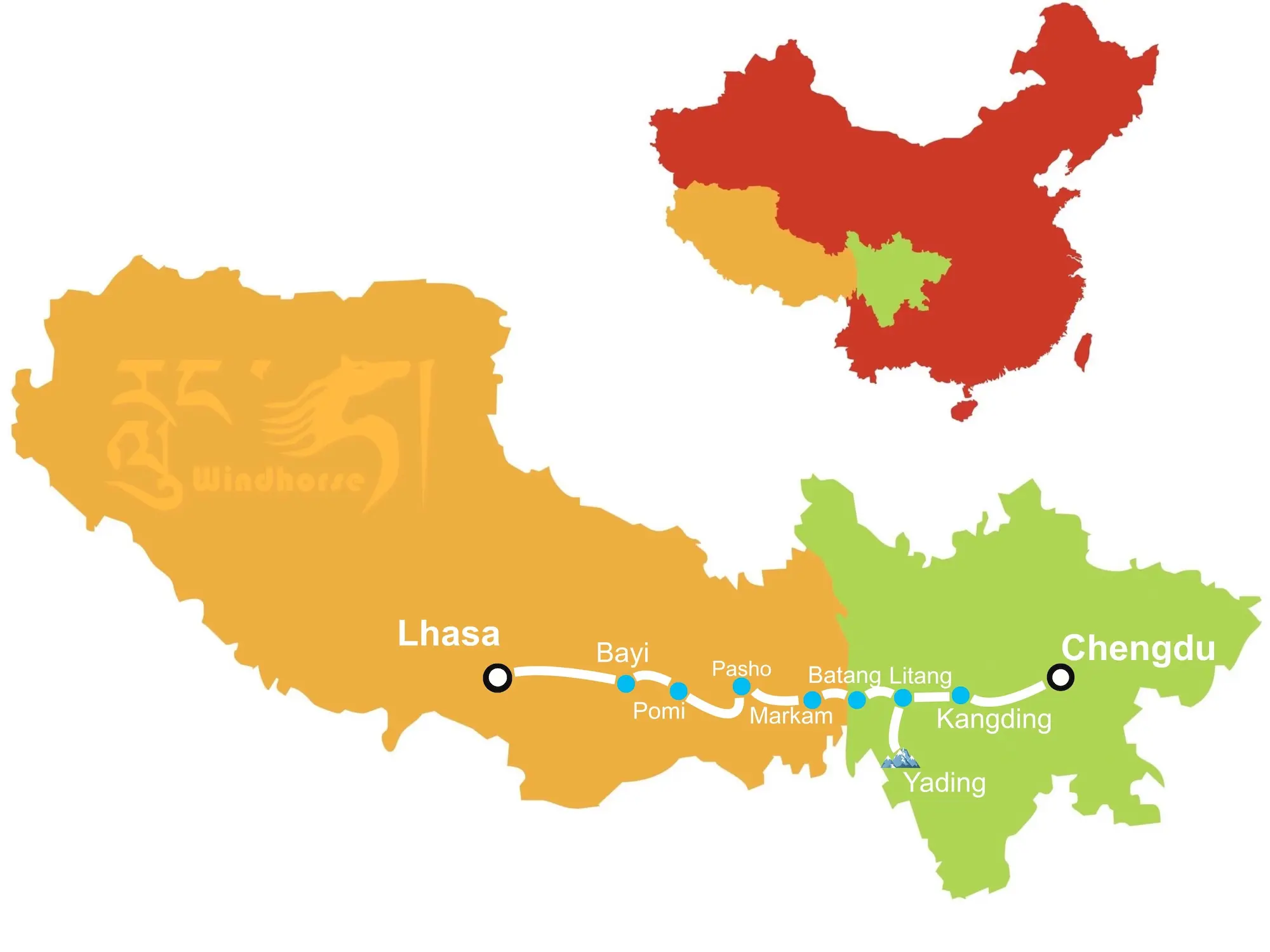
Take a Chengdu to Lhasa overland tour via Daocheng Yading along the Sichuan–Tibet Highway Southern Route (G318). Travel through Tagong Grasslands, Litang, Yading Nature Reserve, Ranwu Lake, Midui Glacier, Lulang Forest, and Draksum-tso before reaching Lhasa.
Set out on an unforgettable 11-day Chengdu to Lhasa overland tour along the Sichuan–Tibet Highway (G318). Cross high passes, vast grasslands, glaciers, and sacred lakes while experiencing yourself in Kham culture and the dramatic landscapes of eastern Tibet.