
10 Taoist Mountains in China to Recharge Your Spirit

As we always say, in China you can find everything that you ever dream of. From busy crowded cities, to calm peaceful nature with breathtaking sceneries, to high peaks and mesmerizing mountains to amazing ancient towns…China has it all in one.
Today, I’m taking you on a journey to 10 breathtaking Taoist mountains in China that are must-visit spots, even if you’re not a follower of Taoism.
First, a little introduction about Taoism.
Taoism or (also spelled Daoism) is an ancient Chinese philosophy and spiritual tradition that encourages simplicity, balance, and inner peace. It teaches that life works best when we stop forcing things and start flowing with what is. The famous Taoist idea of “wu wei“ means “effortless action” or doing without overdoing. Taoism also embraces nature very deeply. That’s why Taoist sages often retreated into the mountains, seeking wisdom not in words, but in stillness.
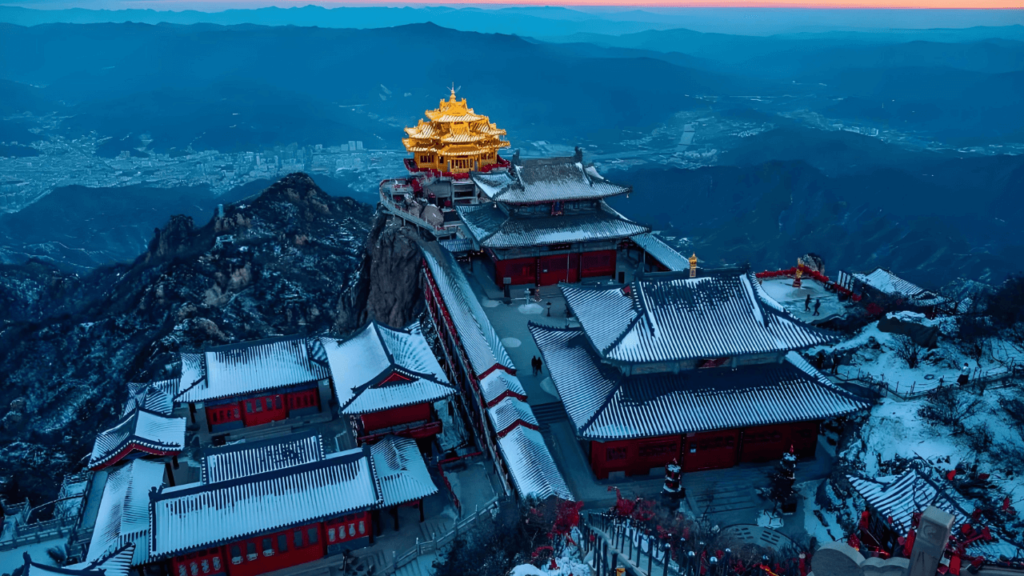
1. Mount Qiyun (齐云山)
Location
Located in Xiuning County, near Huangshan City, in Anhui Province, China. It’s approximately 30 kilometers west of Huangshan City.
How to get there
From Huangshan take a taxi or bus.
At the base, you have options: take a leisurely hike up the stone-paved paths or take the cable car for a quick and scenic lift right to the top.
Best time to visit
Spring (April–June) and Autumn (September–November).
Accessibility
Highly accessible.
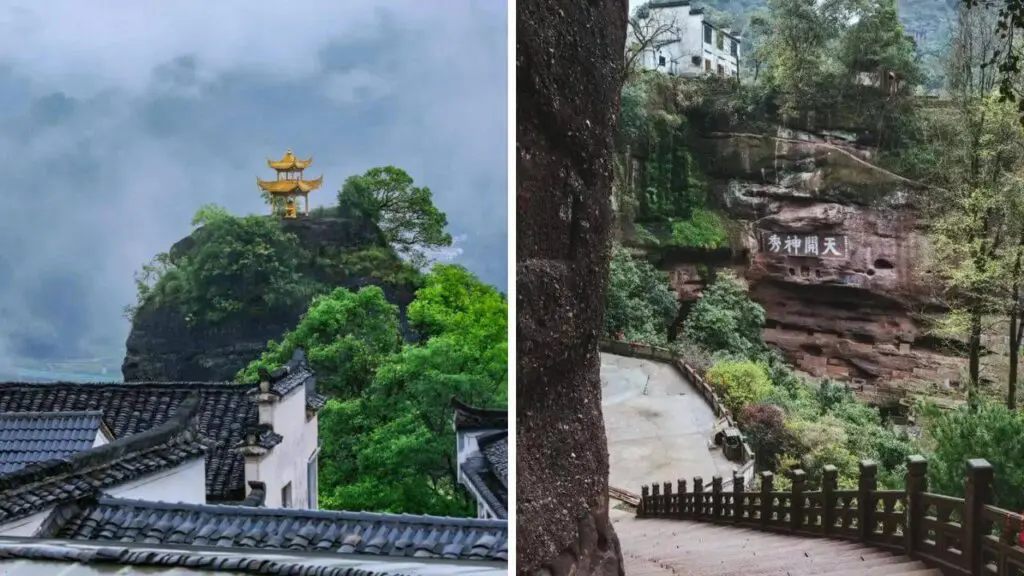
Mount Qiyun is one of those hidden gems of Taoist mountains in China. It is not crowded as much as you its popular neighbor Huangshan, However, Mount Qiyun feels refreshingly peaceful and laid-back, perfect if you prefer soaking up nature and spirituality without fighting huge crowds. One you are there you will feel the calmness and harmony of the nature.
Mount Qiyun literally means “as high as the clouds,” and in Taoism, it’s revered as a sacred spot for spiritual reflection and enlightenment. It’s traditionally been an important retreat for Taoist priests and scholars, a place where people come to meditate, find inner peace, and reconnect with nature.
What to expect on Mount Qiyun
As I said, first you will feel the serenity of calmness. Also, you can explore the many paths where you can find old Taoist temples, charming pavilions, and ancient inscriptions etched into cliffs that date back hundreds of years. The highlight for many visitors is Yuehua Street. It is a quaint village perched right on the mountain with traditional Anhui-style buildings, cute cafés, and small guesthouses.
Also, don’t miss the breathtaking views from the Moon-watching Pavilion, especially around sunset. Trust me, the golden hues lighting up the valleys are something you’ll remember for a lifetime.
2. Mount Kongtong (崆峒山)
Location
Mount Kongtong is located near Pingliang City in Gansu Province.
How to get there
Mount Kongtong is about 12 km from downtown Pingliang City. You can catch a taxi or local bus from the city center. Once you’re at the mountain, there are cable cars or if you can hike up!
Best time to visit
Spring (April–June) and Autumn (September–October).
Accessibility
Moderately accessible.
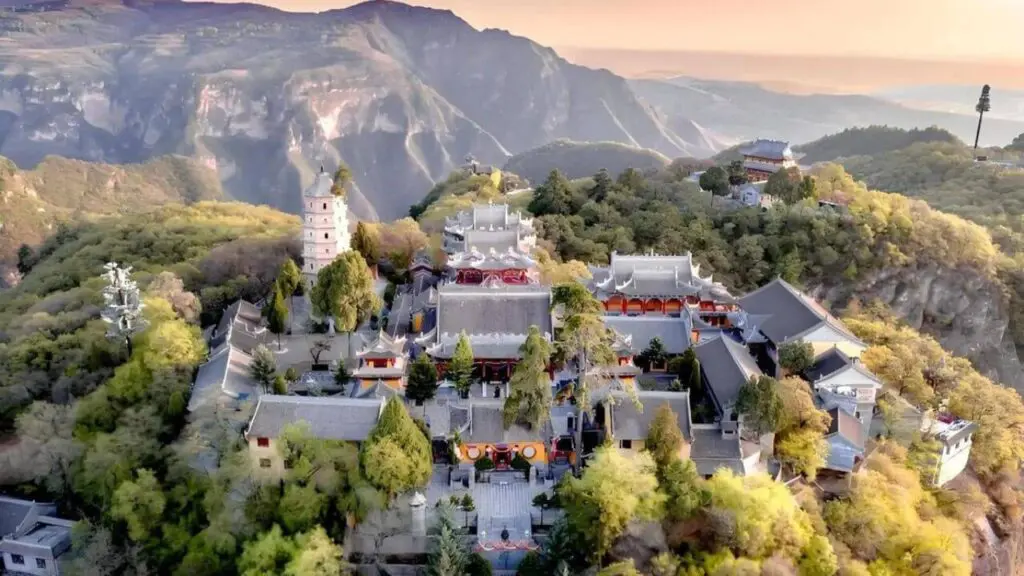
Why is Mount Kongtong special to Taoism?
Kongtong is considered to be one of the birthplaces of Taoism. Legend says that the Yellow Emperor once visited here to seek wisdom from a sage named Guangchengzi. Because of this, Kongtong has long been a sacred Taoist pilgrimage site, known as a mountain of enlightenment and spiritual teaching. Visiting this mountain, you will genuinely feel you’re walking paths that ancient scholars and seekers walked thousands of years ago.
When you explore Mount Kongtong, you’ll need to expect gorgeous scenery mixed with fascinating historical sites. There’s a whole network of beautiful paths and stairways connecting temples, pagodas, and caves. Highlights include the stunning Guangcheng Temple. It’s a quiet, peaceful place perfect for reflecting, and Yuxu Palace, an impressive complex with breathtaking views of the valleys below.
Make sure to catch the sunrise or sunset at one of the peak viewpoints. Trust me, it’s worth getting up early or staying late, the colors washing over the mountain sides are simply magical.
3. Mount Qingcheng (青城山)
Location
Near Dujiangyan, about 68 kilometers northwest of Chengdu in Sichuan Province
How to get there:
From Chengdu- a high-speed train at Chengdu Railway Station to Qingchengshan Station (about 30-40 minutes). From the station, it’s a quick bus or taxi ride to the mountain entrance.
Best time to visit:
spring (March to June) and autumn (September to November).
Accessibility:
Highly accessible.
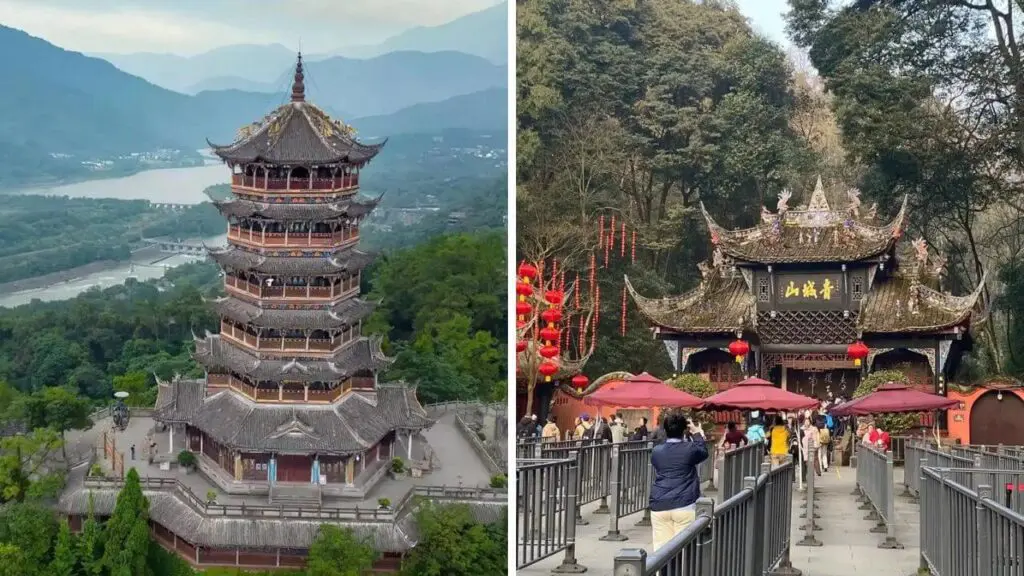
Mount Qingcheng is one of the four sacred Taoist Mountains in China. It is located in Sichuan Province, it’s a UNESCO World Heritage Site with well-maintained paths, cable cars, and nearby accommodations. It’s popular among both domestic and international tourists. Mount Qingcheng is the kind of place that instantly makes you slow down, take a deep breath, and smile. This UNESCO World Heritage Site feels like stepping straight into an ancient, serene Chinese painting.
What will you see here?
The lush greenery, misty trails, and ancient temples make Mount Qingcheng a truly magical place. The mountain has two sides: the front mountain is rich with cultural treasures, and the back mountain offers more natural landscapes, perfect for hikers who love peaceful walks.
Definitely don’t miss Shangqing Palace, because it’s like stepping into an ancient movie scene, surrounded by tranquil gardens and historical architecture. Tianshi Cave is another highlight; it’s full of ancient carvings and Taoist relics that leave you feeling a sense of wonder. And if your feet get tired, hop onto the cable car—believe me, the view alone makes it totally worth it.
4. Mount Wudang (武当山)
Location: Nestled in Shiyan, Hubei Province
How to get there: From Wuhan or Xi’an, you can take a convenient high-speed train directly to Wudangshan Station. From there, grab a taxi or a quick local bus ride straight to the scenic area’s entrance.
Best time to visit: The perfect times to check out Mount Wudang are spring (April to June) and autumn (September to November).
Accessibility: Highly accessible.
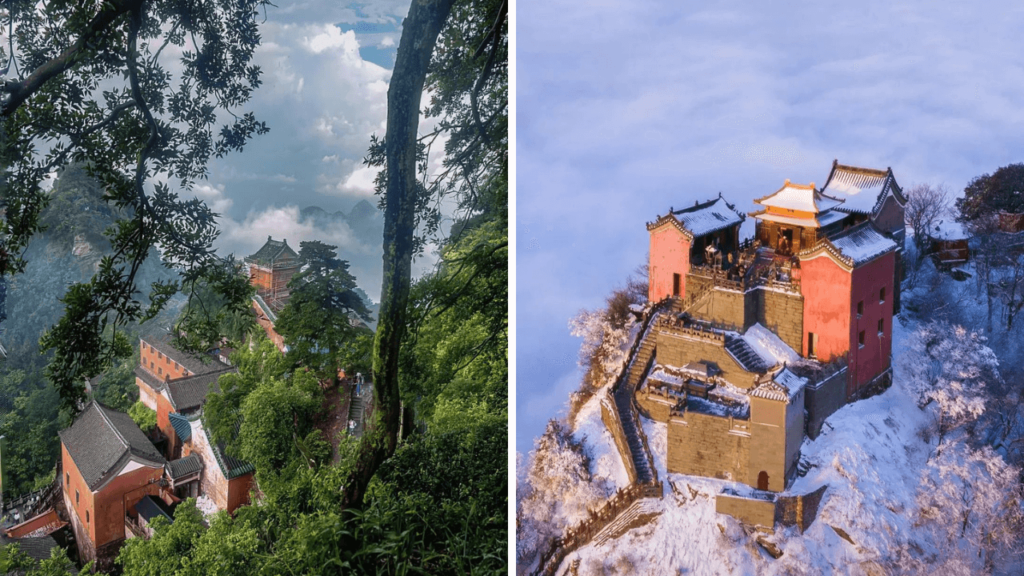
Mount Wudang (武当山) is honestly one of the coolest places I’ve ever explored in China. This mountain isn’t just famous for its breathtaking scenery—it’s also legendary as the birthplace of Tai Chi and a cornerstone of Taoist spirituality.
What will you see here?
Stepping onto Mount Wudang feels like traveling back in time. The mountain is dotted with ancient temples, monasteries, and palaces, all perfectly blending with the natural surroundings. The Golden Hall (Jinding) at the mountain’s summit is an absolute must-see—it’s literally covered in shimmering gold, and the panoramic views from up there are epic.
You also can’t skip the Purple Cloud Temple—walking around its quiet courtyards and hearing the chants from Taoist monks is genuinely soothing. Oh, and if you’re curious about martial arts, you’ll often spot Tai Chi practitioners gracefully moving through their routines at sunrise. Trust me, it’s magical!
5. Mount Longhu (龙虎山)
Location
Yingtan City, Jiangxi Province
How to get there
High-speed train from major cities like Nanchang or Shanghai to Yingtan North Railway Station. Then a quick 20-minute taxi or shuttle bus straight to Mount Longhu scenic area.
Best time to visit
Spring (April–June) and autumn (September–November)
Accessibility
Highly accessible.
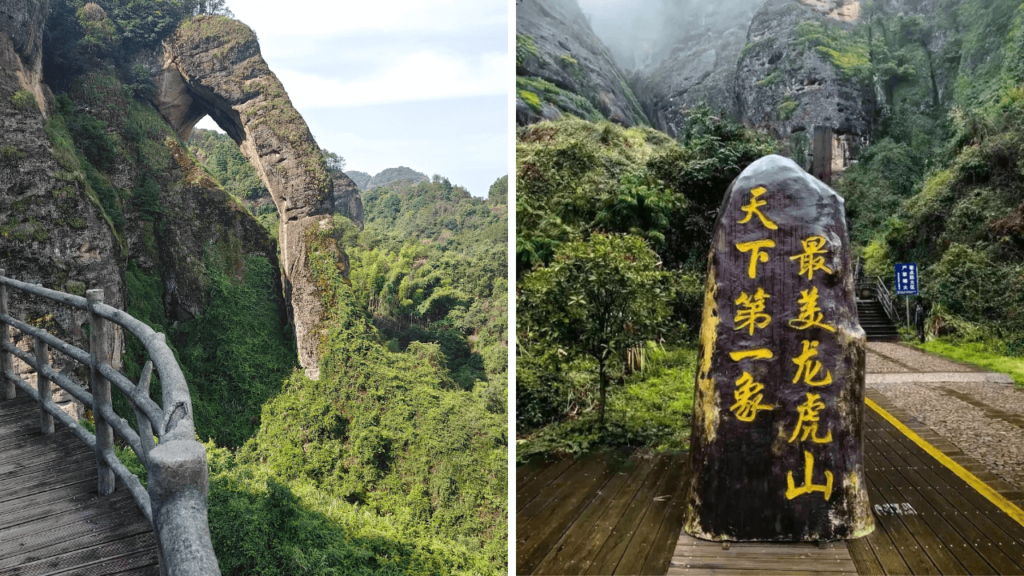
Mount Longhu is one of those fantastic spots that somehow feels both relaxing and exciting at the same time. It is located in Yingtan City, Jiangxi Province, and it’s a Taoist mountain with stunning landscapes and some pretty awesome cultural experiences.
What will you see here?
Exploring Mount Longhu feels like an adventure straight out of a movie. You’ll see temples tucked into cliffs, amazing rock formations, and even mysterious ancient hanging coffins perched high up on the mountainside—yep, coffins! Don’t miss the Heavenly Master’s Mansion (Tianshi Mansion), a historical Taoist site where you can learn tons about traditional Chinese culture. If you’re into photography, Elephant Trunk Hill is a must-see spot—perfect for those Insta-worthy shots.
Taking a bamboo raft down the Luxi River is hands down my favorite way to soak up the views. Drifting along, surrounded by lush greenery and towering cliffs, is incredibly peaceful and totally unforgettable.
6. Mount Yunmeng (云梦山)
Location
Jiaozuo City, Henan Province
How to get there
Take a bus or train from Zhengzhou to Jiaozuo City. From downtown Jiaozuo, hop into a taxi or local shuttle bus—it’s about an hour’s drive directly to Mount Yunmeng scenic area.
Best time to visit
Spring (April–June) and autumn (September–November)
Accessibility
Less accessible.
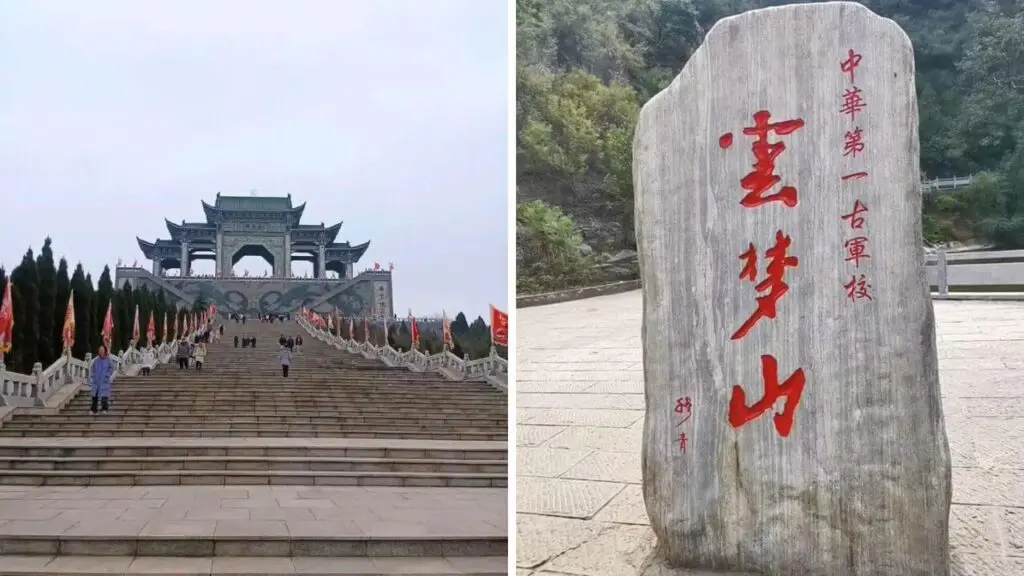
Mount Yunmeng is one of those special, quiet getaways where you feel instantly refreshed and far away from the daily grind. Tucked away in Jiaozuo City, Henan Province, it’s an awesome spot if you’re craving some nature, tranquility, and breathtaking scenery.
What will tourists see there?
Exploring Mount Yunmeng is like stepping into a dream—think peaceful forest paths, crystal-clear streams, and hidden waterfalls that seem straight out of a fairy tale. Definitely take your camera for the hike because you’ll want to capture views from the scenic lookouts, especially around Yunmeng Lake. This lake is perfect for relaxing, picnicking, or just soaking in the peaceful mountain atmosphere.
Keep an eye out for ancient temples and meditation spots hidden along the trails—great places to sit back, relax, and just take in the calm vibes.
7. Mount Zhongnan (终南山)
Location
South of Xi’an, Shaanxi Province
How to get there
From Xi’an city center, take a direct bus or taxi toward Mount Zhongnan scenic area (approximately 1-hour drive). Private cars or organized tours from Xi’an are also convenient ways to reach the mountain.
Best time to visit
Spring (April–June) for blooming nature, autumn (September–November) for vibrant colors and crisp air.
Accessibility
Less accessible.
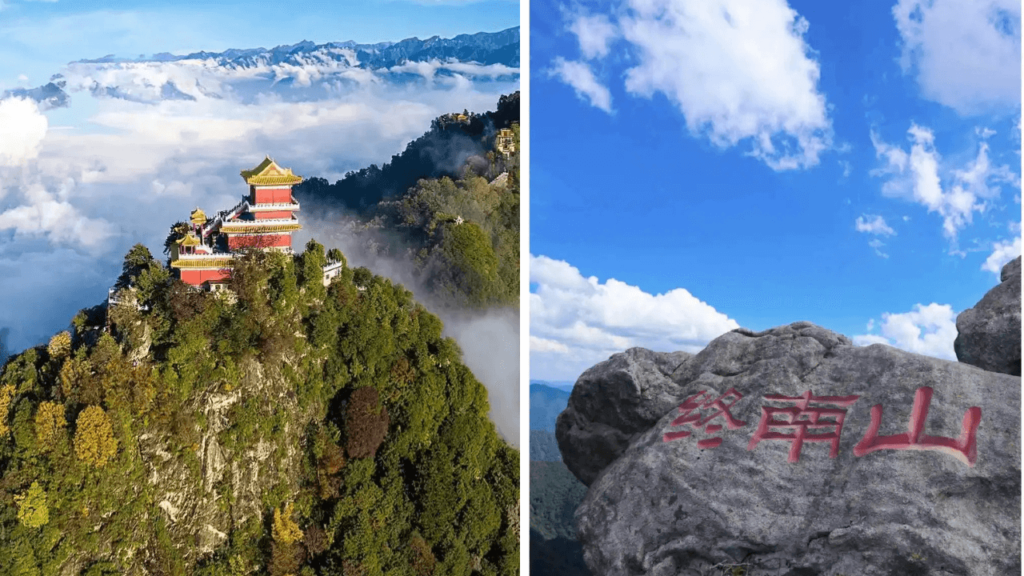
Mount Zhongnan is one of those mystical places where nature, spirituality, and history perfectly blend. It’s located just south of Xi’an in Shaanxi Province, and if you love quiet adventures with a dose of ancient culture, Zhongnan is absolutely the place to be.
What will tourists see there?
Visiting Mount Zhongnan feels like discovering a hidden chapter of Chinese history and Taoist spirituality. You’ll wander through dense forests, peaceful paths, and find small temples and hermitages hidden in the mountainside—where Taoist hermits still live and meditate today.
Check out Louguan Terrace, famous as the birthplace of Tao Te Ching’s author Laozi, and the stunning scenery at Cuihua Mountain, part of the Zhongnan range. Don’t forget your hiking shoes, as the trails offer some incredible panoramic views, especially at sunrise or sunset. The quiet, spiritual atmosphere here really makes you slow down and appreciate everything around you.
8. Mount Laoshan (崂山)
Location: Near Qingdao, Shandong Province
How to get there: From Qingdao city center, take a local bus or taxi directly to Laoshan Scenic Area (around 30-40 minutes). There are also organized tours available from Qingdao if you prefer a hassle-free experience.
Best time to visit: Late spring (April–June) and early autumn (September–October) for mild weather and clear views.
Accessibility: Highly accessible.
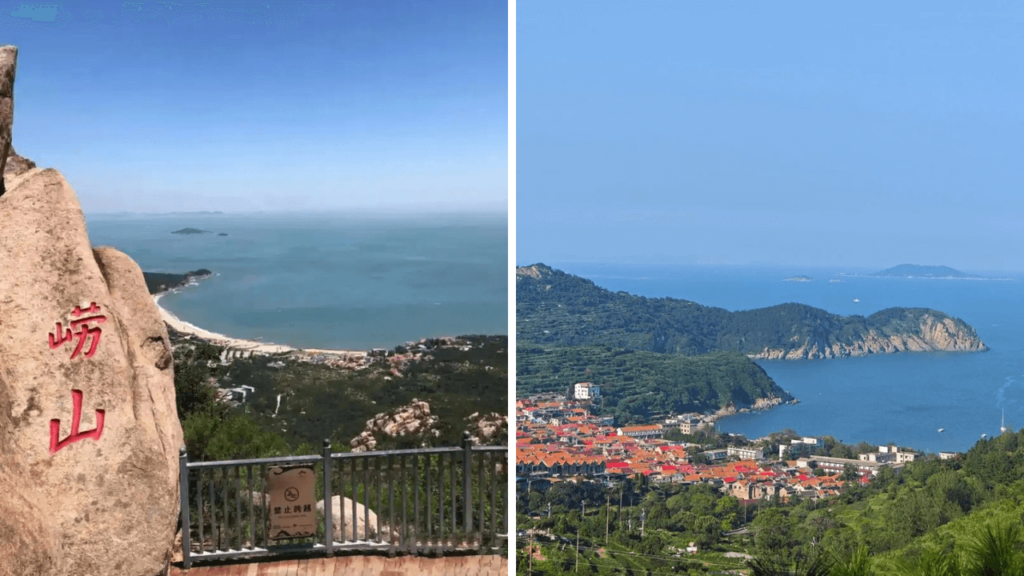
Located in Shandong Province, it’s a coastal mountain with good infrastructure, including cable cars, hiking trails, and nearby accommodations. It’s a popular destination for both spiritual and nature tourism. It is one of China’s most important Taoist mountains, historically regarded as a spiritual center in northern China. Home to ancient temples like Taiqing Palace, reflecting deep-rooted Taoist philosophy and culture.
What will you see there?
Mount Laoshan offers stunning views of the sea meeting lush green mountains, creating landscapes you’ll fall in love with instantly. It’s famous for its Taoist temples, especially Taiqing Palace, which has that amazing ancient vibe, surrounded by centuries-old trees and peaceful gardens.
Don’t miss the chance to hike along Beijiushui Scenic Area—full of clear streams, waterfalls, and refreshing pools where you can dip your feet. Also, definitely explore Dragon Pool Waterfall, a perfect spot to relax and snap some photos. Oh, and if you’re a tea lover, tasting the local Laoshan green tea right where it’s grown is a must-do!
9. Mount Hua (华山)
Location
Huayin City, Shaanxi Province
How to get there
From Xi’an city center, catch a high-speed train or bus directly to Huashan North Railway Station (about 30 minutes by train). From there, a short taxi or shuttle bus takes you right to Mount Hua Scenic Area.
Best time to visit
Late spring (April–June) and early autumn (September–October)
Accessibility
Highly accessible.
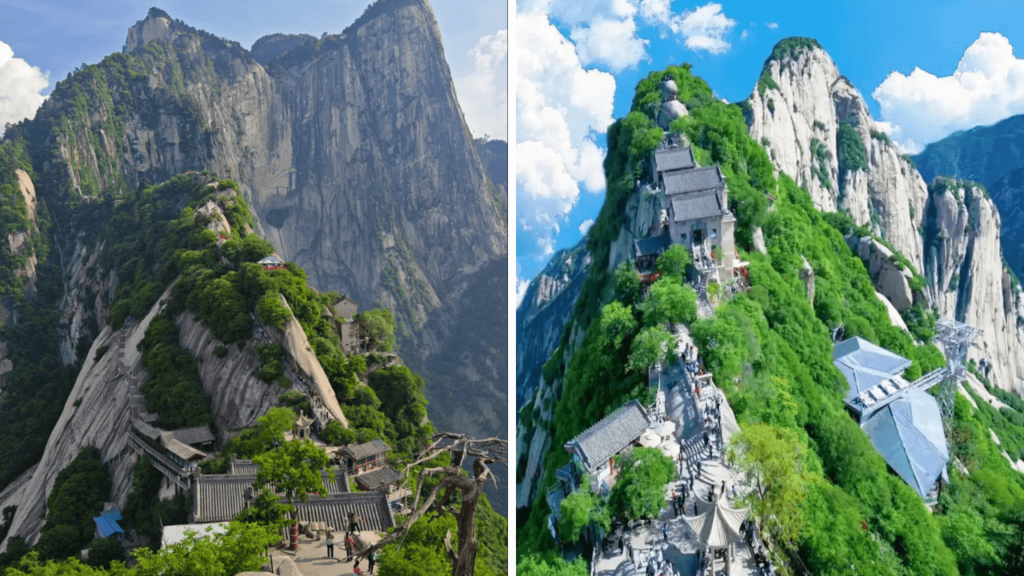
Located in Shaanxi Province, Mount Hua is known for its dramatic cliffs, scenic trails, cable cars, and comfortable accommodations nearby. It’s extremely popular among adventurers, photographers, and spiritual tourists.
Mount Hua is hands-down one of the most thrilling and visually stunning mountains I’ve visited in China. Close to the historic city of Xi’an, it combines breathtaking landscapes with deep historical and spiritual significance, perfect for adventure-seekers and history buffs alike.
What will you see there?
Mount Hua is famous for its dramatic peaks, steep trails, and epic views. Don’t miss East Peak (Sunrise Peak)—watching sunrise here is seriously unforgettable. The South Peak, the highest point, offers jaw-dropping views that make the challenging climb totally worth it.
If you’re feeling brave, try the Changkong Plank Road, an exhilarating cliffside walkway that provides an adrenaline rush you’ll be talking about for ages. The Jade Spring Temple, near the base, is also a must-see, offering a peaceful vibe and great historical context before your climb.
10. Mount Sanqing (三清山)
Location
Near Shangrao City, Jiangxi Province
How to get there
Take a high-speed train to Shangrao Railway Station, then hop on a shuttle bus or taxi directly to Mount Sanqing Scenic Area (around 1 hour).
Best time to visit
Late spring (April–June) and autumn (September–November)
Accessibility
Highly accessible
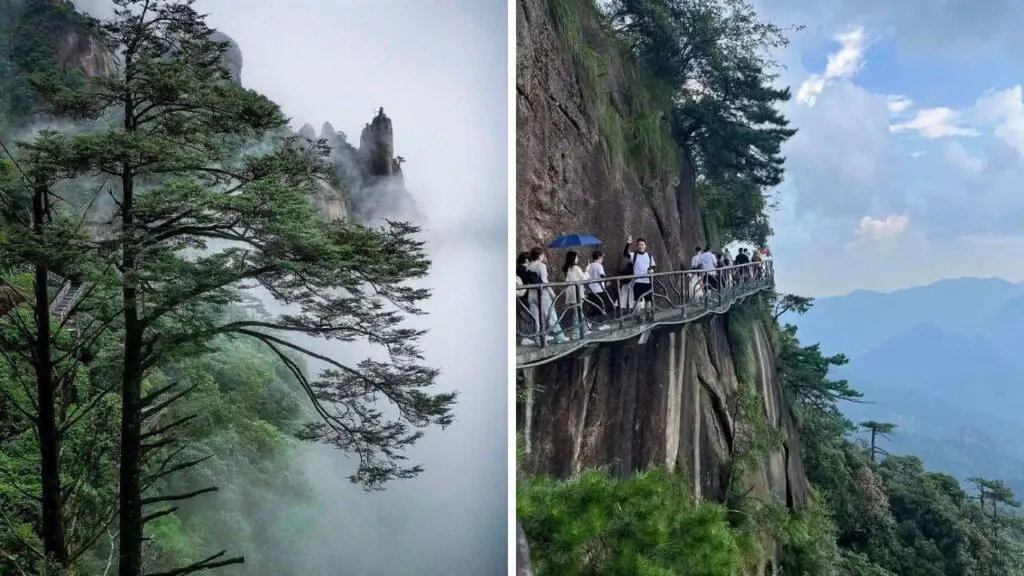
Mount Sanqing is one of the beautiful Taoist mountains in China. It is located in Jiangxi Province, and it is famous for its unique granite formations, excellent hiking trails, convenient cable cars, and comfortable nearby accommodations. It’s a favorite spot for both nature lovers and spiritual travelers.
Mount Sanqing genuinely feels like stepping into another world—it’s easily one of China’s most mesmerizing natural wonders. With awe-inspiring granite peaks and a deeply spiritual atmosphere, it’s perfect if you’re looking to escape the city and reconnect with nature.
What will you see there?
You won’t want to miss Nanqing Garden, famous for its incredible rock formations that look almost magical.
The Sanqing Palace area, nestled among lush forests, gives off a serene and mystical vibe—ideal for leisurely exploration. The West Coast Scenic Area is another highlight, offering stunning cliffside walks with panoramic mountain views you simply have to capture with your camera.
Final Words
From ancient temples nestled in misty forests to jaw-dropping cliffside views that leave you speechless, these Taoist mountains in China offer more than just great hiking or places where you can take a stunning photo, they offer a chance to pause. To breathe. To reflect.
Each mountain carries the quiet wisdom of centuries past, where sages once walked and seekers still come searching for balance, clarity, and connection. Whether you’re deep into spiritual practice or just craving a break from the noise of everyday life, these sacred places welcome you with open arms.
As we always say in China, you’ll find everything you ever dreamed of. From buzzing cities to peaceful lakes, towering peaks to ancient villages, there’s magic around every corner. And in the heart of these Taoist mountains, you might just find a piece of yourself you didn’t know was missing.
So pack your boots, open your mind, and let the journey begin. The mountains are waiting.
Related tours
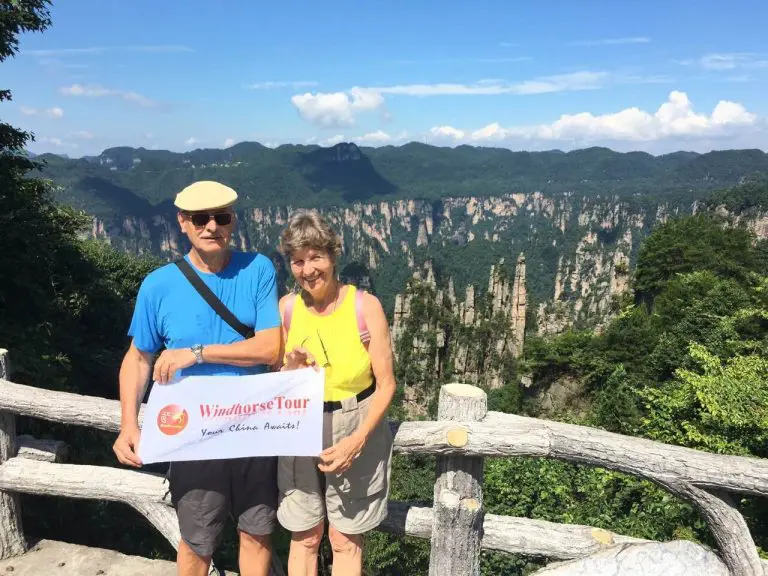
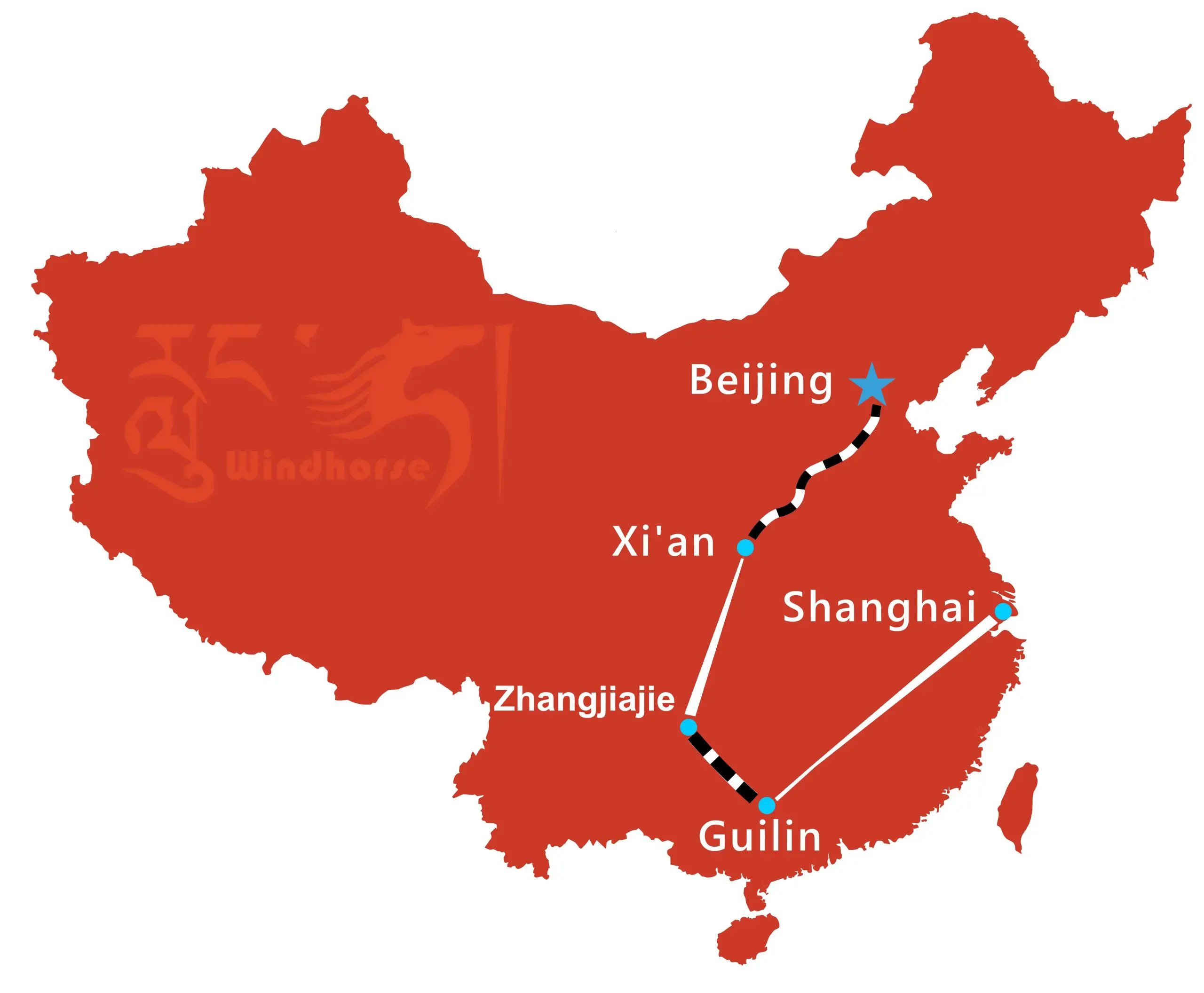
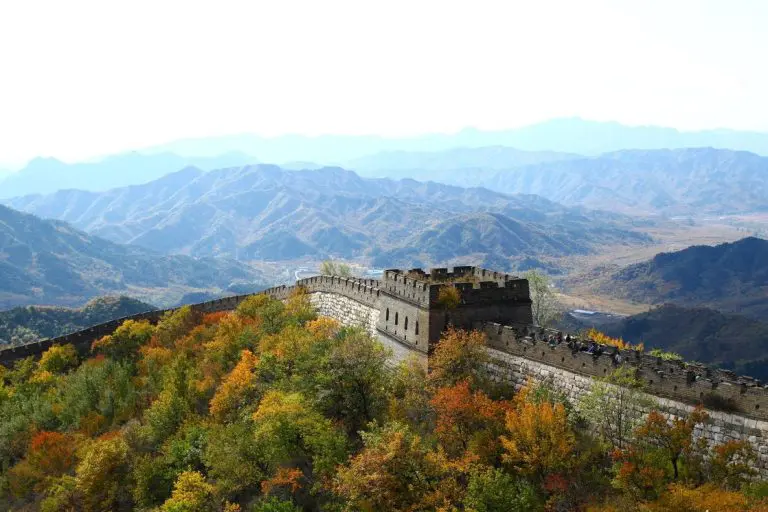
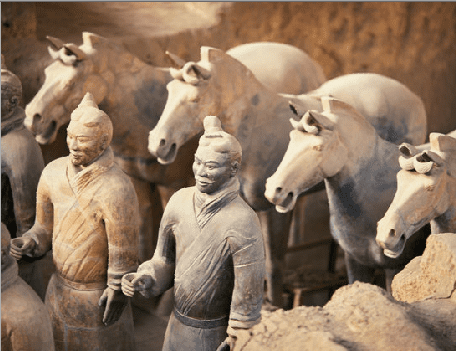
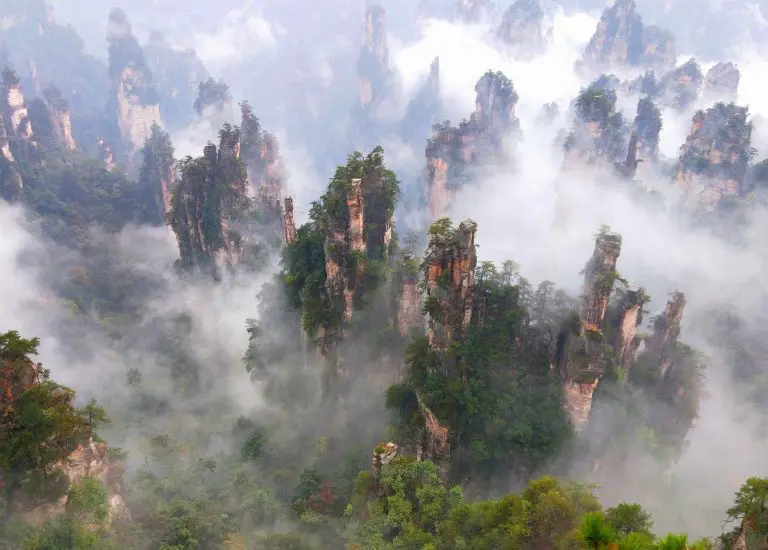
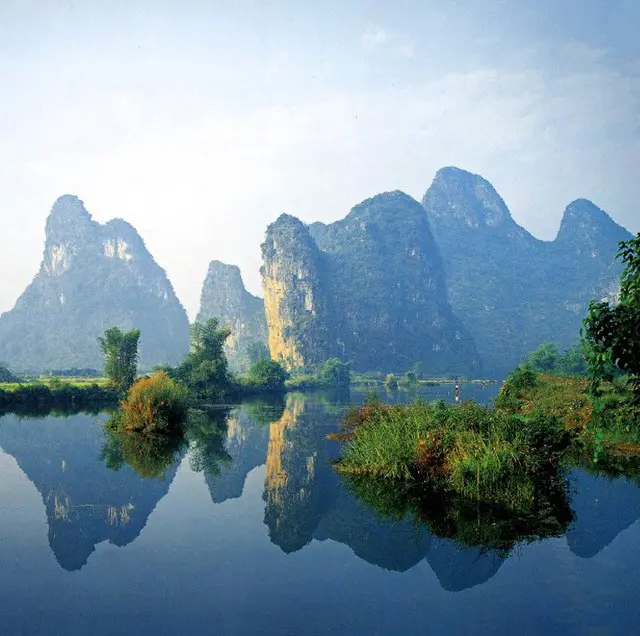
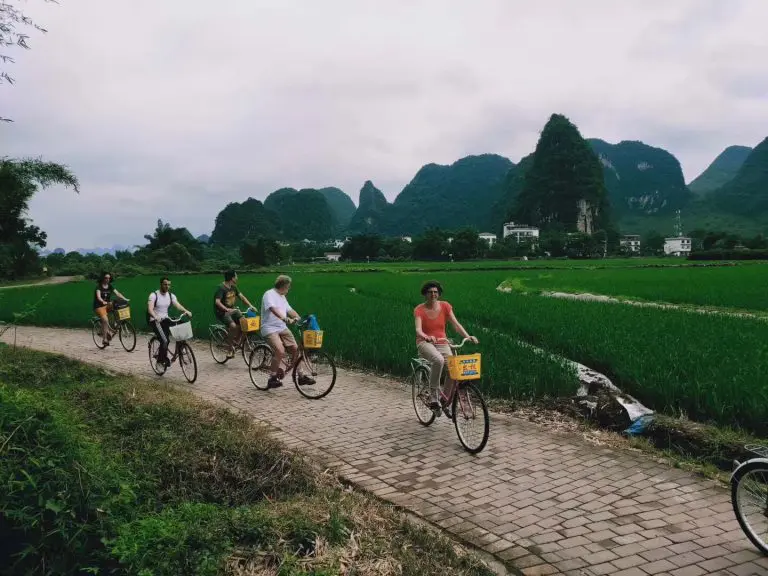

This 14-day China tour with Zhangjiajie and Guilin covers Beijing, Xi’an, Zhangjiajie, Guilin, and Shanghai. Walk along the Great Wall, see the Terracotta Warriors, cruise the Li River, and marvel at Zhangjiajie’s sandstone peaks, the perfect 2-week China itinerary for first-time travelers.
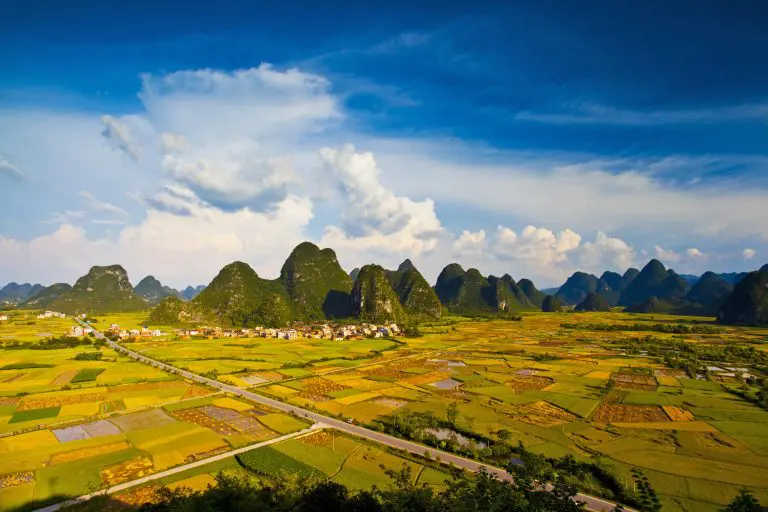
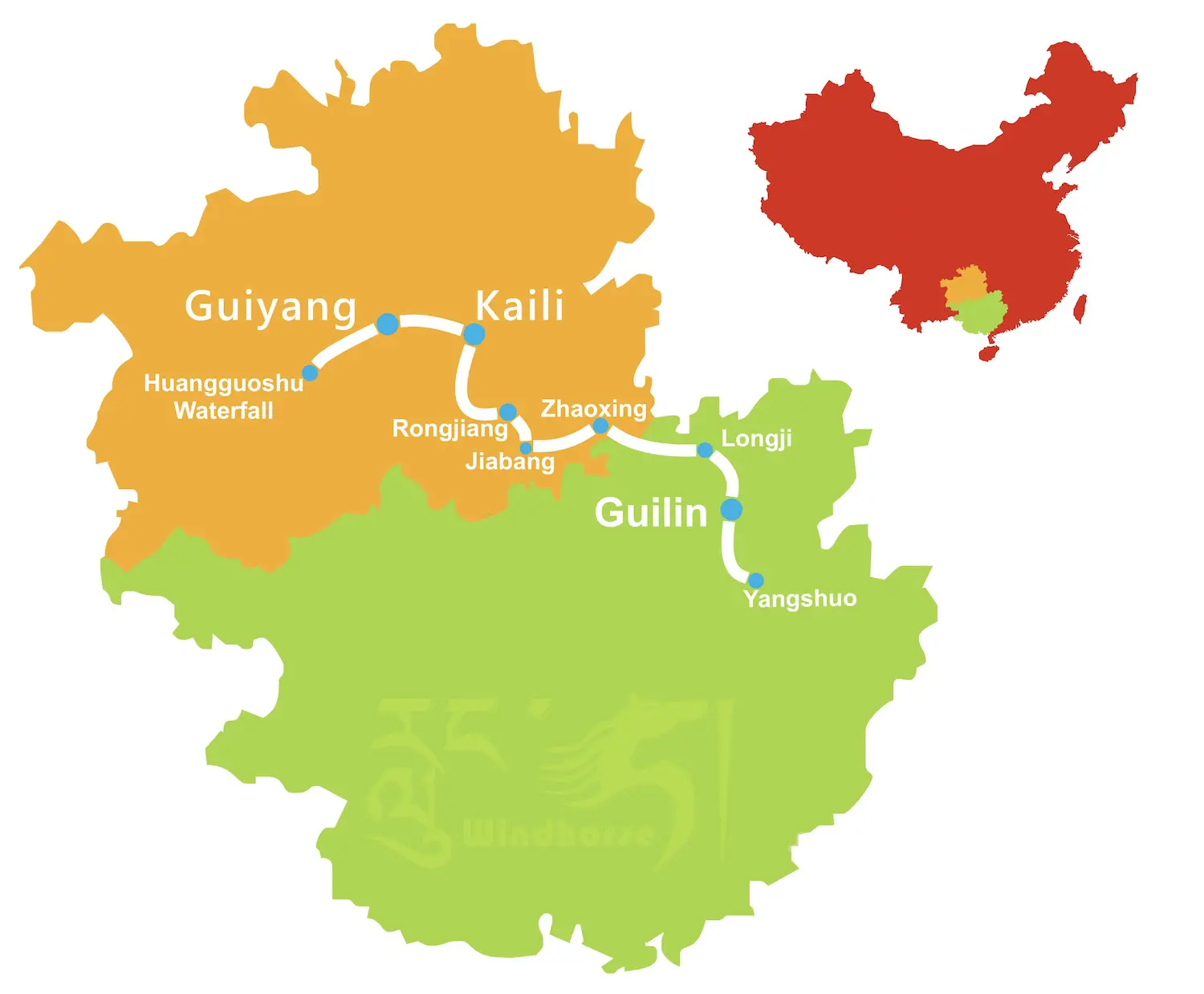
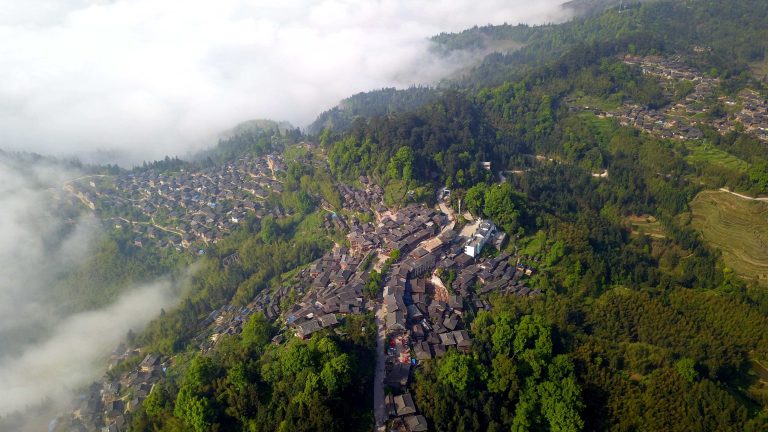
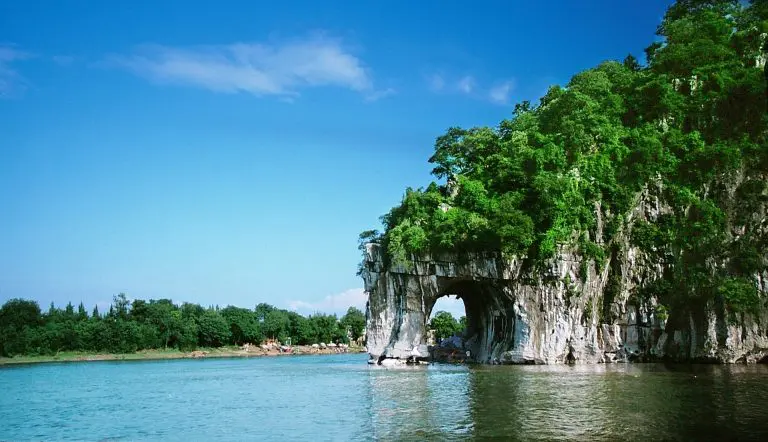
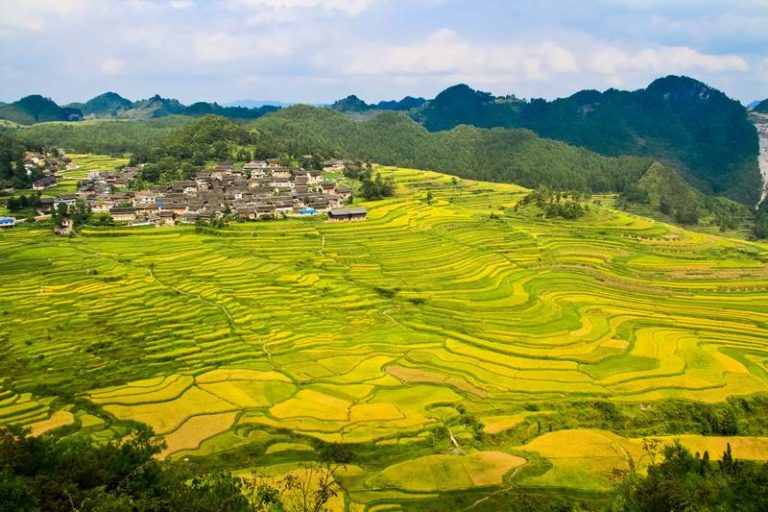
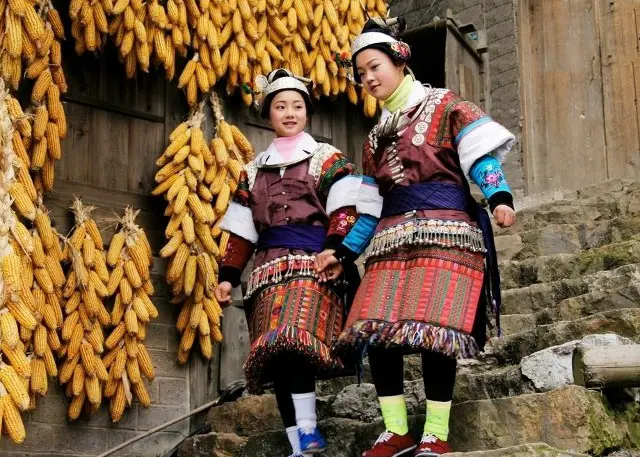

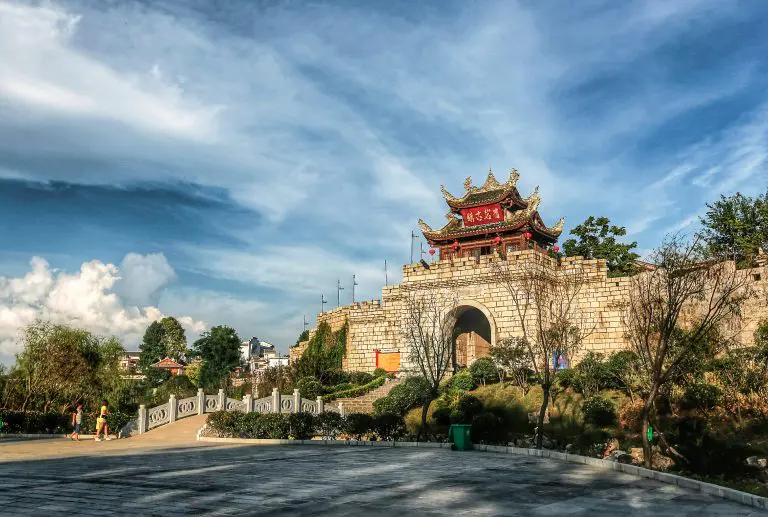
Explore Guizhou’s Miao, Dong, and Shui villages, hike Jiabang and Longji rice terraces, visit Huangguoshu Waterfall and Dragon Palace Cave, and finish with a Li River cruise to Yangshuo on this 12-day cultural journey from Guizhou to Guilin.
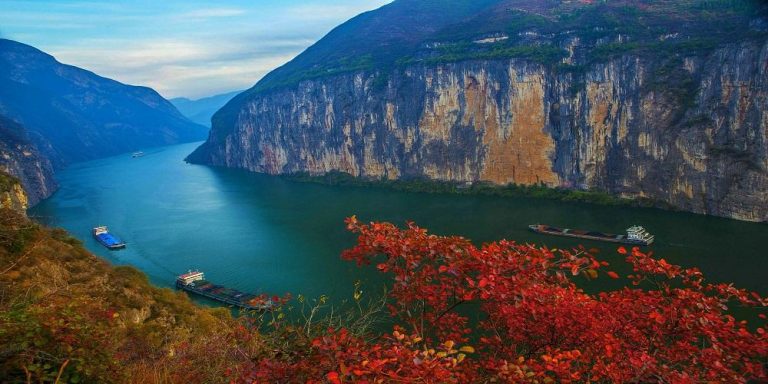
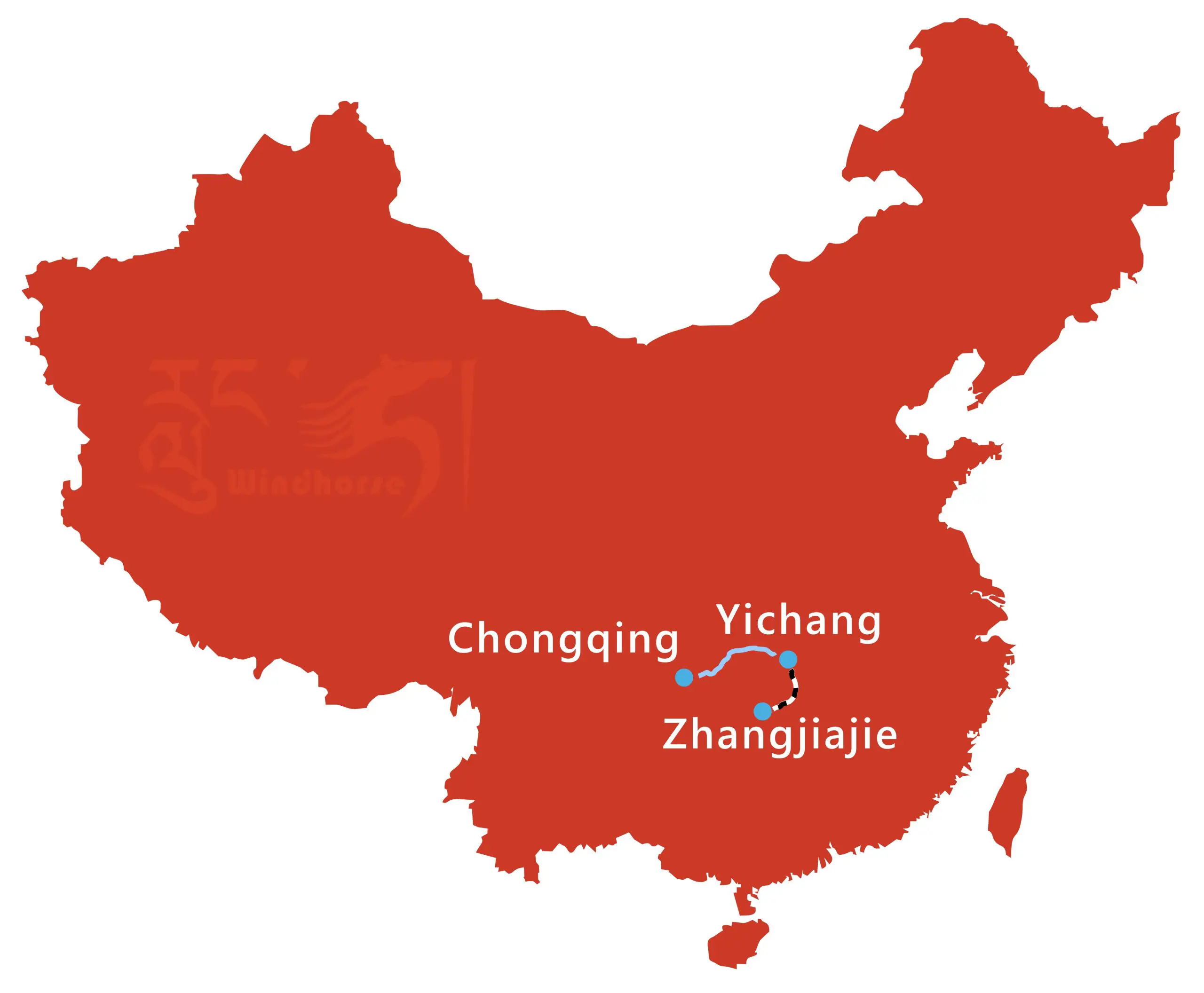
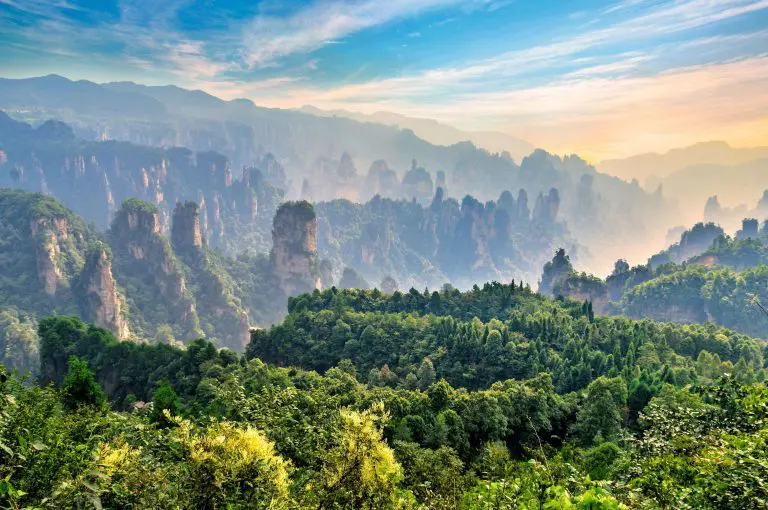
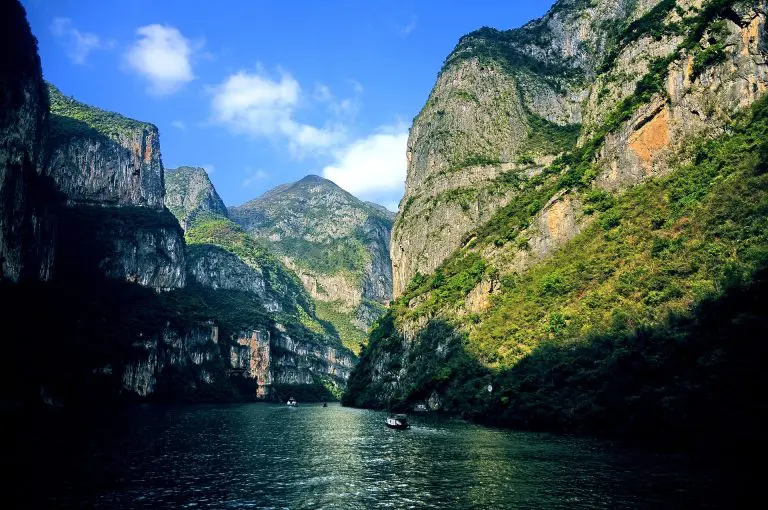
Experience an 8-day Chongqing Yangtze Cruise and Zhangjiajie Tour, combining a classic Three Gorges cruise from Chongqing to Yichang with Zhangjiajie’s top sites, including Yuanjiajie, Tianzi Mountain, the Glass Bridge, and Tianmen Mountain.
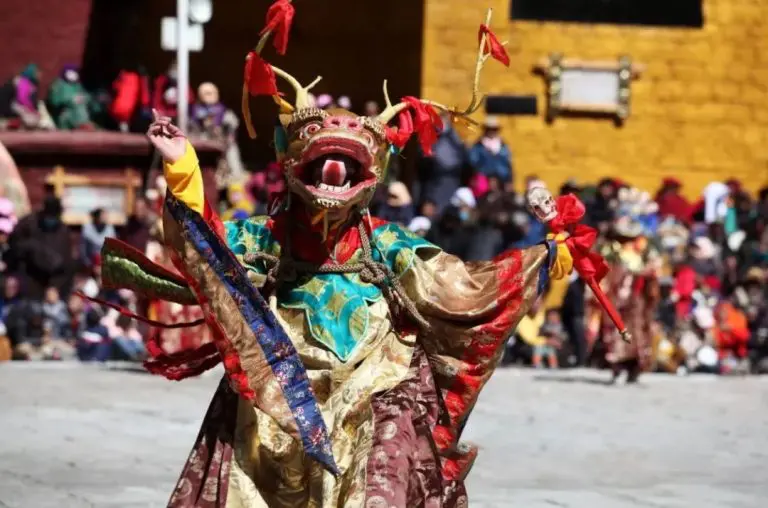
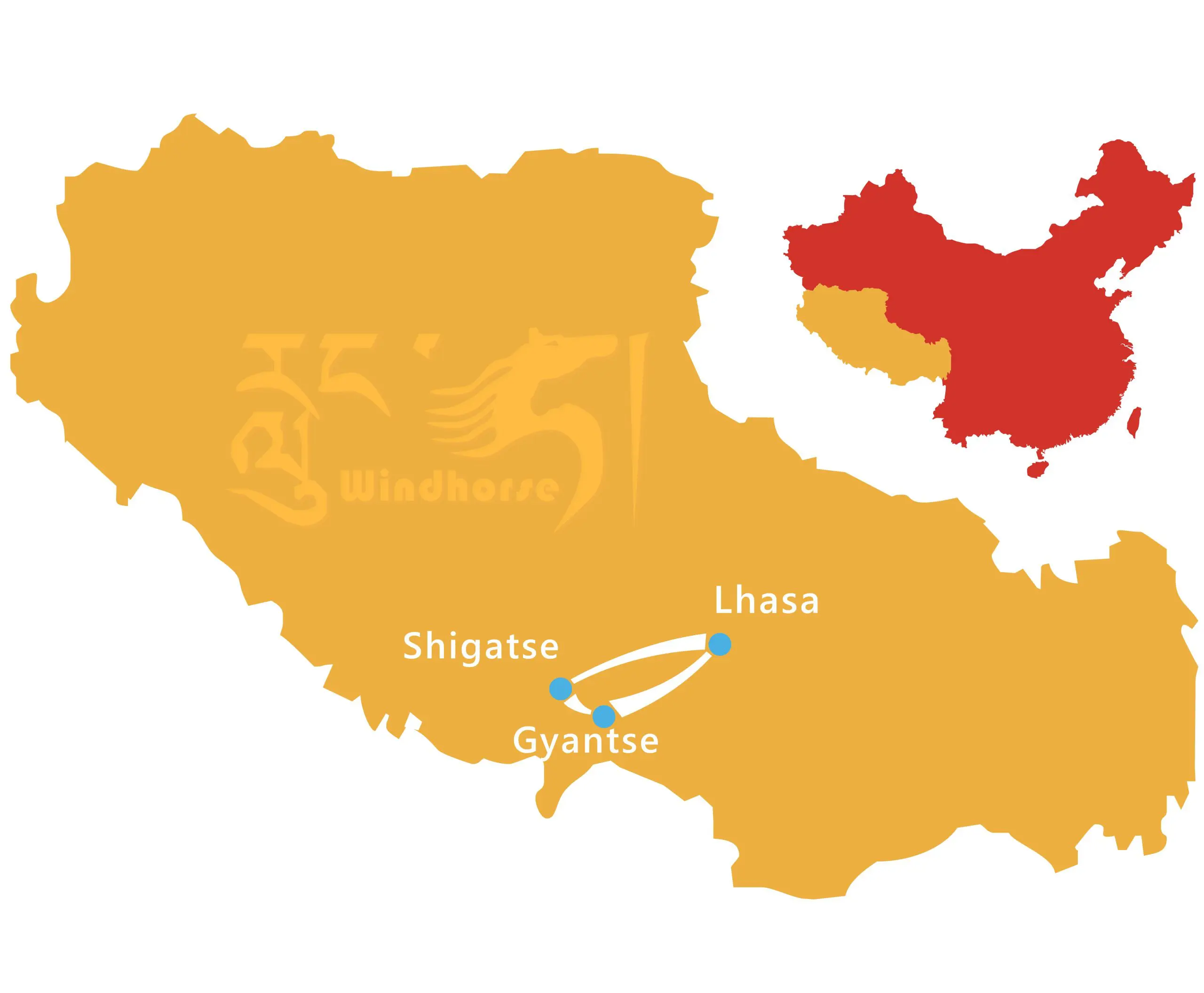
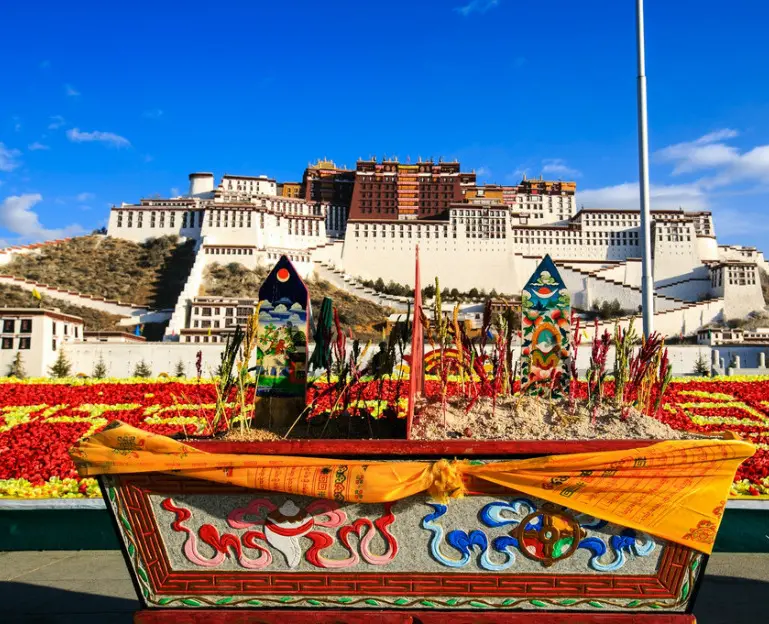
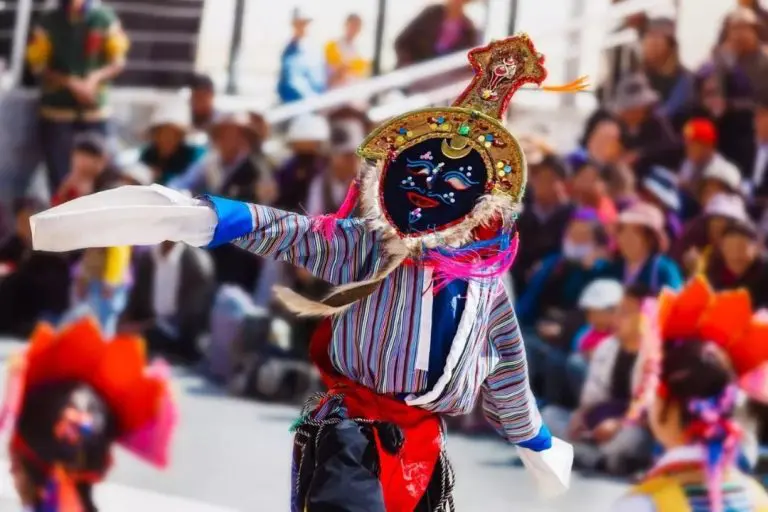
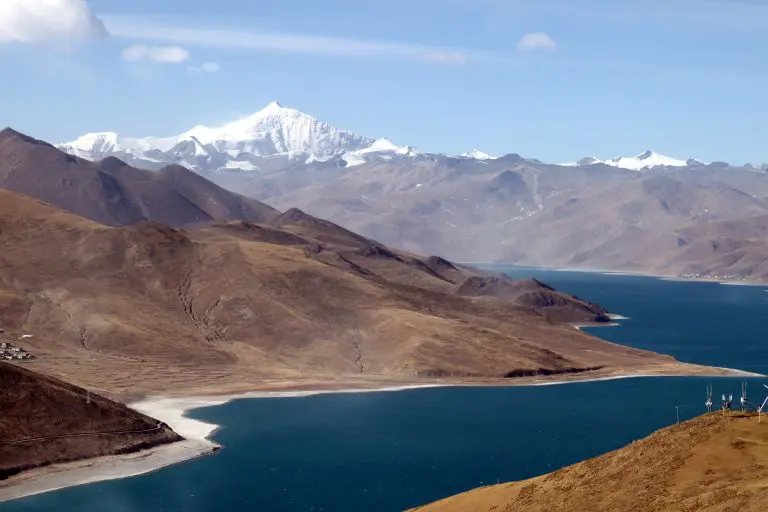
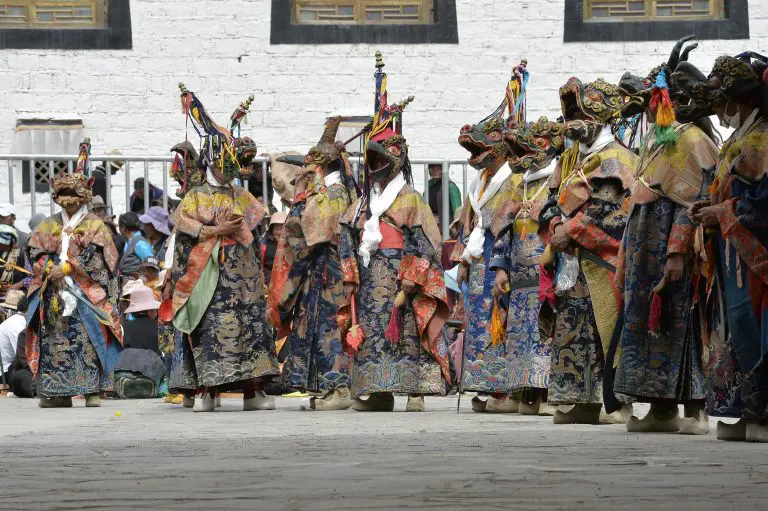
Experience the Tibet New Year atmosphere with a local family, daning, singles, yak dumplings and more. All ways Tibetans celebrate the New Year arrival. Enjoy a happy time and explore beyond Lhasa into the best highland scenery in the world.