
A Simple Guide to Chopsticks and Chinese Table Manners

Chopsticks have been part of Chinese culture for thousands of years, reflecting the country’s rich traditions, deep respect for etiquette, and refined table manners. It is essential to know basic chopsticks etiquette when you travel to China. Mistakes with chopsticks can come across as rude or disrespectful, while using them correctly shows appreciation for local customs. It also makes your dining experiences smoother and more enjoyable.
So, we created this guide to chopsticks to help you navigate meals with confidence, show cultural respect, and fully enjoy the flavors and rituals of Chinese cuisine.
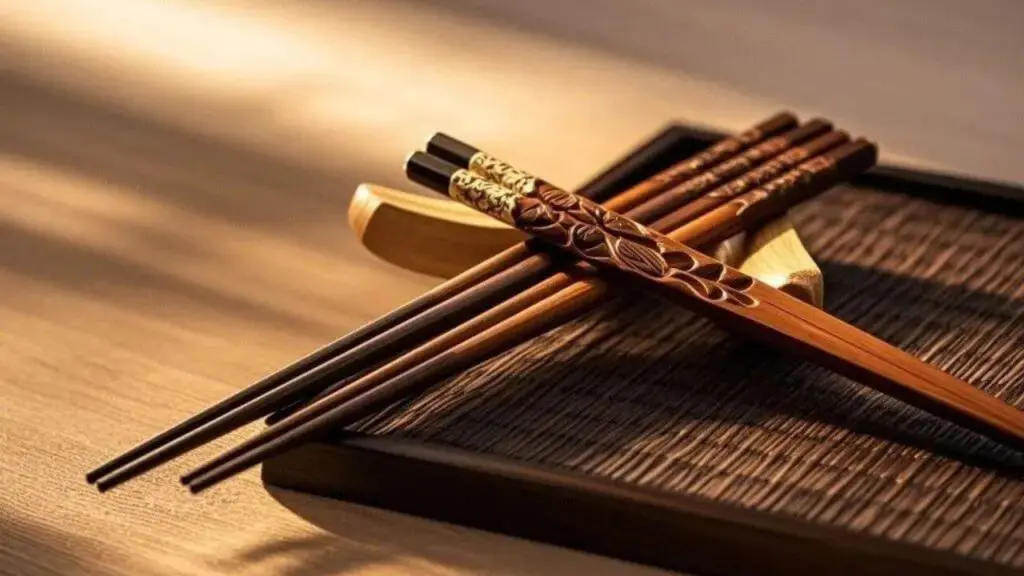
A Short History of Chopsticks in China
Chopsticks, known as kuàizi (筷子) in Mandarin, are believed to have originated in China around 1200 BCE, during the Shang Dynasty. The earliest chopsticks were likely made of bronze and used for cooking purposes—especially for reaching into deep pots or picking up hot food.
By the Han Dynasty, chopsticks began to transition from cooking implements to utensils used at the dining table. The growing popularity of Confucianism during this period played a significant role. Confucius advocated for a dining style that emphasized calmness and gentleness, encouraging people to avoid knives at the table. Chopsticks, being non-violent and refined, fit this philosophy perfectly.
During the time of the Tang Dynasty, the production of chopsticks from bamboo and wood made them more accessible, and their use became more standardized in daily meals.
Cultural Significance
In later dynasties, such as the Song (960–1279), Ming (1368–1644), and Qing (1644–1912), chopsticks became more than just utensils, they were also status symbols and artistic items. Wealthy families used chopsticks made from ivory, jade, or silver (which was believed to detect poison). They became embedded in Chinese etiquette and family traditions, including gift-giving and marriage customs.
Fun Fact
The word kuàizi itself came into common use during the Ming Dynasty, replacing earlier terms. The character 筷 combines 竹 (bamboo) with 快 (quick), reflecting their function and material.
Guide to Chopsticks Basics
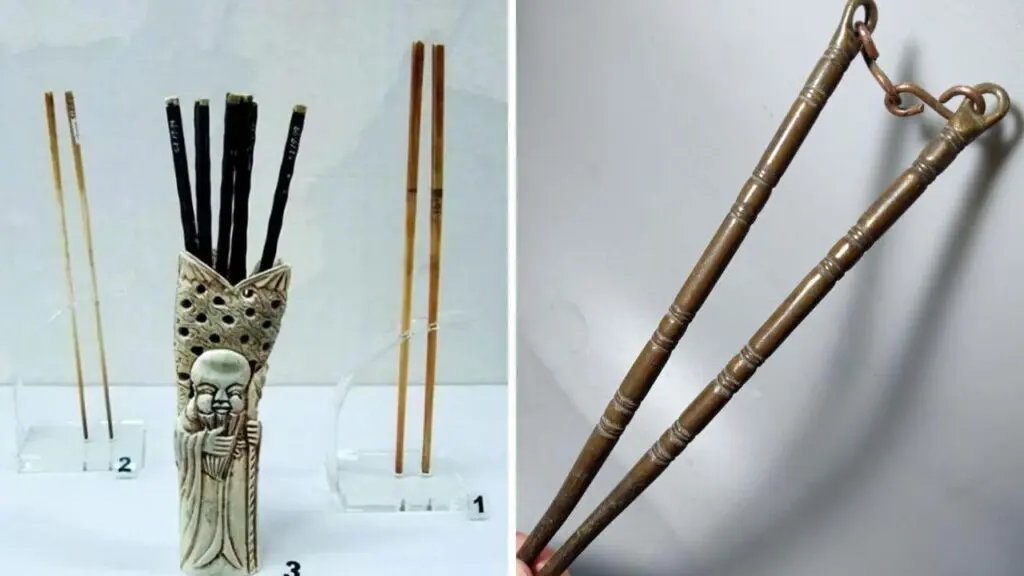
There are a few different types of chopsticks you might come across—wooden, plastic, and metal. Each one feels a little different in your hands, and they’re used in different places.
Metal chopsticks are fancier and more durable. People often use them at home or in fancy restaurants. They feel heavier in your hand and can be a bit tricky to handle at first, especially if you’re just learning. But once you get the hang of it, they work just as well as the others.
Wooden chopsticks are the most common. You’ll find them almost everywhere in China: restaurants, takeout places, and street food stalls. They’re usually cheap and meant to be used once, then thrown away. They’re light, easy to use, and great for beginners because they grip food pretty well.
Plastic chopsticks are reusable and often found in casual restaurants or at home. They’re a bit smoother, so food can sometimes slip off more easily, especially if you’re picking up something slippery like tofu or noodles. But they’re easy to clean and come in lots of colors and styles. We recommend using these types of chopsticks if you are not a beginner.
Here’s how to properly hold chopsticks
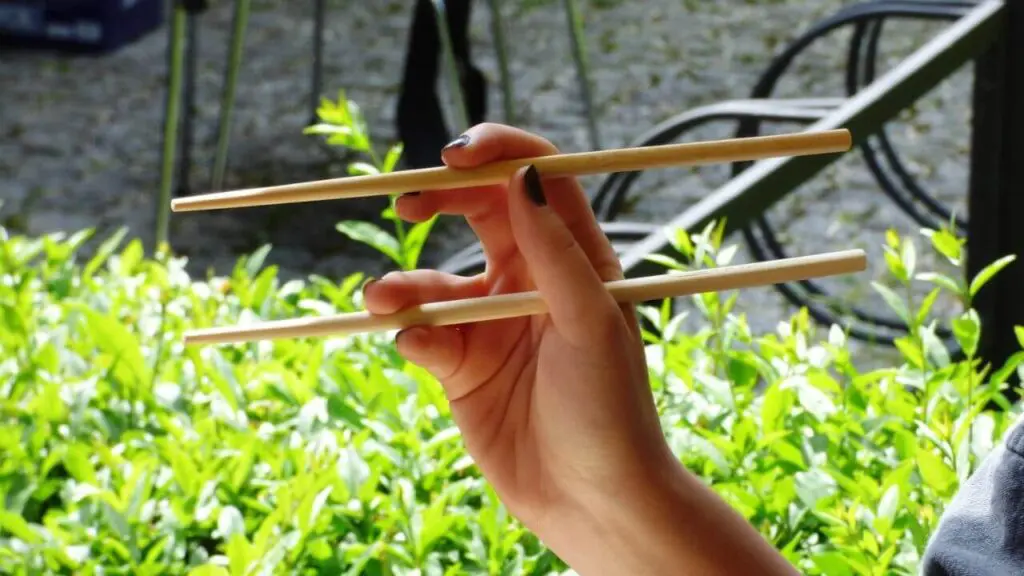
Holding chopsticks might feel weird at first, but once you get the hang of it, it’s not that hard. Here’s a simple way to do it:
Start by resting one chopstick between your thumb and the side of your hand—kind of like it’s lying across the base of your thumb and supported by your ring finger. This bottom chopstick stays still the whole time. Think of it like an anchor.
Now, hold the second chopstick like you would a pencil. Use your thumb, index finger, and middle finger to grip it. This is the chopstick you’ll move to pick things up.
To grab food, move the top chopstick up and down, while the bottom one stays in place. Try opening and closing the tips gently like tongs. The more you practice, the smoother it gets.
Start with bigger pieces of food, like a chunk of meat or a dumpling then try smaller or slippery stuff like rice or noodles. It’s totally normal to drop food a few times when you’re learning, so don’t stress.
Give it a few tries, and before you know it, you’ll be picking up food like a pro.
Essential Etiquette Tips
If you’re eating with chopsticks in China, there are a few simple rules to keep in mind. Nothing too fancy, just little things that show respect and help you blend in.
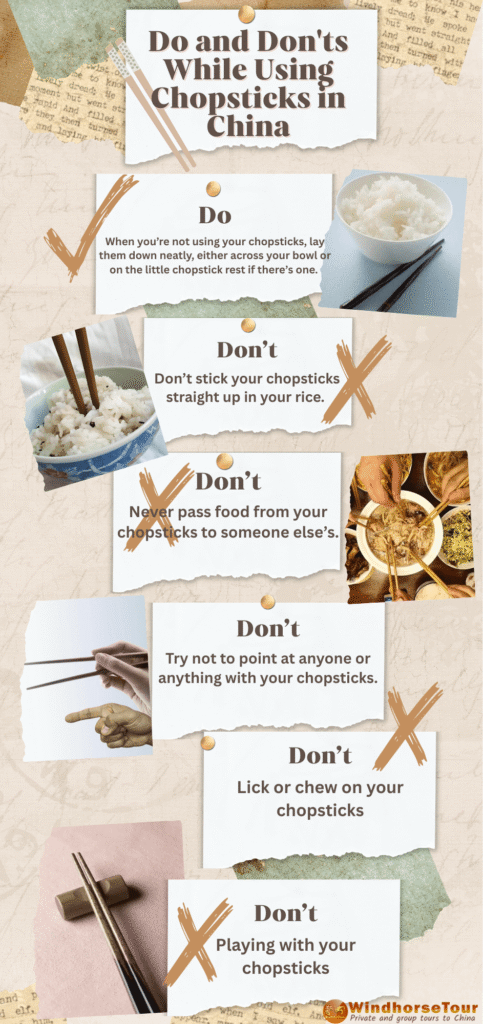
Do
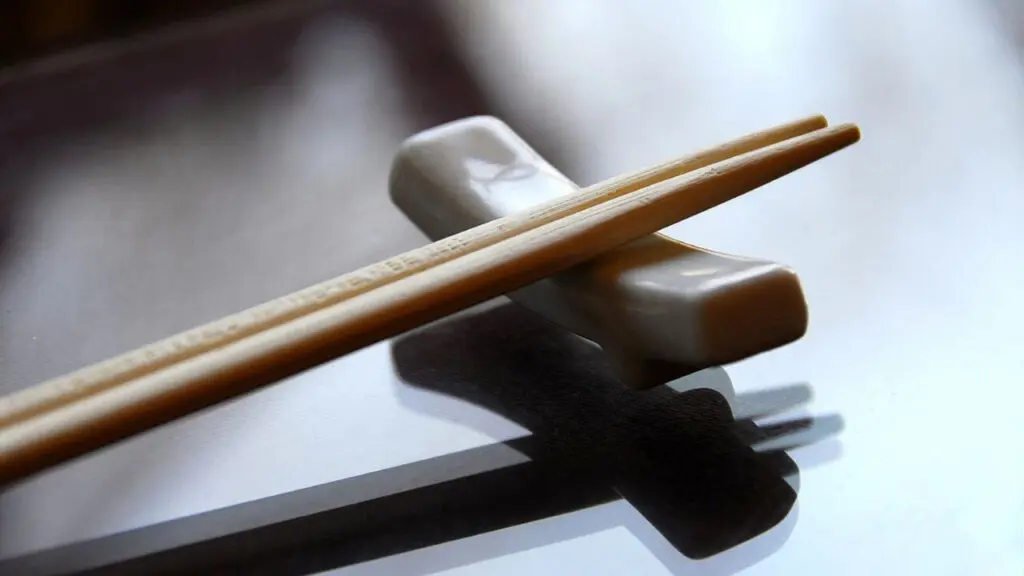
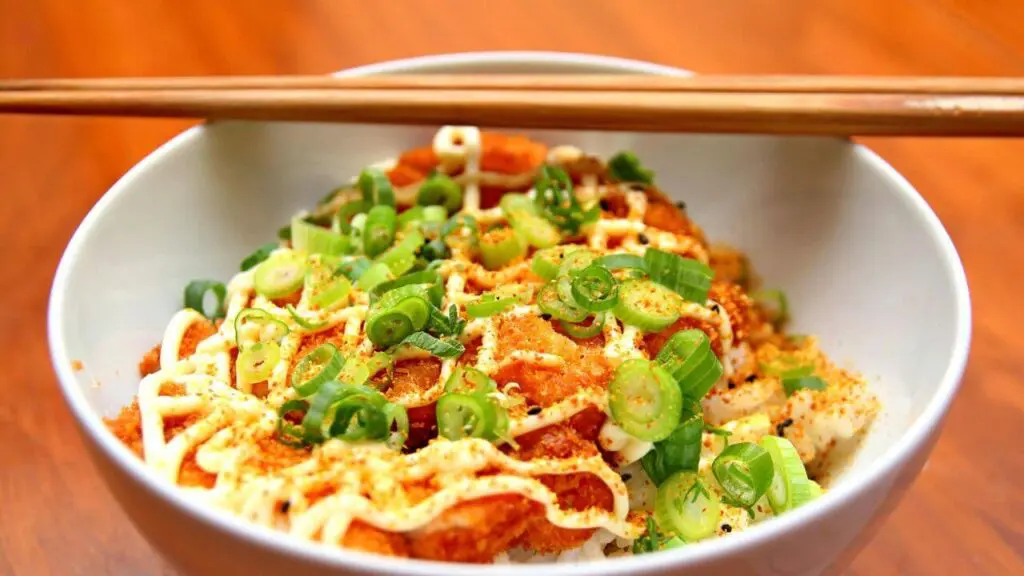
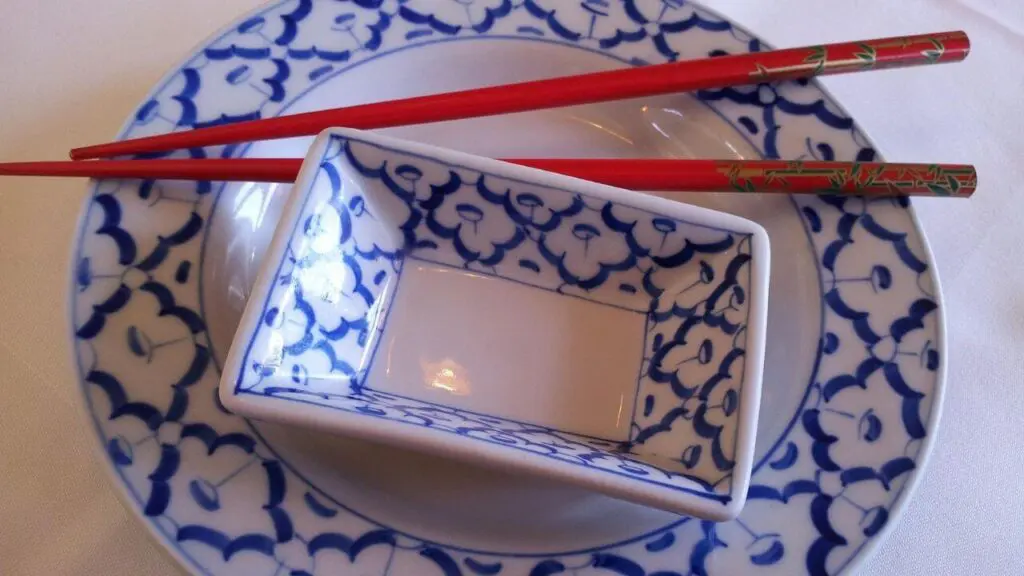
- When you’re not using your chopsticks, lay them down neatly, either across your bowl or on the little chopstick rest if there’s one. It’s the polite thing to do and keeps the table looking tidy.
Don’t
- Don’t stick your chopsticks straight up in your rice.
- Never pass food from your chopsticks to someone else’s. That might seem helpful, but it actually reminds people of a funeral custom where bones are passed this way. It’s considered bad luck.
- Try not to point at anyone or anything with your chopsticks.
- Another don’t is licking or chewing on your chopsticks. This is considered rude and unhygienic. Chopsticks are utensils, not toothpicks or candy.
- Playing with chopsticks is also a big don’t.
These small habits can make a big difference. When you follow them, people will notice and appreciate that you’re showing respect for the culture. It’s a great way to make a good impression at the table.
Navigating Shared Meals
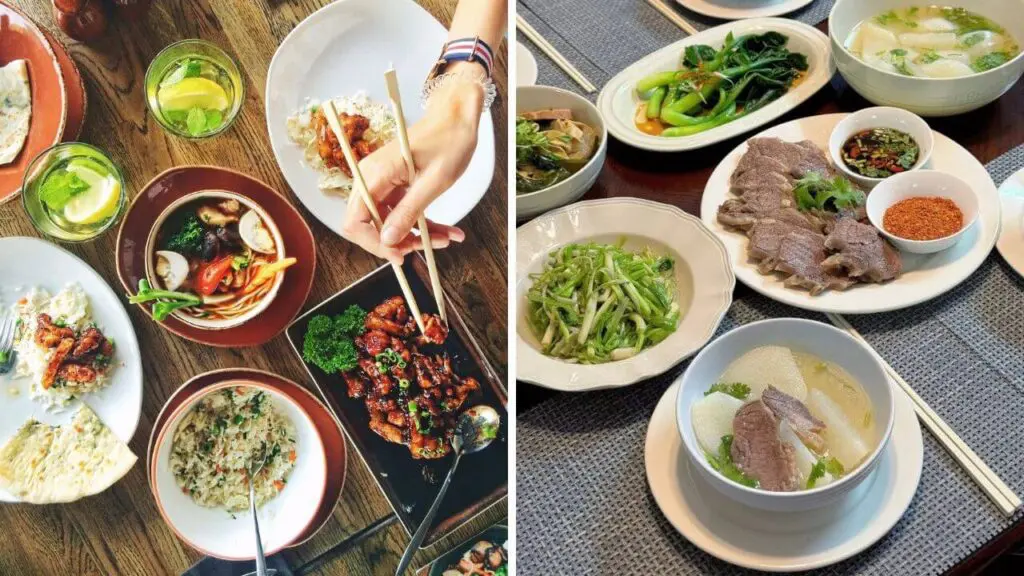
When eating with chopsticks at a shared meal, there are simple rules to follow. First, use chopsticks if they’re provided. Serving chopsticks help keep food clean and show respect to others at the table.
If there aren’t any serving chopsticks, flip your chopsticks around and use the wider end to pick up food from shared dishes. This prevents germs from spreading.
Pass the dishes carefully. Hold the dish with both hands when passing it, and never reach across the table. Instead, politely ask someone to pass it to you.
Chopstick Etiquette in Different Chinese Regions
Chopstick rules can actually change a little depending on where you are in China. It’s not all the same everywhere, so it helps to be a bit observant.
In Northern China, it’s pretty normal to use your own chopsticks to grab things like noodles or steamed buns straight from shared plates. People are a bit more relaxed about it.
But in Southern China, things are usually a bit more formal. Using your personal chopsticks to reach into a shared dish might be seen as rude. Instead, you might notice people using separate serving chopsticks, or even flipping their chopsticks around to use the clean end for shared food.
As a traveler, the best tip is: watch what the locals do and follow their lead. If everyone’s using serving chopsticks—do the same. It’s an easy way to show respect.
Practical Tips for Beginners
If you’re new to using chopsticks, don’t worry, with this guide to chopsticks and a little practice you will be at your best. The best thing you can do is start at home. Try picking up different types of food like noodles, chunks of meat, vegetables, or even something tricky like rice. Practicing with different textures helps your hands get used to the movement.
Start with bigger or firmer pieces, like broccoli or chicken, do this before working your way up to slippery or tiny foods. And don’t forget, using a plate instead of a bowl at first can make things easier because it gives you more space to work with.
Here are a few extra tips to make things easier:
- Wipe your chopsticks if they feel slippery, especially plastic ones.
- Avoid using broken or splintered wooden chopsticks, which can make eating harder and less enjoyable.
- Hold your bowl closer to your mouth when picking up food. It shortens the distance and helps you avoid dropping things.
- Relax your grip—if your hand starts cramping, take a quick break and shake it out.
- Watch others around you to pick up new techniques. Everyone has a slightly different style, and you might find a trick that works better for you.
At the end of the day, it’s about being respectful and trying your best. Whether you’re using chopsticks like a pro or still figuring them out, what matters most is enjoying the meal and the experience.
Conclusion
Chopstick etiquette might seem small, but it plays a big role in showing respect at the table. in this guide to chopsticks we added to avoid common mistakes like stabbing food, licking chopsticks, or playing with them. When sharing meals, use serving chopsticks if available, and follow local customs. Remember, different regions in China may have slightly different habits, so watch and learn from others. And if you’re new to chopsticks, a little practice at home can go a long way.
Respecting dining traditions when you are visiting a new country shows that you’re open to the culture. Embrace it, enjoy the experience, and you’ll leave a good impression wherever you go.
Related tours
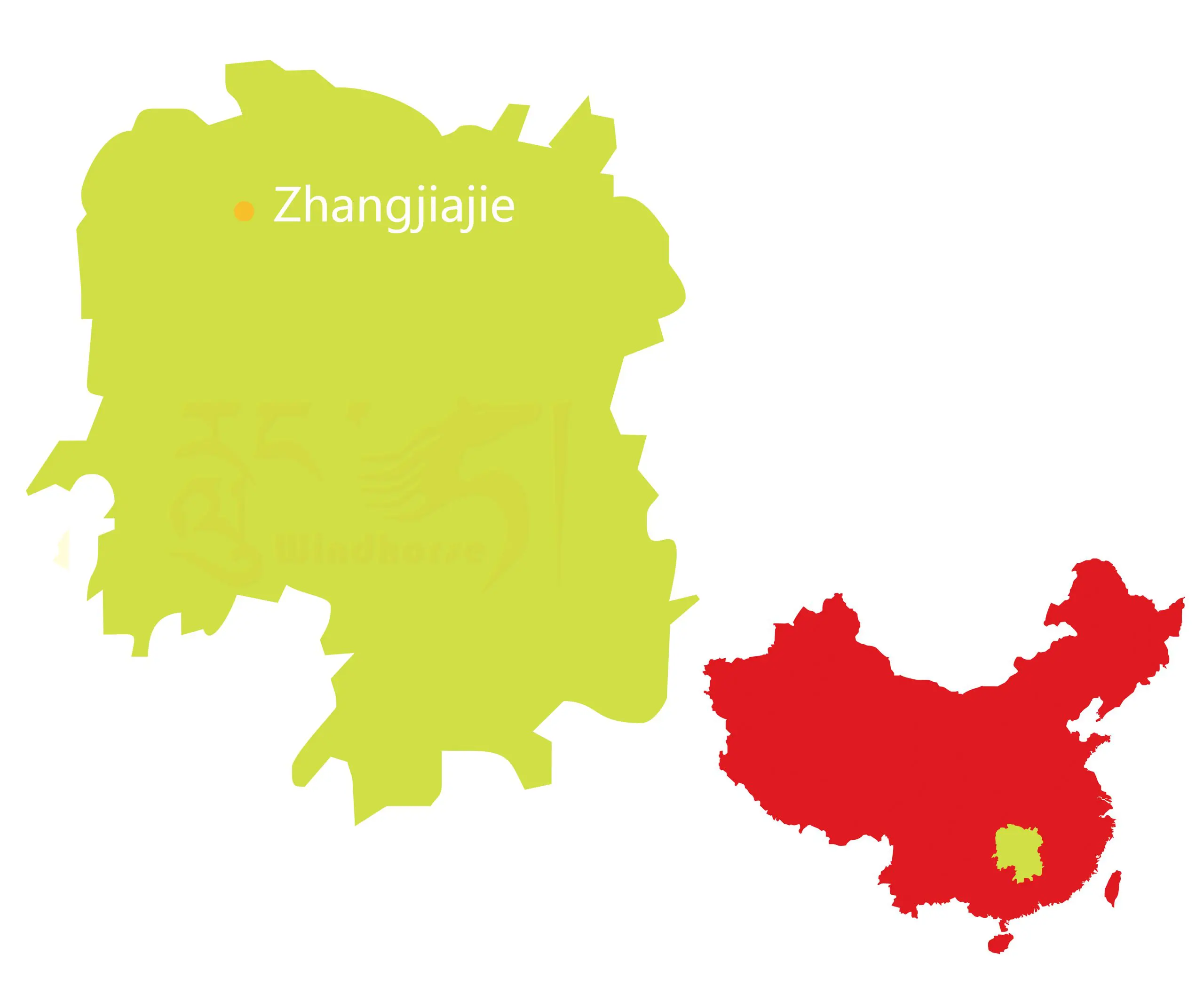




Explore Huangshizhai, Golden Whip Stream, Yuanjiajie's Avatar Mountains, Tianzi Mountain, the Glass Bridge at Zhangjiajie Grand Canyon, and Tianmen Mountain's Heaven's Gate on this private 5-day Zhangjiajie tour with Glass Bridge.

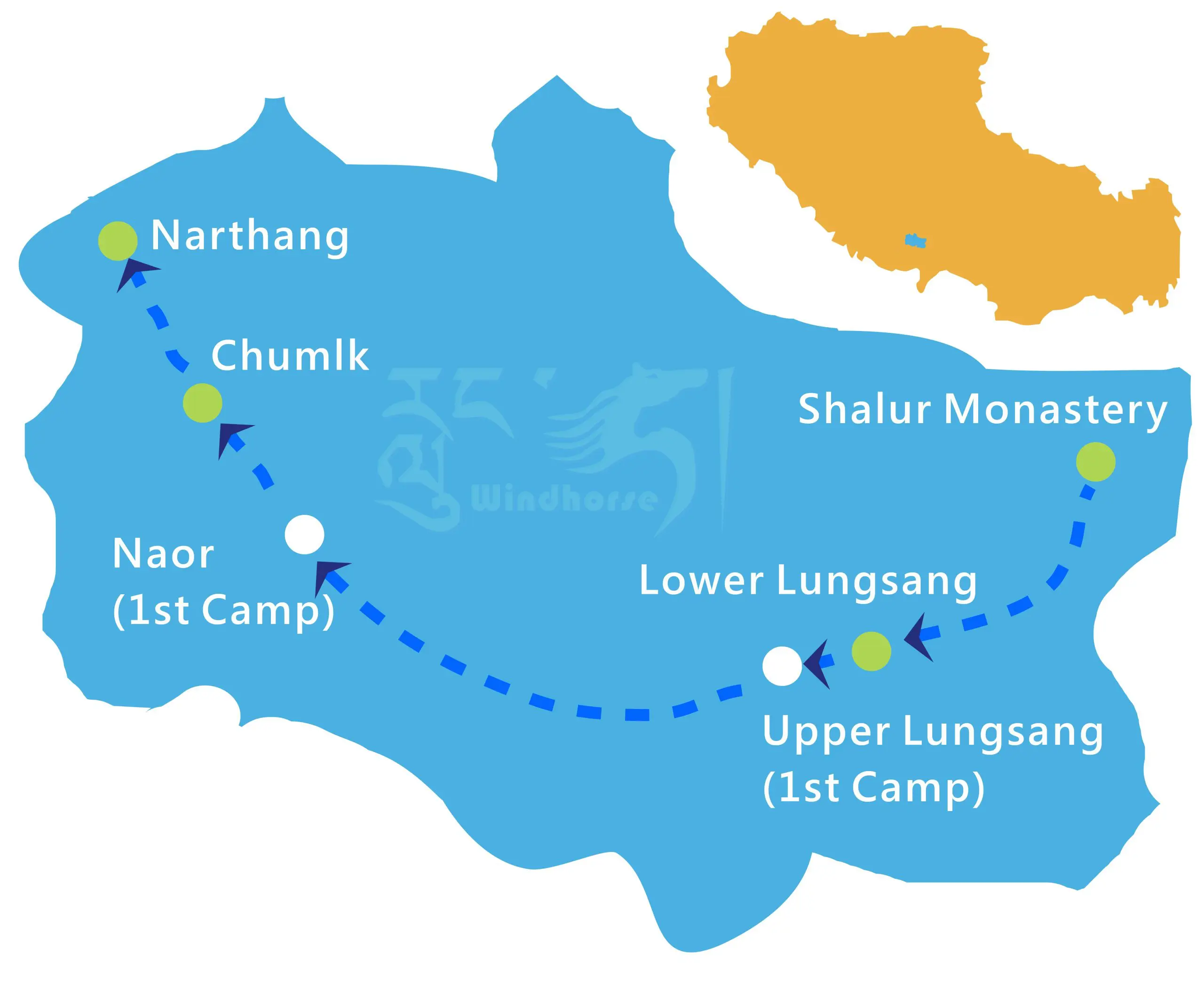
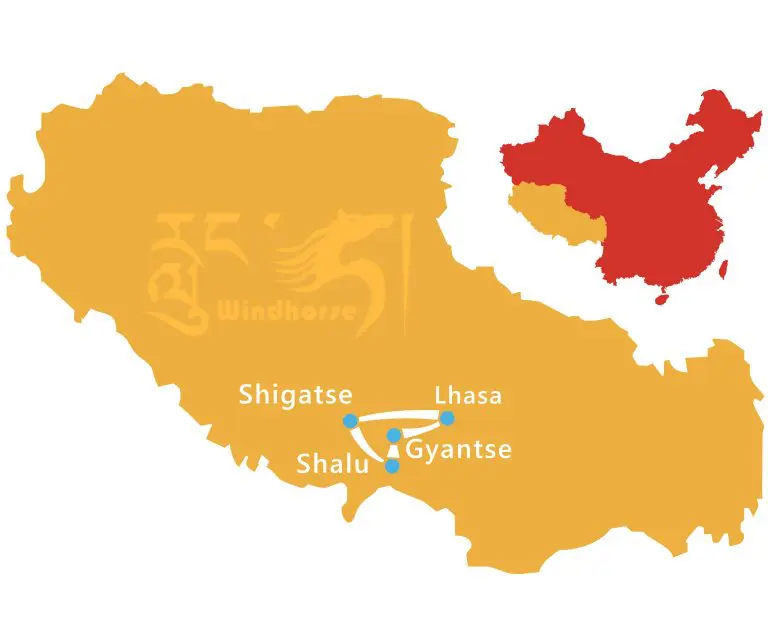



This 8-day Shalu to Nartang Monastery Trek combines Tibetan culture and easy trekking. Walk through quiet villages, barley fields, and dry valleys between two historic monasteries near Shigatse, offering a glimpse into authentic Tibetan life and scenery.

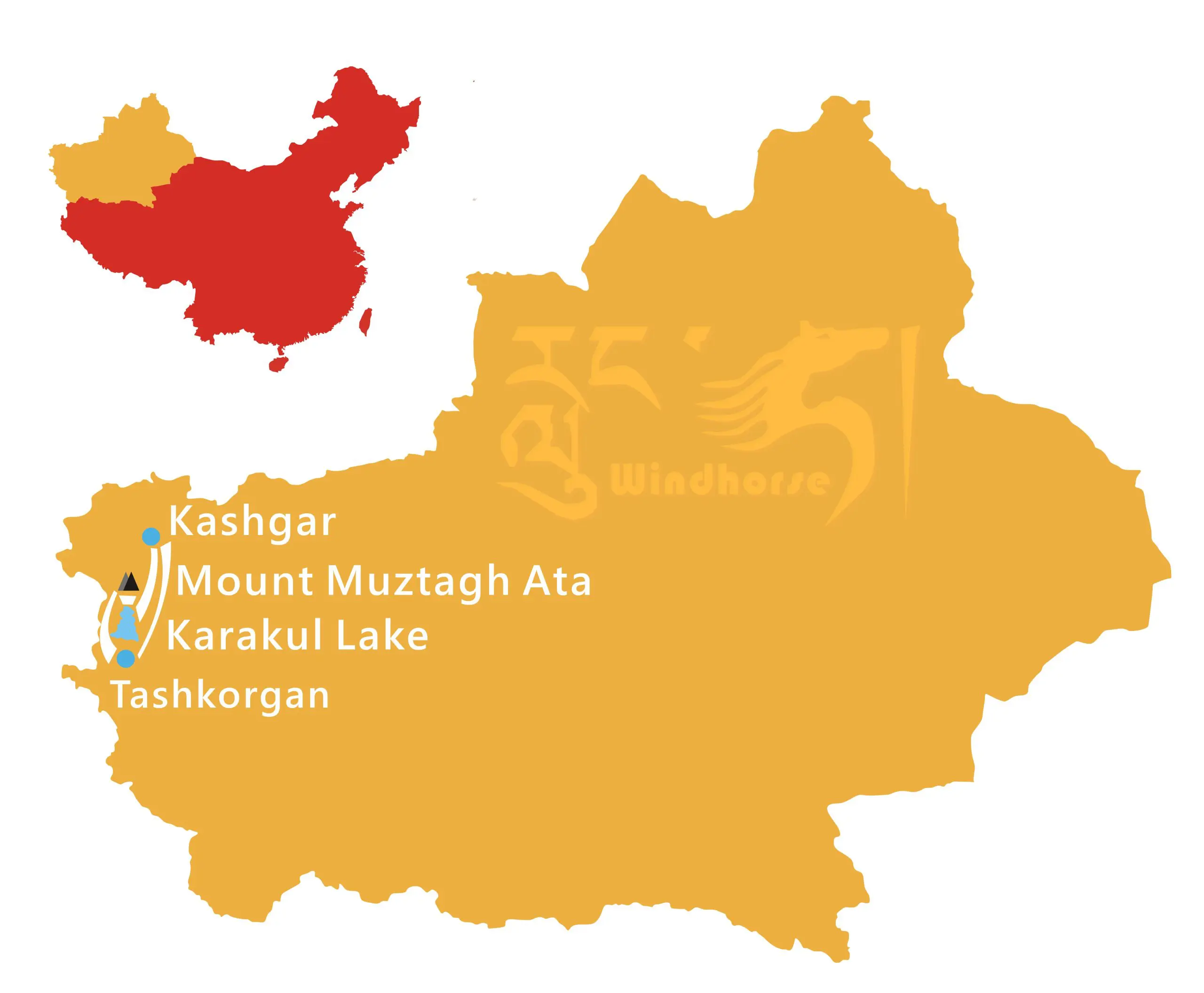



This 8-day Muztagh Ata Base Camp trekking tour starts in Kashgar and takes you to Karakul Lake, Kyrgyz nomad villages, and the Pamir Plateau. Hike through grasslands and glaciers up to 4,500 m for unmatched views of Muztagh Ata, with cultural stops in Tashkorgan and Kashgar.

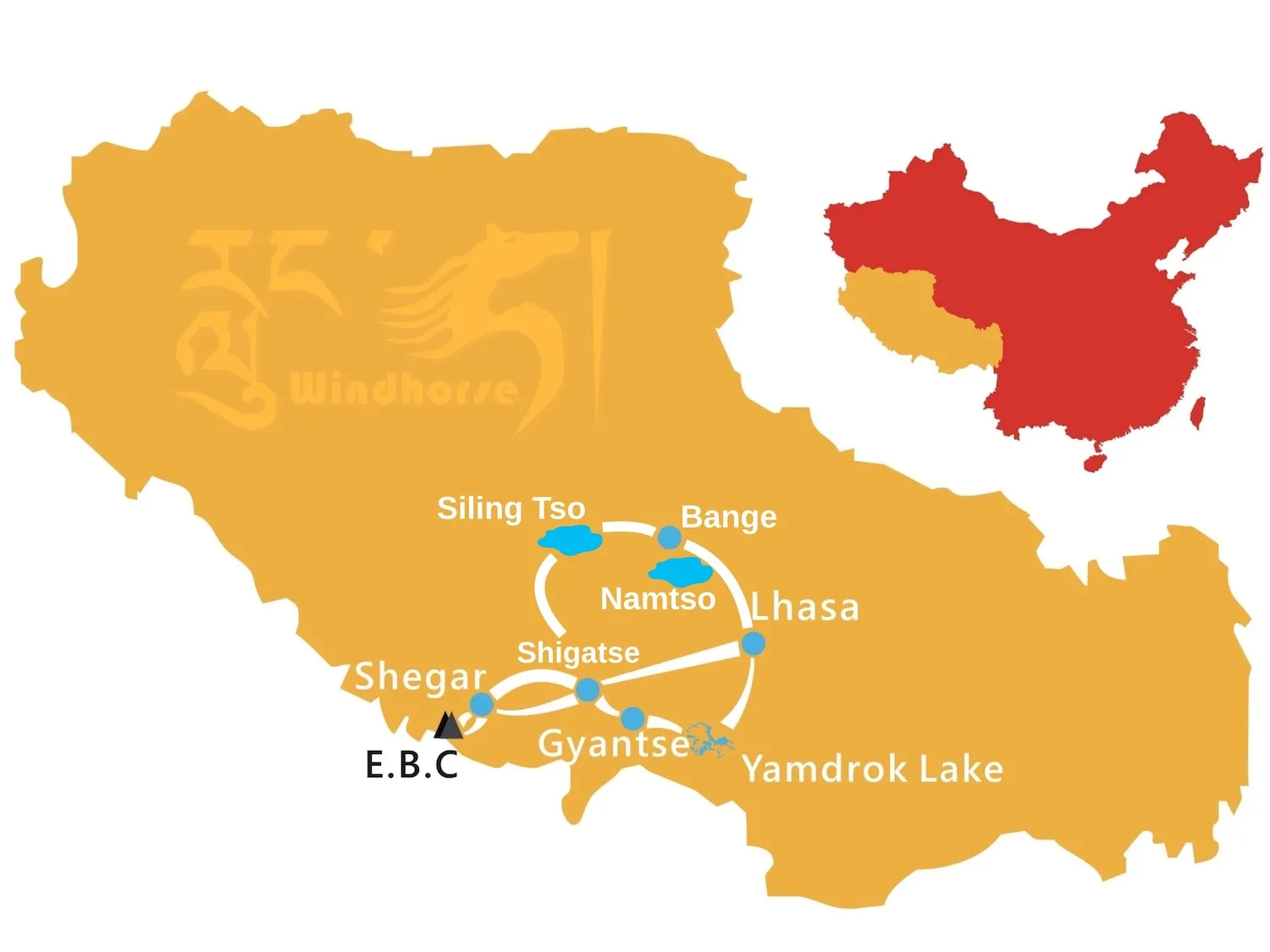





Discover Tibet’s highlights on this 10-day small group journey from Lhasa to Everest Base Camp and Namtso Lake. Explore sacred monasteries, Himalayan landscapes, northern Tibetan grasslands, and remote holy lakes with expert Tibetan guides.