
Things to do in Zhangjiajie
Zhangjiajie is one of China’s most spectacular natural destinations, famous for its towering sandstone pillars, misty mountain landscapes, glass walkways, and dramatic canyon scenery. Best known as the real-life inspiration for the floating mountains in Avatar, Zhangjiajie offers a rare combination of extraordinary geology, scenic engineering wonders, and rewarding cultural side trips.
This guide highlights the top things to do in Zhangjiajie, helping you understand what’s truly worth seeing and how the main sights fit together. It is especially useful for first-time visitors, those planning a 3–6 day stay, and travelers looking to balance iconic landscapes with light hiking, nearby ancient towns, and optional adventure activities. For practical planning details such as transportation, the best time to visit, and where to stay, see our Zhangjiajie travel guide.

Table of Contents
1. Zhangjiajie National Forest Park (UNESCO World Heritage Site)
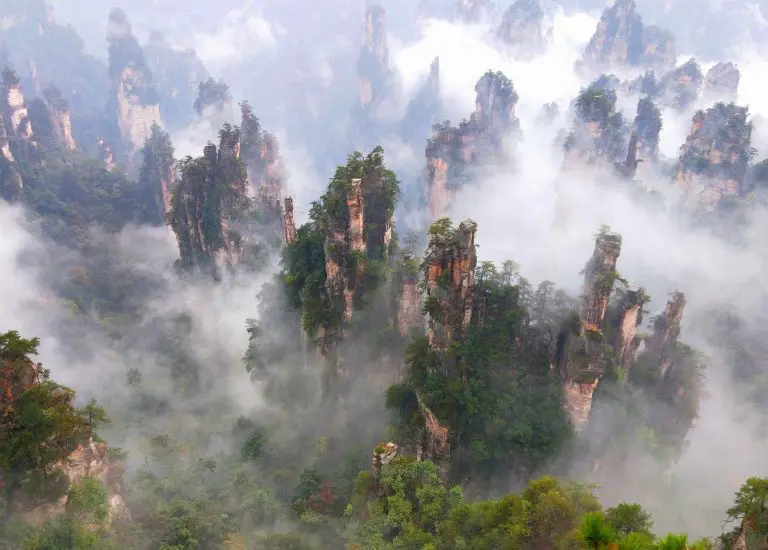
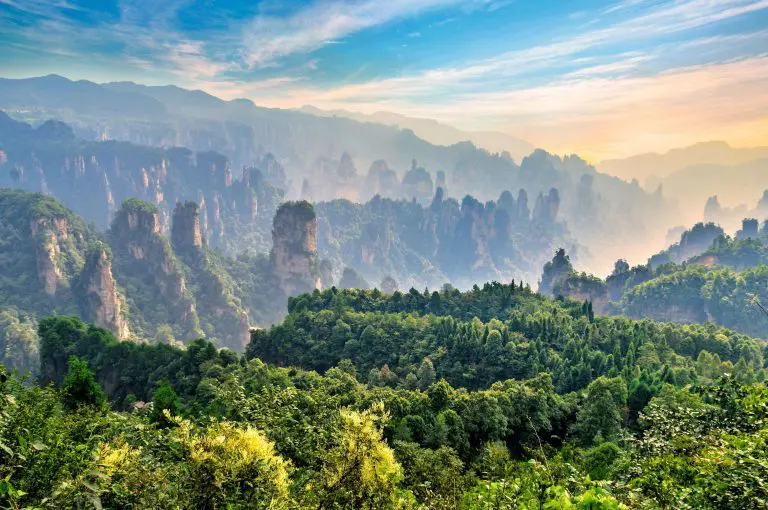
Zhangjiajie National Forest Park is the heart of the region and the single most important attraction. As part of the larger Wulingyuan Scenic Area, Zhangjiajie National Forest Park is home to the world-famous quartz sandstone pillar landscapes found nowhere else on Earth.
Rather than being a single viewpoint, the park consists of several distinct scenic areas, each offering a different perspective.
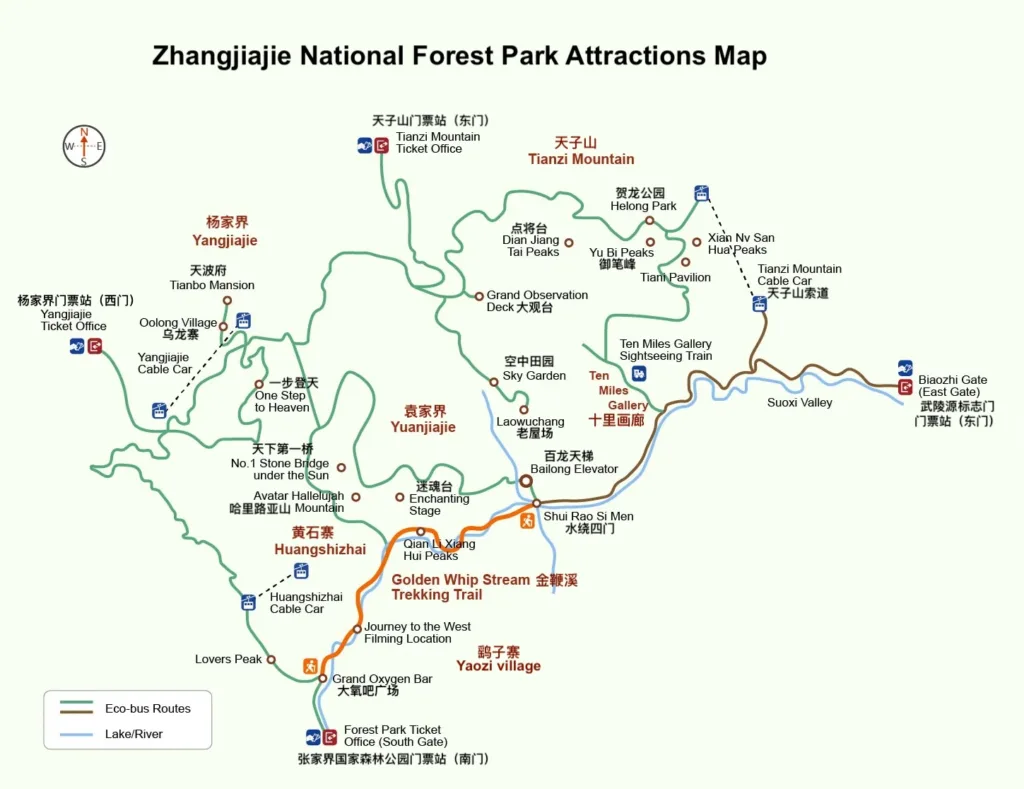
Yuanjiajie Scenic Area
Yuanjiajie is the most famous and visually dramatic section of the park, where sheer rock columns rise abruptly from deep valleys. This is the area that inspired the floating mountains in Avatar, and it features some of Zhangjiajie’s most iconic viewpoints, including Avatar Hallelujah Mountain and the First Bridge Under Heaven. Elevated walkways and the Bailong Elevator make the area accessible while preserving its dramatic impact.
Tianzi Mountain
Tianzi Mountain is best known for its wide-open viewpoints and ever-changing light. Compared to the dramatic vertical scenery of Yuanjiajie, this area feels more expansive and tranquil, with rolling peaks and classic “sea of clouds” views. It is especially rewarding at sunrise and is ideal for photography lovers and travelers who prefer scenic overlooks over steep climbs.
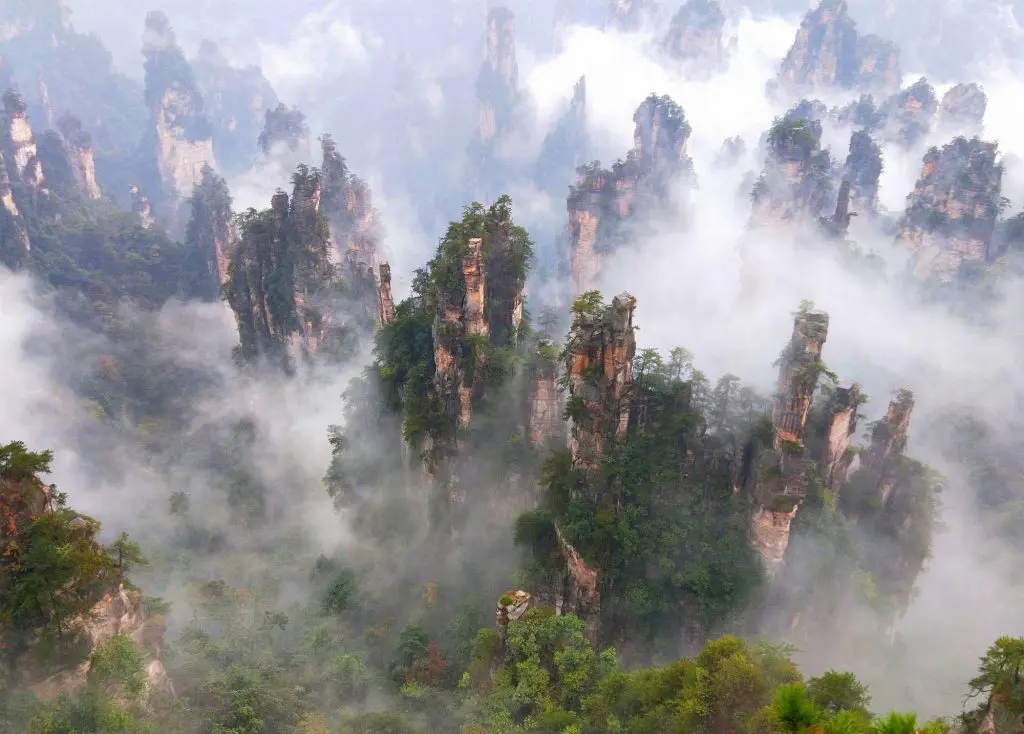
Yangjiajie
Yangjiajie is the wildest and least developed part of the park. Narrow ridgelines, sharp peaks, and forested trails give this area a more remote feel. Hiking here is more physically demanding, but visitors are rewarded with dramatic scenery, fewer crowds, and a stronger sense of wilderness. The Sky Corridor in Yangjiajie can only be reached on foot via mountain paths and staircases.
Golden Whip Stream
Golden Whip Stream offers a completely different experience, focusing on the valley floor rather than mountain peaks. This flat, shaded trail follows a clear stream beneath towering cliffs and dense forest for about 7.5 kilometers. Beginning at Laomo Gully, the stream winds through lush scenery and provides one of the easiest walks in the park. It is especially popular with families, photographers, and travelers looking for a peaceful break between viewpoints.
Ten Miles Gallery
Ten Miles Gallery is a scenic corridor where rock formations line both sides of a gentle valley, many resembling animals, people, and mythical figures. Visitors can walk the trail or take a small sightseeing train, making it suitable for travelers of all activity levels. The landscape feels playful and relaxed, offering a slower-paced contrast to the park’s towering peaks.
Huangshizhai (Yellow Stone Village)
Huangshizhai is one of the highest and most classic viewpoints in Zhangjiajie National Forest Park. Local sayings claim that “a visit to Zhangjiajie is incomplete without Huangshizhai,” reflecting its long-standing importance. From the top, visitors enjoy expansive panoramas of stone peaks, deep valleys, and forested slopes. The viewpoint can be reached by hiking or cable car.
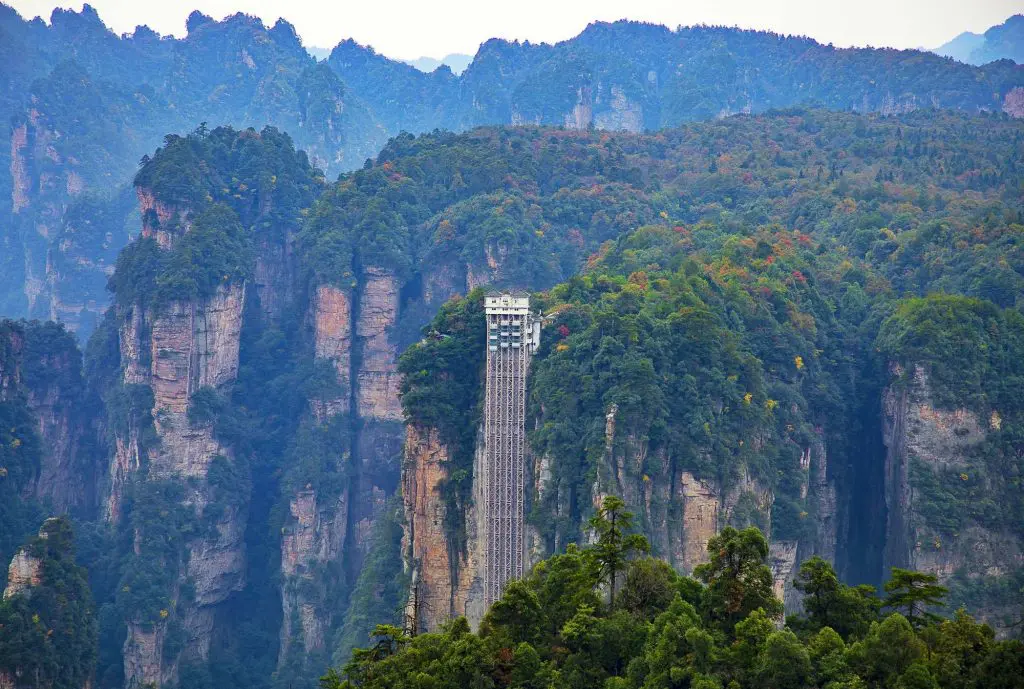
Bailong Elevator – Must Try
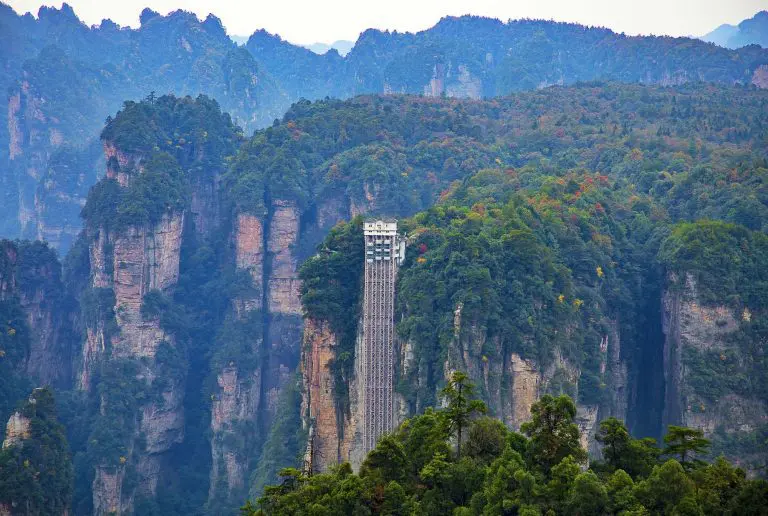
One of the park’s most remarkable engineering features, the Bailong Elevator is the world’s tallest outdoor elevator. Built directly into a cliff face, it connects Golden Whip Stream with Yuanjiajie in under two minutes, saving hours of uphill hiking. It plays an important role in making the park accessible for families and senior travelers.
At a glance: Yuanjiajie is the most iconic, Tianzi Mountain offers the best wide views, Yangjiajie feels the wildest, and Golden Whip Stream is the easiest walk.
2. Tianmen Mountain (Heaven’s Gate) and Glass Walkway
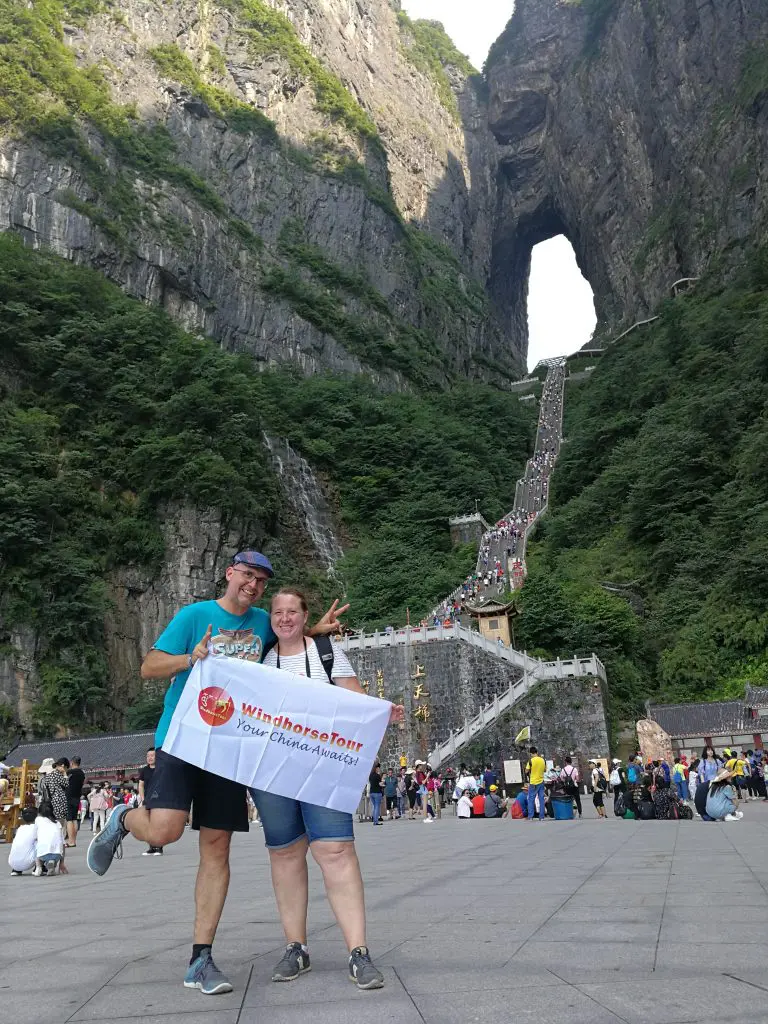
Located just 8 kilometers from Zhangjiajie city center, Tianmen Mountain is the highest peak in the area and one of the region’s most iconic natural landmarks. It is best known for Tianmen Cave, also called Heaven’s Gate, a massive natural arch carved into the mountainside and rising 131.5 meters high.
A major highlight is the Glass Walkway, a narrow glass path built along the cliff edge that offers dramatic views straight down the mountainside. On clear days, visitors enjoy sweeping panoramas, while misty weather creates a surreal walking in the clouds experience.
The visit is completed by riding the world’s longest passenger cable car from the city to the summit, along with scenic hiking trails and the historic Tianmen Mountain Temple. Tianmen Mountain is an essential stop on any Zhangjiajie itinerary and is usually planned as a half-day or full-day Tianmen Mountain visit.
3. Zhangjiajie Grand Canyon with Glass Bridge
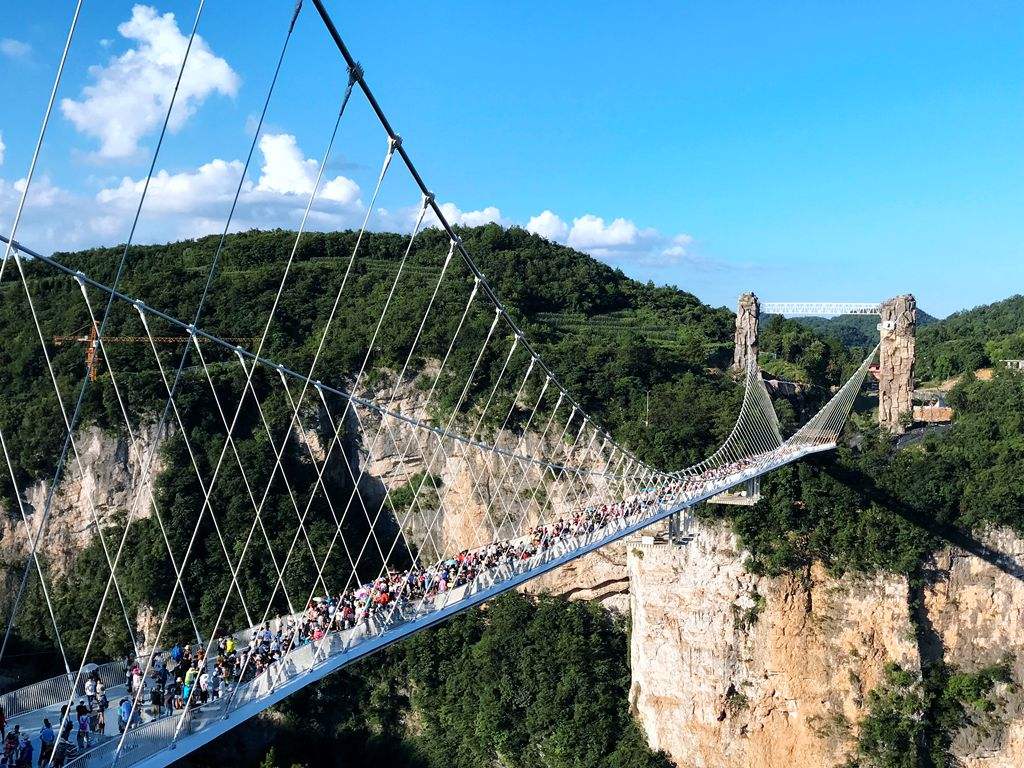
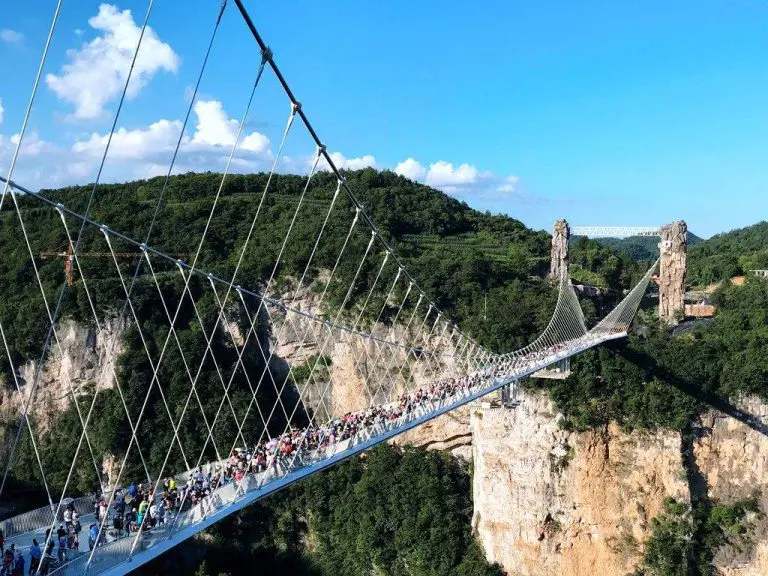
The Zhangjiajie Grand Canyon is best known for its spectacular Glass Bridge. Stretching nearly 430 meters across and suspended about 300 meters above the canyon floor, it is widely regarded as the longest and highest glass bottom bridge in the world.
Crossing the bridge offers a thrilling experience and sweeping views of waterfalls, cliffs, and forested valleys below. Beyond the bridge itself, the surrounding canyon features scenic walking paths, waterfalls, and viewpoints along the gorge. Daily visitor numbers are limited, so advance planning is recommended, especially during peak travel seasons.
4. Baofeng Lake
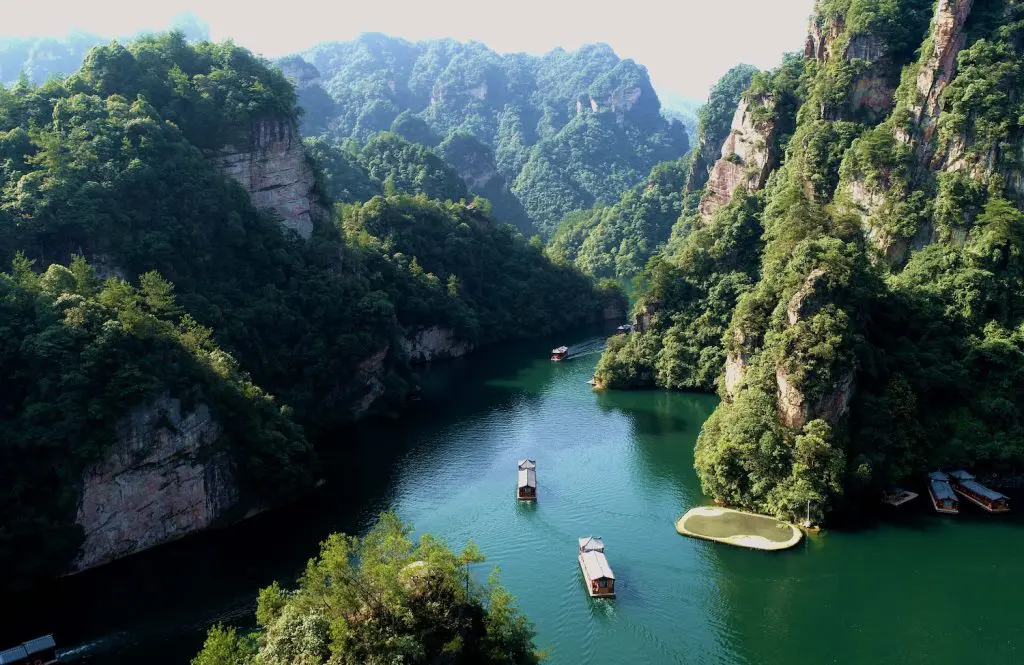
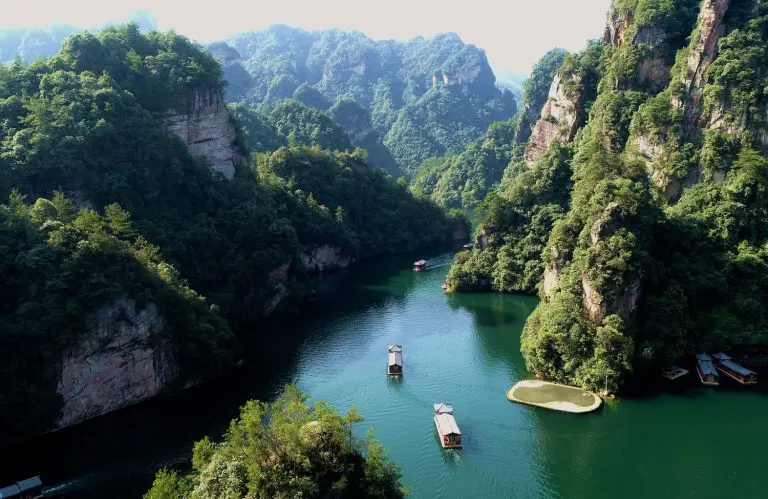
Baofeng Lake offers a softer, more tranquil side of Zhangjiajie. Located about 20 kilometers from Zhangjiajie National Forest Park, the lake is surrounded by steep green peaks and calm, emerald waters.
The best way to experience Baofeng Lake is by boat. A leisurely cruise allows visitors to enjoy reflections of jagged peaks, and traditional Tujia songs are sometimes performed during the ride. Quiet and unhurried, Baofeng Lake is an ideal addition to a 4–5 day Zhangjiajie itinerary.
5. Yellow Dragon Cave
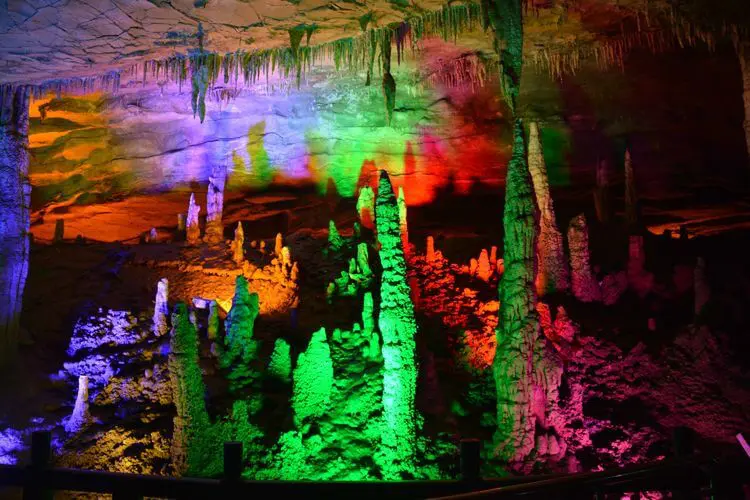
Also known as Huanglongdong, Yellow Dragon Cave is one of the largest and most impressive karst cave systems in China. Located on the eastern side of the Suoxi Valley area, the cave stretches over 7.6 kilometers in length and covers nearly 100,000 square meters.
Inside, visitors explore towering stalactites and stalagmites, underground rivers, waterfalls, and vast chambers. Highlights include thirteen grand halls, crystal-clear pools, and more than ninety interconnected passageways. The Dragon Palace is the most remarkable chamber, noted for its immense scale and dramatic rock formations shaped over millions of years.
The visit combines well-lit walking paths with a short underground boat ride, making Yellow Dragon Cave an easy-to-explore, all-weather attraction that can be easily added to a 4–6 day Zhangjiajie itinerary.
6. Cultural & Evening Attractions in Zhangjiajie
Beyond its daytime landscapes, Zhangjiajie offers several evening and cultural attractions that showcase local folklore, architecture, and ethnic traditions. These experiences are optional but can add variety to a multi-day Zhangjiajie itinerary.
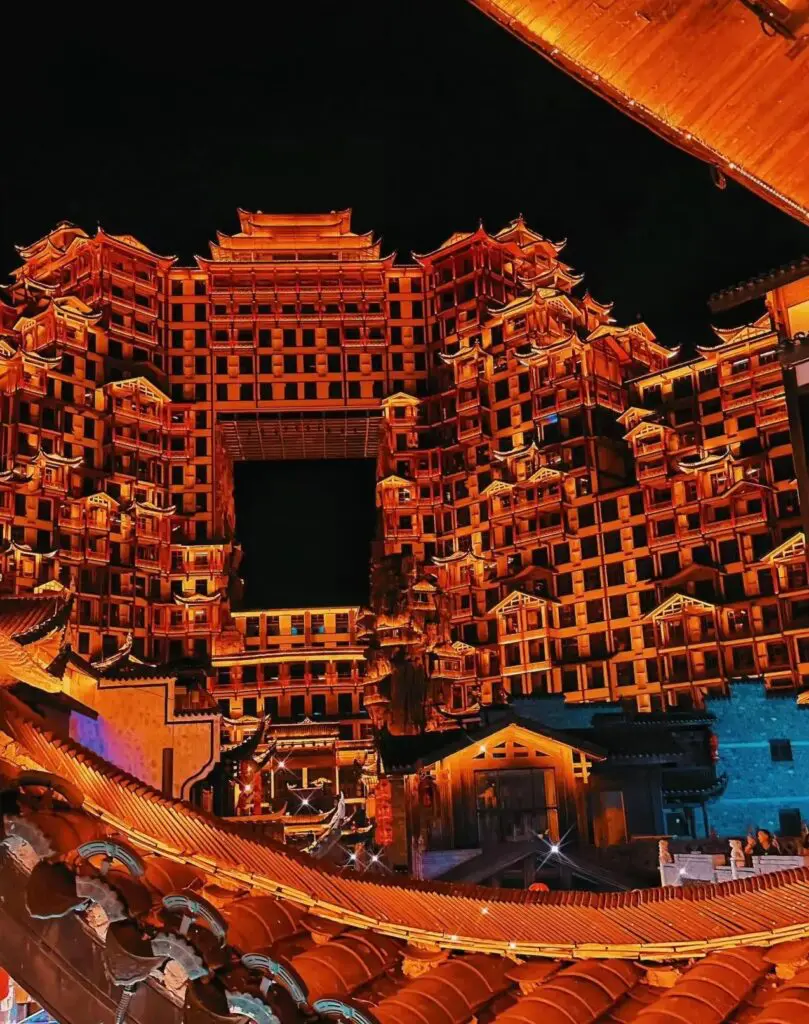
72 Strange Buildings (72 Qilou)
Located in Yongding District, 72 Strange Buildings is a modern cultural complex inspired by Tujia legends and architectural styles. The area is especially atmospheric at night, when illuminated towers, street food stalls, and live performances create a lively evening scene. It is best visited after dark and works well as a relaxed evening stop.
Tianmen Fox Fairy Show
Staged in the canyon beneath Tianmen Mountain, the Tianmen Fox Fairy Show is a large-scale outdoor musical based on local folklore. With Tianmen Mountain as its natural backdrop, the show combines music, dance, lighting, and storytelling to present a dramatic love story between a fox fairy and a human. It is one of Zhangjiajie’s most visually memorable nighttime experiences. Note the show is normally only available in tourism season from April to October.
Charming Xiangxi Show
Held in the Wulingyuan area, this indoor performance showcases Tujia and Miao traditions through live music, dance, and storytelling. It is a convenient evening option for visitors staying near the National Forest Park.
7. Top Adventure Experiences in Zhangjiajie
Beyond its famous viewpoints and scenic parks, Zhangjiajie also offers a range of outdoor adventures for travelers who want something more active. From river rafting to cliff-side challenges and trekking routes, these experiences can be added to a Zhangjiajie tour for extra excitement.
River Rafting
Zhangjiajie’s surrounding river valleys offer some of the best rafting experiences in western Hunan, especially during the warmer months.
- Maoyan River Rafting (茅岩河漂流) features dramatic canyon scenery with a mix of gentle sections and rapids, suitable for a wide range of travelers.
- Mengdong River Rafting (猛洞河漂流) is more challenging and often combined with a visit to Furong Ancient Town.
Rafting trips are seasonal and weather-dependent, typically available from late spring to early autumn.
Via Ferrata and Cliff Adventures
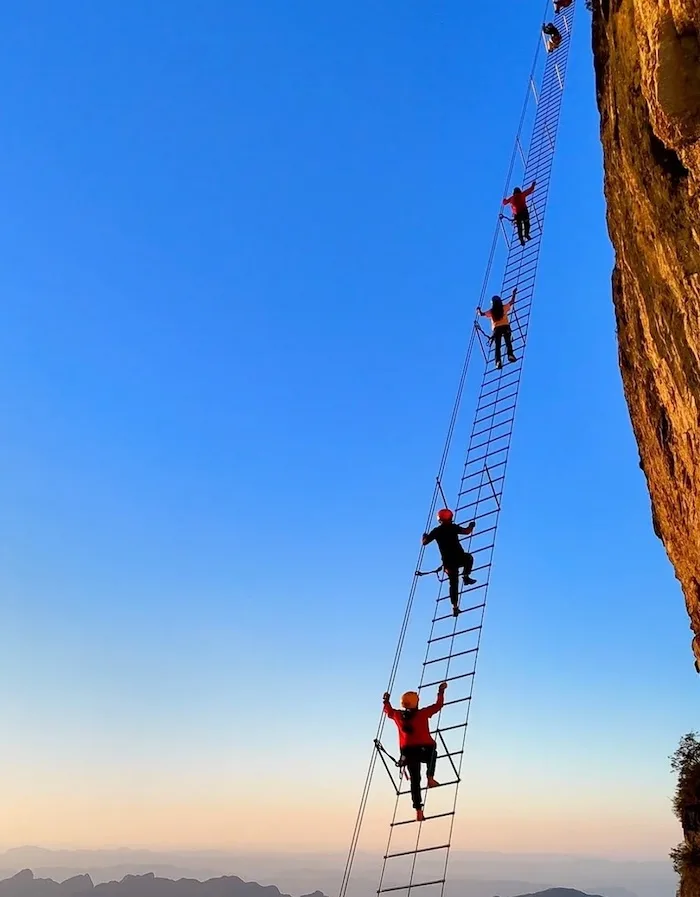
Zhangjiajie’s steep sandstone cliffs make it a growing destination for via ferrata experiences. Fixed steel cables, ladders, and safety anchors allow travelers to move safely along exposed rock faces under the guidance of professional instructors. These activities are suitable for beginners with basic fitness and offer a close-up, high-altitude perspective of Zhangjiajie’s dramatic landscapes. Via ferrata can be done in Zhangjiajie Grand Canyon and Qixing Mountain of Zhangjiajie.
Trekking and Hiking Experiences
For travelers who prefer exploring on foot, Zhangjiajie offers a variety of trekking routes beyond the main sightseeing paths.
Recommended Trekking Areas in Zhangjiajie National Park:
- Golden Whip Stream – A gentle valley walk suitable for most travelers
- Yangjiajie Scenic Area – Wilder trails, fewer crowds, and dramatic ridgelines, the Sky Corridor can only be reached on foot via mountain paths and staircases.
- Huangshizhai to Forest Park routes – Classic hiking paths with elevated viewpoints
- Laowuchang area – Quiet trails and sunrise viewpoints for experienced hikers
- Tianzi Mountain Ridge Routes Nantianmen and Wolong Ridge
These ridge routes offer more demanding trekking within Tianzi Mountain, with steeper sections and expansive views over the sandstone peaks. Nantianmen features open ridgelines and dramatic panoramas, while Wolong Ridge is quieter, with narrower paths, layered mountain scenery, and fewer visitors. It is well suited for travelers seeking a more secluded hiking experience.
Trekking difficulty can be adjusted based on fitness level, with routes ranging from easy scenic walks to longer full-day hikes.
8. Best Nearby Ancient Towns to Combine with Zhangjiajie
After exploring Zhangjiajie’s dramatic mountain landscapes, many travelers choose to add a nearby ancient town or ethnic village for cultural contrast. These destinations are easy to combine with a Zhangjiajie itinerary and offer a slower, more atmospheric experience.
Furong Ancient Town
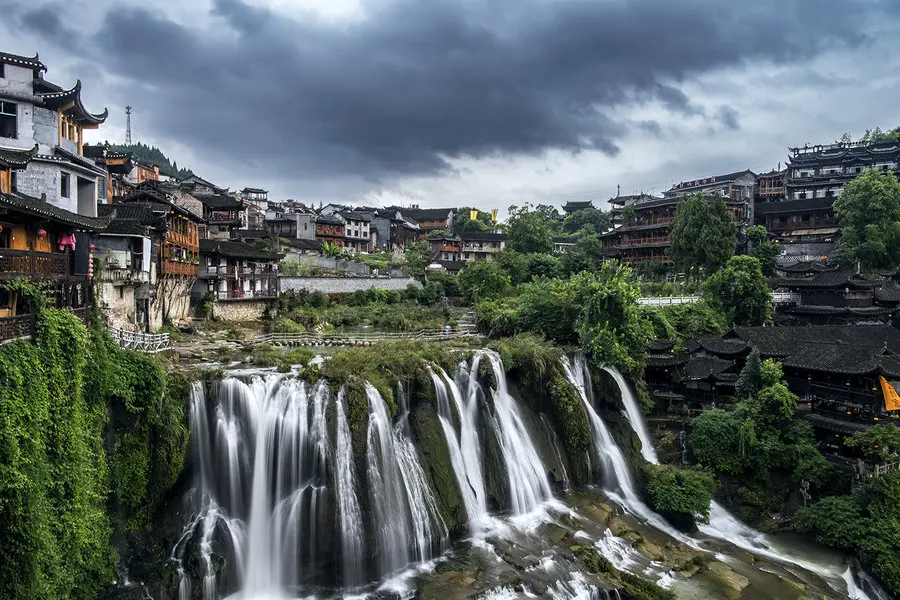
Often called the “ancient town hanging on a waterfall,” Furong Ancient Town is known for its dramatic cascade flowing directly through the heart of the town. Traditional Tujia-style stilt houses cling to the cliffs above the water, creating one of the most distinctive townscapes in western Hunan. With cobbled lanes, riverside views, and a relaxed pace, Furong is an excellent cultural stop after visiting Zhangjiajie National Forest Park. It can also be combined with the nearby Red Stone Forest National Geopark (Hongshilin) for a rewarding full-day excursion from Zhangjiajie.
Fenghuang Ancient Town
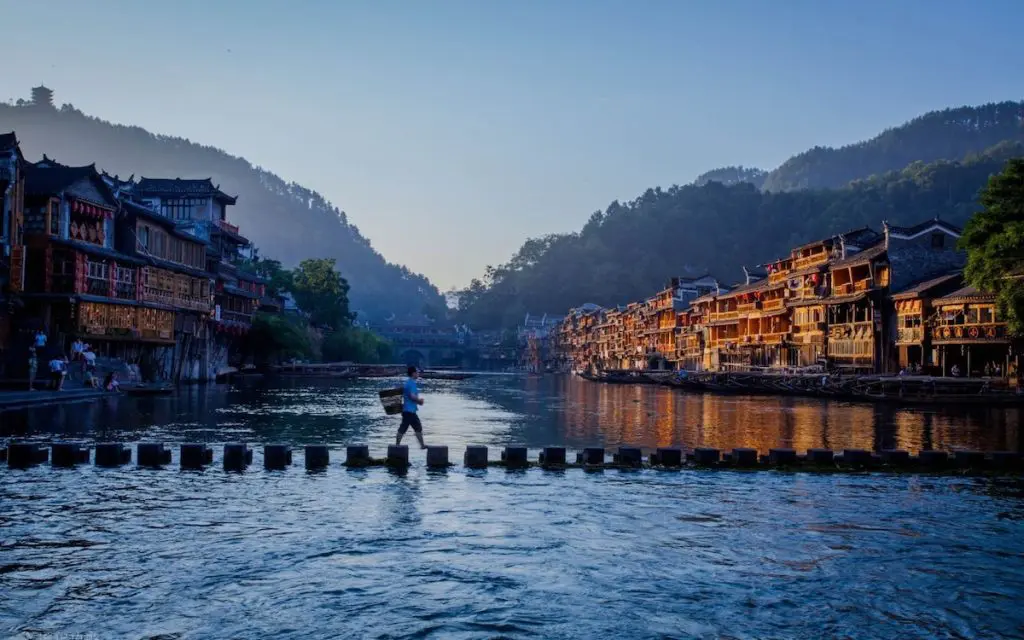
Fenghuang is one of China’s best-preserved historic towns and a very popular extension from Zhangjiajie. The town is famous for its riverside wooden houses, stone-paved alleys, ancient bridges, and lantern-lit night scenery along the Tuojiang River. Its blend of Ming and Qing architecture, ethnic culture, and vibrant evening atmosphere makes it a natural complement to Zhangjiajie’s mountain scenery.
Dehang Miao Village
Set within a dramatic canyon landscape near Jishou, Dehang Miao Village offers insight into traditional Miao culture and rural life. Surrounded by cliffs, waterfalls, and forested trails, the village is known for its scenic setting and peaceful atmosphere. It is a good choice for travelers interested in ethnic culture, countryside walks, and quieter scenery away from major tourist hubs.
Zhangjiajie Travel FAQs
How many days do you need in Zhangjiajie?
Most travelers spend 3–5 days to cover the main highlights comfortably, including the National Forest Park, Tianmen Mountain, and one additional scenic or cultural site.
Is Zhangjiajie suitable for families or seniors?
Yes. Many major sights feature cable cars, elevators, and paved walkways, making Zhangjiajie accessible for families and senior travelers.
What is the best time of year to visit Zhangjiajie?
The best periods are April–June and September–October, when weather is mild and visibility is generally good.
Can Zhangjiajie be combined with Fenghuang or Furong?
Yes. Fenghuang and Furong Ancient Towns are popular extensions, usually added before or after Zhangjiajie for cultural contrast.
Final Thoughts
Zhangjiajie is unlike anywhere else in China, offering an extraordinary concentration of sandstone pillars, cliffside walkways, deep valleys, and scenic viewpoints. From the iconic landscapes of Zhangjiajie National Forest Park to Tianmen Mountain’s Heaven’s Gate and the dramatic Glass Bridge, each highlight delivers a distinct and memorable experience.
What sets Zhangjiajie apart is the balance it offers. Visitors can combine panoramic viewpoints, gentle valley walks, light hiking, and cultural side trips without long transfers or rushed schedules. With good planning and sensible pacing, the region suits a wide range of travelers, from photographers and nature lovers to families and active explorers.
Choose the sights that matter most to you, travel at a comfortable rhythm, and Zhangjiajie will reward you with one of China’s most visually stunning and satisfying journeys.
If you’re considering visiting these highlights with a private, well-paced Zhangjiajie itinerary and local guidance, explore ourZhangjiajie tours, which combine the region’s top attractions with flexible routing and private travel.
Related tours
Explore Huangshizhai, Golden Whip Stream, Yuanjiajie's Avatar Mountains, Tianzi Mountain, the Glass Bridge at Zhangjiajie Grand Canyon, and Tianmen Mountain's Heaven's Gate on this private 5-day Zhangjiajie tour with Glass Bridge.
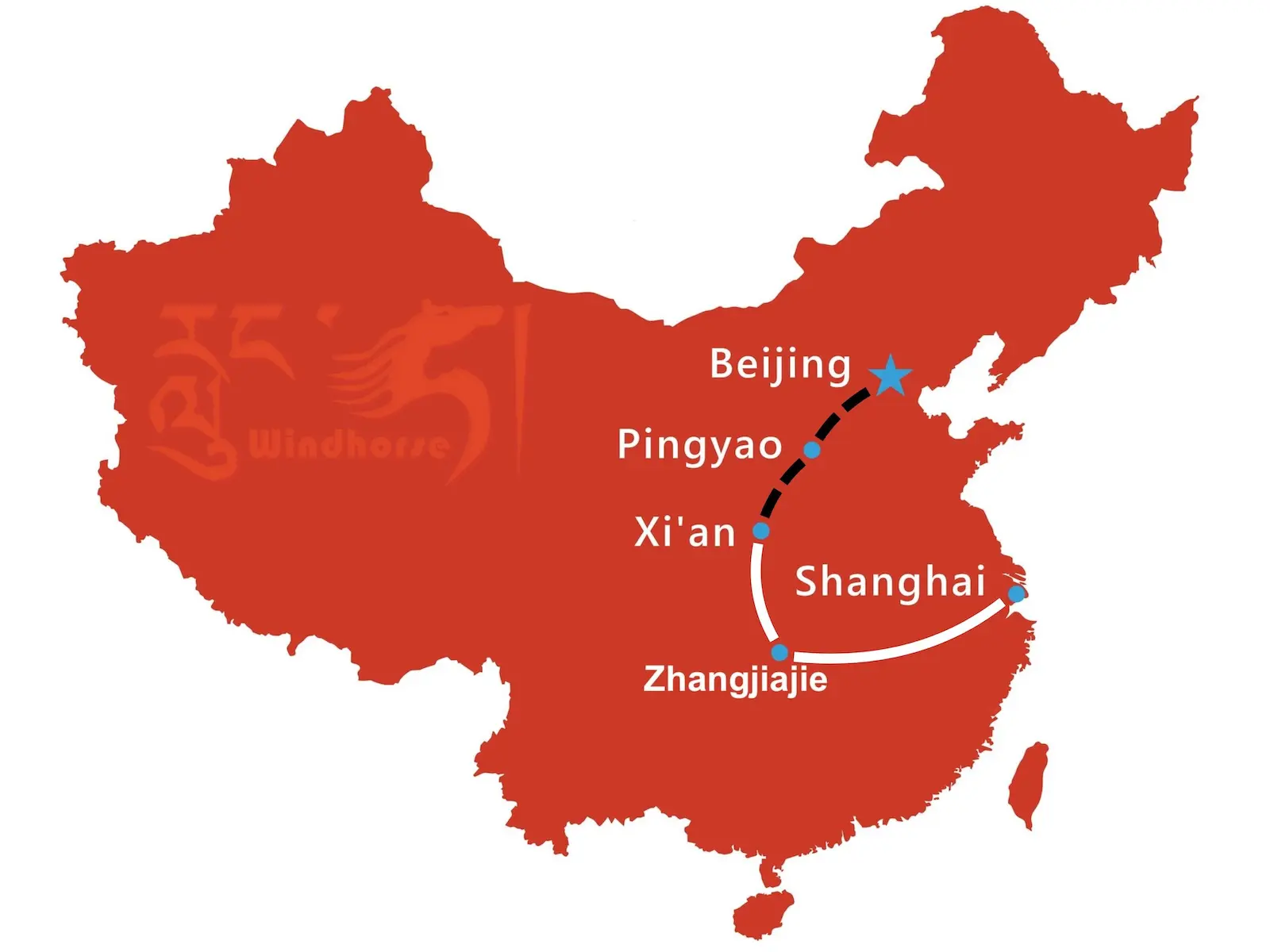
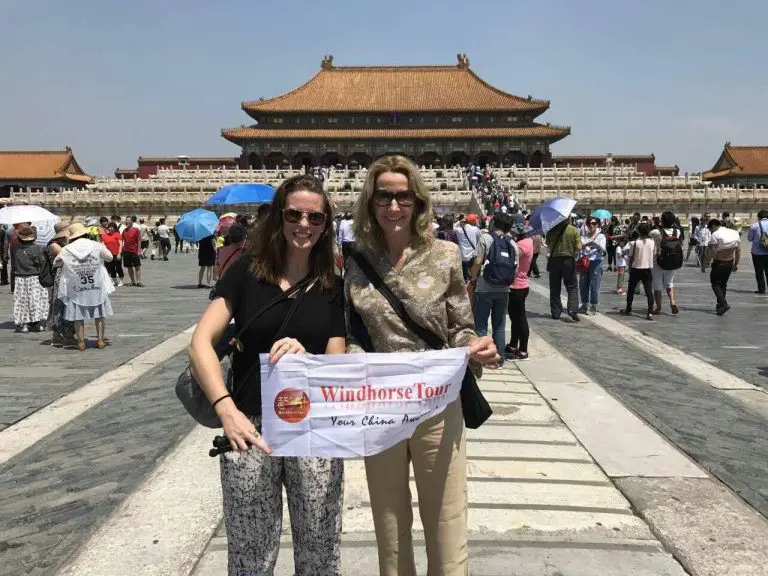
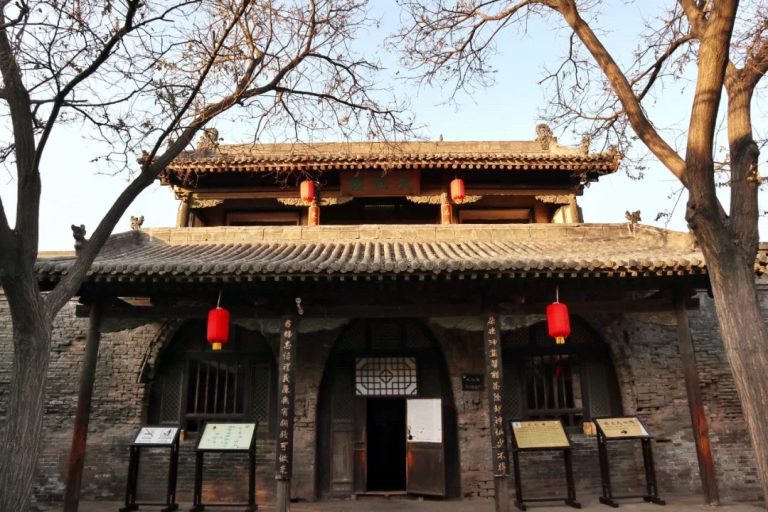
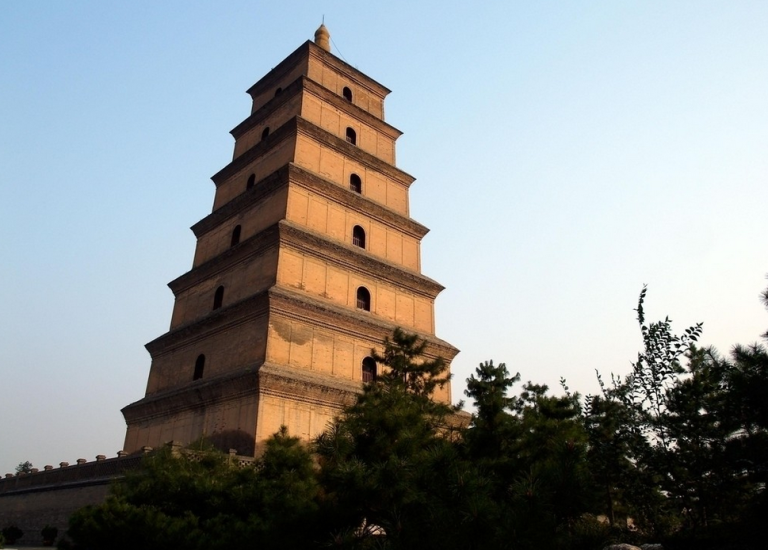
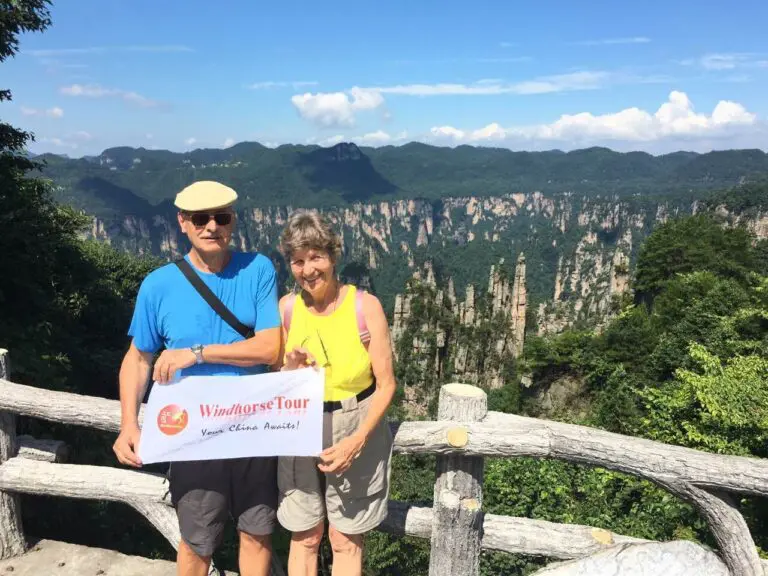
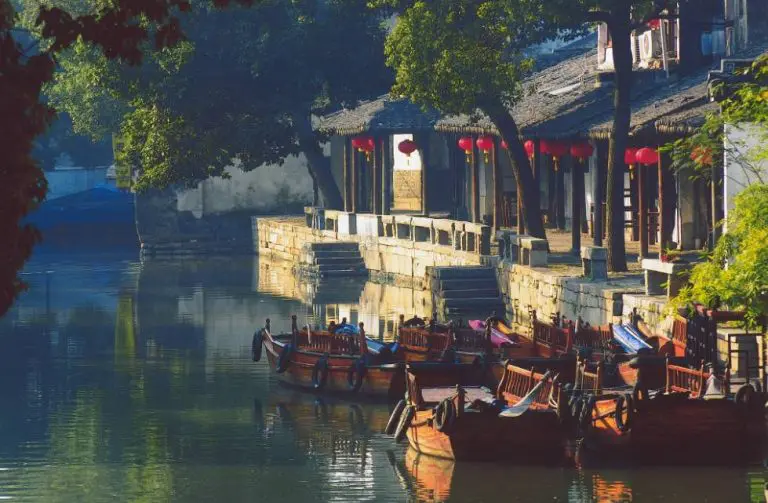
Experience China on this 2 week Beijing Xi’an Zhangjiajie Shanghai tour. Explore Beijing’s highlights, Pingyao Old Town, the Terracotta Warriors, Zhangjiajie’s Avatar Mountains, and Shanghai’s modern skyline for a balanced culture and nature journey.
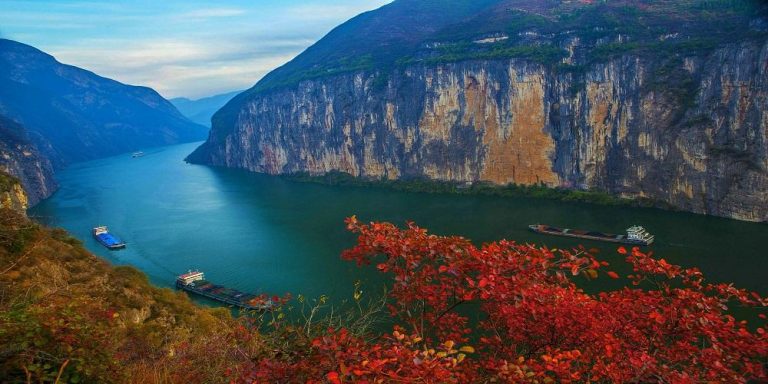
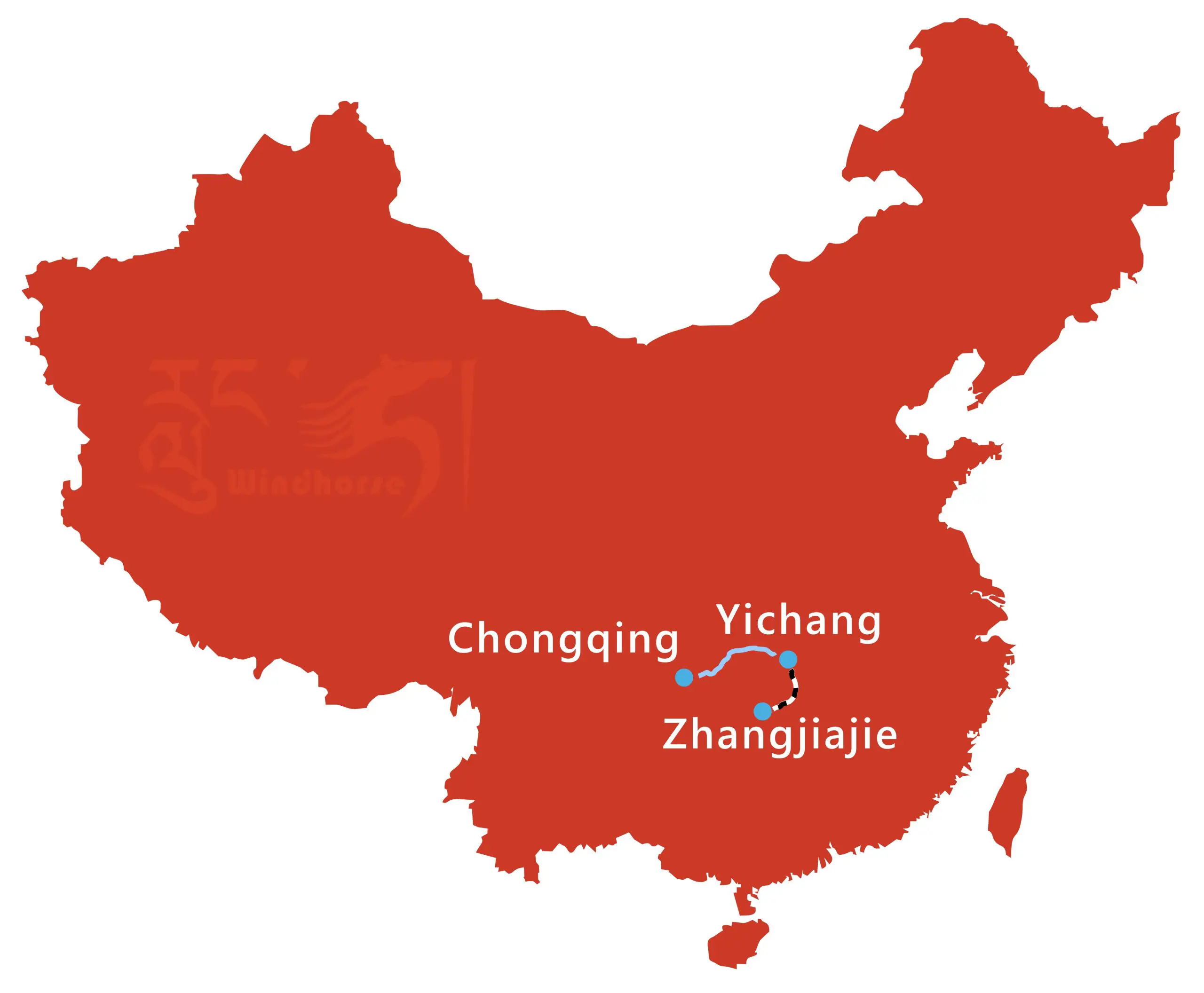
Experience an 8-day Chongqing Yangtze Cruise and Zhangjiajie Tour, combining a classic Three Gorges cruise from Chongqing to Yichang with Zhangjiajie’s top sites, including Yuanjiajie, Tianzi Mountain, the Glass Bridge, and Tianmen Mountain.