
Qinghai–Tibet Train Guide: Tickets, Sleeper Classes & Travel Tips
Qinghai–Tibet Train at a Glance
- Journey: Xining to Lhasa in about 20 hours
- Fares (Xining–Lhasa): soft sleeper 781–808 RMB, hard sleeper 495–521 RMB, hard seat 224 RMB
- Ticket release: generally 15 days before departure, including the departure day
- Soft sleepers: limited on every train and the first to sell out, especially from April to October
- To board: passport and a color copy of your Tibet Travel Permit
- Booking: train tickets are arranged as part of a complete Tibet tour; WindhorseTour does not sell ticket-only bookings
Table of Contents
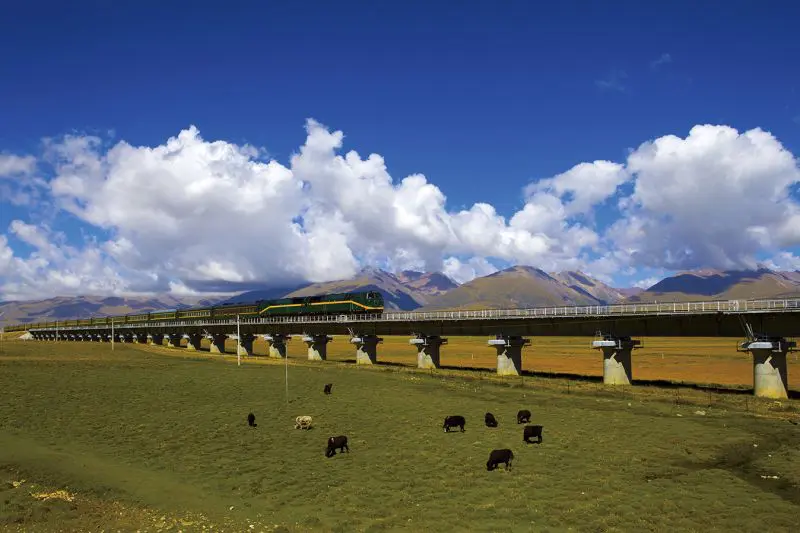
What is the Qinghai–Tibet train?
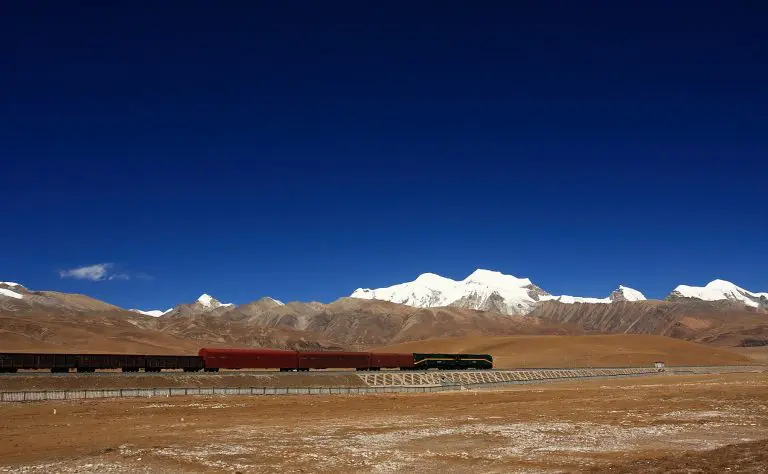
The Qinghai–Tibet train runs on the Qinghai–Tibet Railway, the world’s highest railway, connecting Xining with Lhasa. Since the railway opened in 2006, the trains have become a popular choice for travelers because they are punctual and cost-efficient, and the route offers splendid scenery across the Tibetan Plateau.
The highest point on the rail line is 5,072 m (16,640 ft) above sea level. The railway covers 960 km (597 mi) at an altitude of more than 4,000 m (13,123 ft), with over 550 km (341 mi) in the “frozen earth” area.
Qinghai–Tibet Railway key facts
Opening date: July 1st, 2006
Starting Point: Xining, Qinghai Province
Terminal Point: Lhasa, Tibet Autonomous Region
Length: 1,956 KM
Duration: about 20 hours
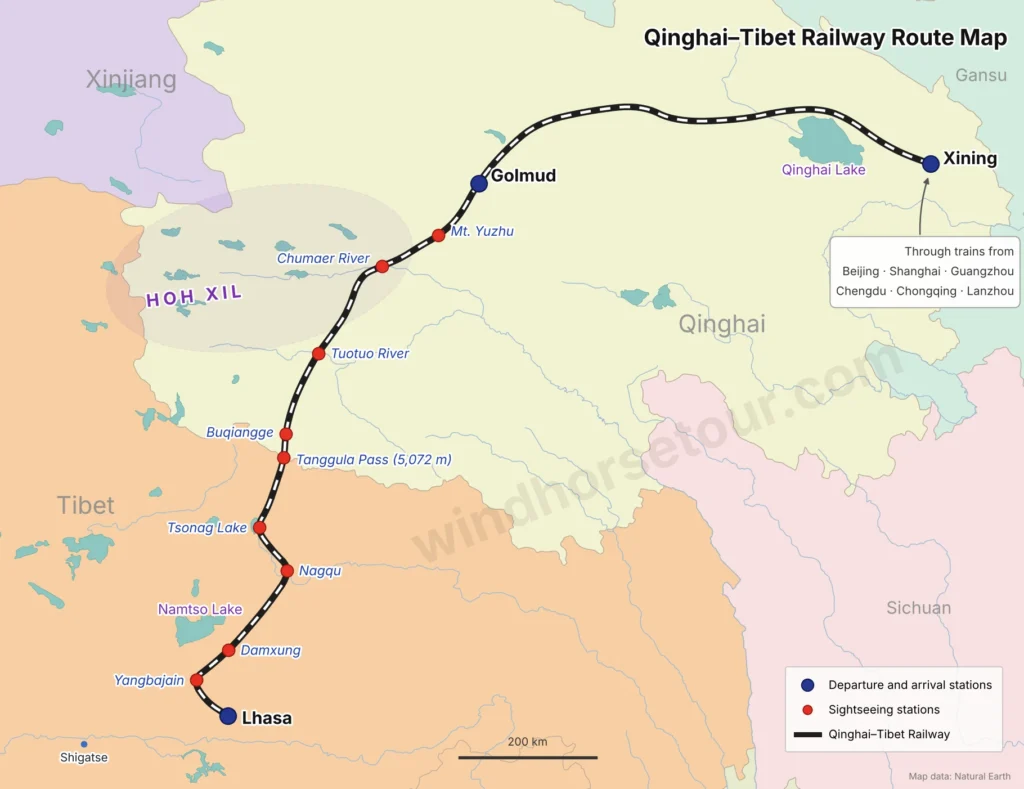
Major Railway Stops: Xining, Delingha, Golmud, Tuotuo river, Amdo, Nagqu, Lhasa
Top Speed: Xining-Golmud (814 KM): 160 km/h; Golmud-Lhasa (1142 KM): 100 km/h
Characteristics: World’s highest railway, the world’s longest railroad built atop a plateau
For the scenery and highlights along the line, see Qinghai–Tibet Railway: Route, Scenery & Highlights.
Changing to an Oxygen-Supplied Train at Xining
All trains traveling to Lhasa from other mainland Chinese cities require passengers to change to specially equipped oxygen-supplied trains at Xining Railway Station.
The transfer takes place within the station, so passengers do not need to exit and re-enter. Keep your luggage with you and follow the instructions of railway staff when changing trains.
Even if you have a through ticket from Beijing or another city to Lhasa, you will still need to change trains at Xining.
Train or Flight to Tibet: Which Is Better?
Taking the train is a good choice if you have time to enjoy the journey and want to see the Tibetan Plateau along the way. Flying is more practical if you have limited vacation time and prefer to spend more of it exploring Tibet.
- By train: The journey takes about 20–22 hours from Xining or 35–54 hours from cities such as Chengdu, Beijing, Shanghai and Guangzhou. Starting at around 2,275 m in Xining, the train gradually climbs onto the Tibetan Plateau, passing through Hoh Xil, the Tanggula Mountains and Tsonag Lake. However, the gradual ascent does not guarantee better acclimatization or prevent altitude sickness.
By flight: Flights from Chengdu or Chongqing to Lhasa take approximately 2–3 hours. You’ll arrive at an elevation of about 3,650 m, so we recommend spending your first two or three days at a relaxed pace, exploring Lhasa before continuing to higher-altitude destinations.
You can also combine both options. Many travelers take the train into Tibet to enjoy the scenery and fly out to save time. The reverse works just as well, with the possibility of better sleeper ticket availability when departing from Lhasa.

Tibet Train Ticket Classes and Prices
There are three types of tickets on Qinghai–Tibet trains: soft sleeper, hard sleeper and hard seat.
From Xining to Lhasa, a soft sleeper costs about 781–808 RMB (115–119 USD) per person and a hard sleeper about 495–521 RMB (73–77 USD) per person. The actual cost depends on which berth you get. A hard seat costs about 224 RMB (33 USD) per person.
For a journey of more than 20 hours, we recommend a sleeper. A hard seat is the cheapest option, but sitting upright overnight at high altitude is tiring and makes it harder to rest.
Journey Times and Fares from Other Cities
The train to Lhasa takes about 20 hours from Xining and 35–55 hours from major cities such as Chengdu, Beijing, Shanghai and Guangzhou. Sleeper fares rise with distance, from about 495 RMB for a hard sleeper from Xining to about 1,468 RMB for a soft sleeper (upper berth) from Guangzhou.
| Departure city | Journey time | Hard sleeper | Soft sleeper |
|---|---|---|---|
| Xining | about 20 hours | 495–521 RMB | 781–808 RMB |
| Lanzhou | about 24 hours | 522–550 RMB | 823–852 RMB |
| Chongqing | about 35 hours | 628–664 RMB | 998–1,035 RMB |
| Chengdu | about 35 hours | 628–664 RMB | 998–1,035 RMB |
| Beijing | about 40 hours | 720–763 RMB | 1,144–1,186 RMB |
| Shanghai | about 45 hours | 794–842 RMB | 1,263–1,311 RMB |
| Guangzhou | about 54 hours | 865-919 RMB | 1,468-1,526 RMB |
Fares range from upper to lower berth, and journey times are approximate. Trains from every city except Xining include the change to an oxygen-supplied train at Xining. For train numbers, departure times and frequencies, see our Tibet Train Schedules & Ticket Prices.

Soft Sleeper vs Hard Sleeper
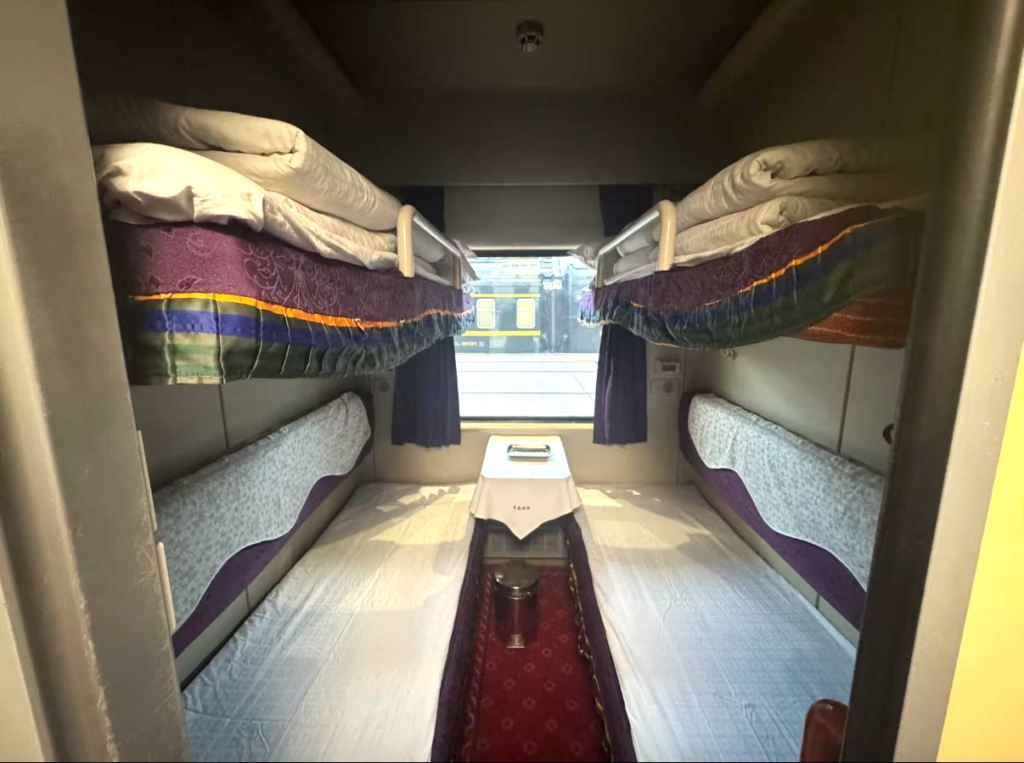
We highly recommend a soft sleeper for a more comfortable and better sleep. The berths are softer, the compartment is more spacious, and each compartment has a door facing the aisle, making it quieter.
A soft sleeper compartment has four berths. A family or group of four can occupy a whole compartment, while smaller groups may share it with other passengers.
A hard sleeper is the most popular choice for travelers on a budget. If soft sleepers are unavailable, a lower hard sleeper berth is a practical alternative. Whichever class you choose, a lower berth is the most comfortable option, with more space to sit, easier access and better window views. In hard sleepers, lower berths are often used as shared seating by other passengers during the day.
| Types | Soft Sleeper | Hard Sleeper |
|---|---|---|
| Privacy | Compartments with lockable doors | Open compartments without doors, less privacy |
| Berth amount | 4 berths (2 lower, 2 upper) in a compartment | 6 berths (2 lower, 2 middle, 2 upper) in a compartment |
| Sleeper size | Width 70 cm / Length 190 cm | Width 50 cm / Length 180 cm |
| Berth condition | All passengers can sit up on their berths | Passengers in the middle or upper berths cannot sit up straight |
| Luggage storage | Luggage closet above the door inside the compartment | Luggage rack above the aisle outside the compartment |
| Toilets | Both Western-style and squat toilets | Squat toilets |
| Oxygen outlets | Yes | Yes |
| Thermos bottle | Yes | Yes |
| Power supply | Sockets inside the compartment | A few sockets in each carriage |
| TV | Yes | No |
| Cost | About 50% more than a hard sleeper berth | The cheapest sleeper option |
| Best for | Families, older travelers, light sleepers and taller travelers | Budget travelers and solo travelers |
Which Train to Tibet Should I Take?
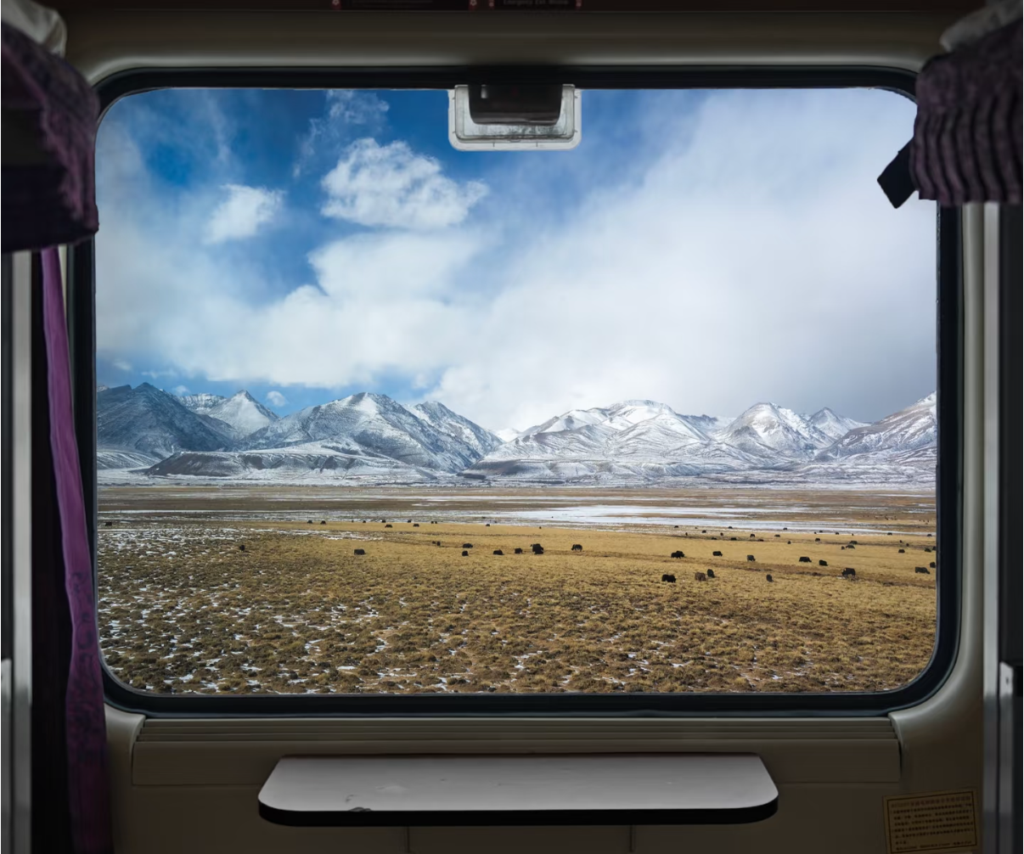
For the best daytime scenery, take a train that departs Xining in the late afternoon or evening, or departs Lhasa in the morning. The most spectacular section, between Golmud and Lhasa, then passes in daylight, including Hoh Xil, the Tanggula Pass and Tsonag Lake.
Best Xining–Lhasa Trains for Scenery
- Z8991, departing around 22:00 and arriving around 18:30 the next day: the most popular choice for scenery. You sleep through the first part of the route and see the plateau highlights in daylight.
- Z165 and Z265, departing around 18:00–19:00 and arriving mid-afternoon the next day: a good balance of scenery and an earlier arrival in Lhasa. Get up early to see Hoh Xil.
Best Lhasa–Xining Trains for Scenery
- Z8982, departing around 09:50 and arriving around 06:20 the next day: the best choice for scenery, with the Nyainqentanglha range, northern grasslands and Tanggula Pass in daylight, and Hoh Xil in the late afternoon. Later departures cross more of Hoh Xil after dark.
During the peak season, seasonal tourist trains (Y839 from Xining and Y840 from Lhasa) also run on daylight-friendly schedules. Schedules vary each year, so ask us which services are running on your travel dates.
How to Book Qinghai–Tibet Train Tickets
Tibet train tickets generally go on sale 15 days before departure, including the departure day. Most Z-series trains to Lhasa have only two soft sleeper carriages, so soft sleeper tickets are limited and often sell out soon after release, especially from April to October.
During this period, we recommend taking the train from Lhasa to Xining, as the chance of getting a sleeper ticket in this direction is better. If you prefer to take the train from Xining to Lhasa, especially in a soft sleeper, plan as early as possible.
If your preferred train or sleeper class sells out, adjusting your travel date or the direction of your train journey can often help, where your itinerary allows.
Requesting Your Train Ticket in Advance
When you book your Tibet tour with WindhorseTour, you can tell us your preferred train and class in advance. This is a request, not a confirmed ticket. Your ticket is confirmed only after tickets are released and issued.
Train tickets in China are issued in your real name, so we book them using your passport details. Please make sure the details you send us match the passport you will travel with.
WindhorseTour arranges train travel as part of a complete Tibet tour, together with your Tibet Travel Permit, guide and itinerary. We do not offer ticket-only bookings.
Please check the below image to find out how to read the train ticket.

Facilities on Qinghai-Tibet trains
Qinghai–Tibet trains have an oxygen supply system, air conditioning, bedding on every sleeper berth, a dining carriage, 24-hour hot water, toilets, washbasins and luggage storage. For differences between soft and hard sleeper carriages, see the comparison table above.
Oxygen Supply
Trains on the Qinghai–Tibet Railway have a “dispersion-mode” oxygen supply system to help passengers cope with the lower oxygen levels on the plateau. The system is switched on after the train leaves Golmud, where the locomotive is changed before the climb onto the high plateau. Sleeper carriages also have oxygen outlets for passengers who need extra oxygen, and train staff provide oxygen tubes free of charge.
Bedding and Air Conditioning
Each sleeper berth comes with a pillow, quilt and sheet. The carriages are air-conditioned and sealed, so the temperature stays comfortable, but the air is very dry.
Food and Drink
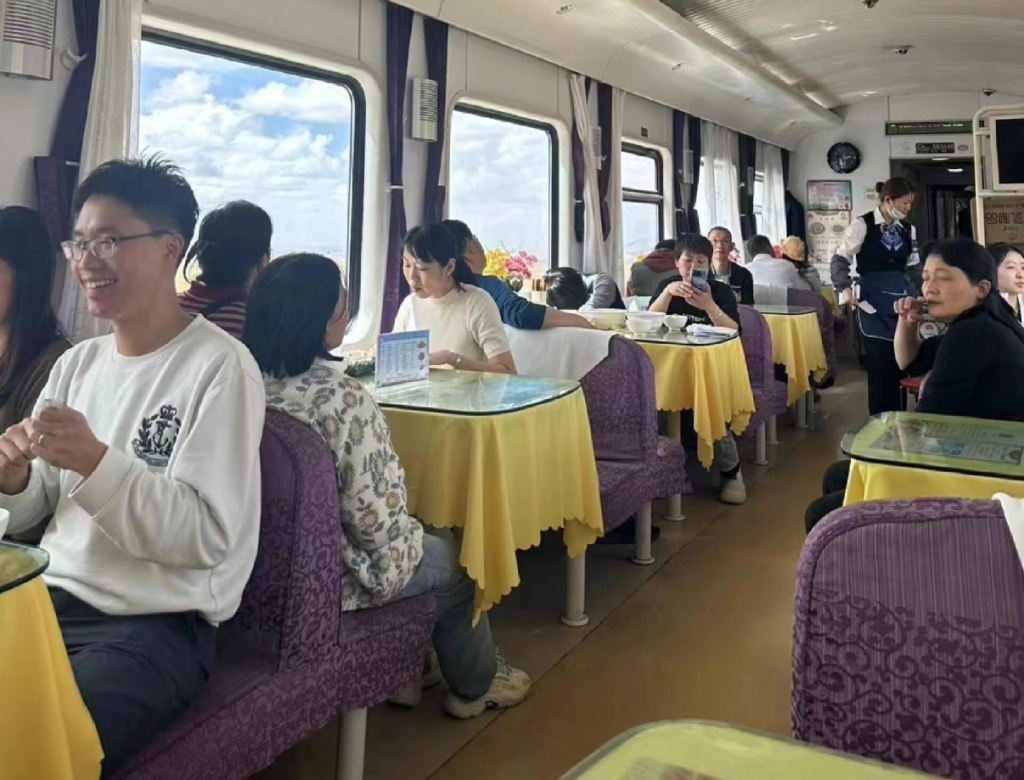
A dining carriage in the middle of the train offers Chinese food such as rice, vegetables, meat, soups and some snacks, and food trolleys sell packed meals and snacks. Choices are limited, so most travelers bring their own snacks and fruit as well.
Hot water is available 24 hours a day from a dispenser at the end of each carriage. At high altitude, water boils at a lower temperature, so cup noodles work better than packet noodles. Water from the washbasins is not drinkable.
Toilets, Washbasins and Luggage
Toilets and a simple washbasin are at each end of the carriage. Toilet paper is not provided, so bring your own, along with wet wipes. Large suitcases fit in the soft sleeper luggage closet, which is about 40 cm (16 in) high and 50 cm (20 in) wide, or on the racks above the windows in hard sleepers.
Mobile Signal and Wi-Fi
There is no Wi-Fi on Tibet trains, and mobile signal is patchy across much of the plateau. Download maps, music and films before boarding.
Smoking Policy
Smoking is prohibited throughout Tibet trains, including in carriage connections, because oxygen is supplied inside the carriages.
Documents Needed to Board a Train to Tibet
To board a train to Lhasa, foreign travelers need their passport and a color copy of their Tibet Travel Permit (Tibet Entry Permit), which is issued only by the Tibet Tourism Bureau. The original permit is not required for the train. Staff check the permit at the station, and may check it again during the journey.
The Tibet Travel Permit application usually takes about 2-3 weeks just depending on your travel route, and it can only be applied for by a local travel agency on behalf of travelers. Besides the permit, foreigners traveling to Tibet need to pre-arrange a tour with a licensed tour guide and a private vehicle with a driver. Learn more in our Tibet Travel Permit guide.
Arriving at Lhasa Railway Station
When you arrive at Lhasa Railway Station, your Tibetan guide meets you at the station exit and transfers you to your hotel. Plan a relaxed first day to adjust to Lhasa’s elevation of about 3,650 m.
Does the Tibet Train Help with Altitude Sickness?
The train’s gradual climb gives your body more time to adjust than flying, but the oxygen supply does not prevent altitude sickness. The train climbs above 4,000 m for a long section of the route and reaches 5,072 m at its highest point.
Drink water regularly, avoid alcohol, move slowly, rest on board, and tell the train staff if you feel unwell. If you develop a severe headache, repeated vomiting, unusual breathlessness or difficulty walking steadily, alert the train staff immediately. Onboard oxygen helps, but it does not make altitude illness harmless.
Plan an easy first day after arriving in Lhasa. See our Tibet altitude and acclimatization guide.
What to Pack for the Tibet Train
- Passport and color copy of your Tibet Travel Permit
- Snacks, fruit and a cup for hot water
- Toilet paper and wet wipes
- Slippers
- Warm layers for the night
- Lip balm and moisturizer for the dry air
- Power bank, as sockets are limited and shared
- Offline maps, music and films, as mobile signal is patchy on the plateau
- Personal medication
There is no need to bring large oxygen canisters, as the train supplies oxygen.
Taking the Tibet Train with Children or Older Travelers
For families with children or older travelers, we often recommend departing from Xining because it shortens the train journey. Spending two or three days in Xining before departure may also provide some initial adjustment to the altitude, although it does not guarantee protection against altitude sickness.
We also recommend soft sleepers for families. A family of four can occupy a whole compartment, while smaller groups may share with other passengers. After arriving in Lhasa, plan an easy first day so everyone can rest. Travelers with medical concerns should consult a doctor before the trip.
Qinghai–Tibet Train FAQs
How long does the train from Xining to Lhasa take?
The train from Xining to Lhasa takes about 20 hours and covers 1,956 km.
Do I need to change trains at Xining?
Yes. If you’re traveling to Lhasa by train from another mainland Chinese city, you need to change to an oxygen-supplied train at Xining Railway Station. The transfer takes place within the station, without exiting or purchasing another ticket.
Is the Qinghai–Tibet train a high-speed train?
No. Trains to Lhasa are Z-series express sleeper trains, not high-speed trains. Top speed is 160 km/h between Xining and Golmud and 100 km/h between Golmud and Lhasa.
Do I need the original Tibet Travel Permit to board the train?
No. A color copy of the Tibet Travel Permit is sufficient to board the Qinghai–Tibet train to Lhasa. Bring your passport as well.
Can I take the Tibet train without booking a tour?
No. Foreign travelers need a Tibet Travel Permit, which can only be applied for by a local travel agency for a pre-arranged tour with a licensed guide and private vehicle.
Plan Your Tibet Tour with a Train Journey
WindhorseTour arranges your Tibet Travel Permit, train tickets, Tibetan guide, private transport and hotels as one complete tour. We don’t offer ticket-only bookings.
Share your travel dates and departure city, and we’ll help you plan the route. Or browse our Tibet Train Tours for ideas.
Related tours

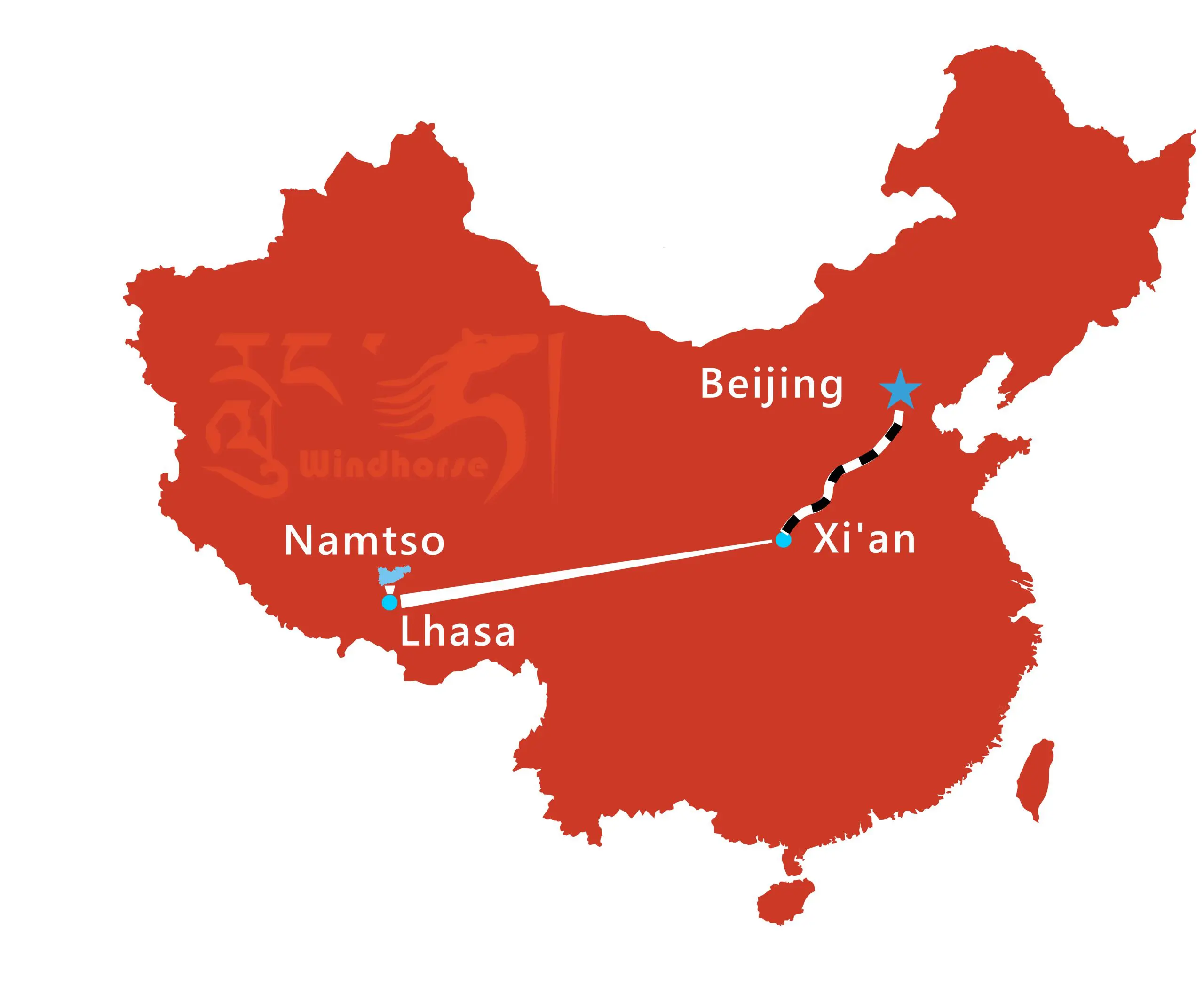
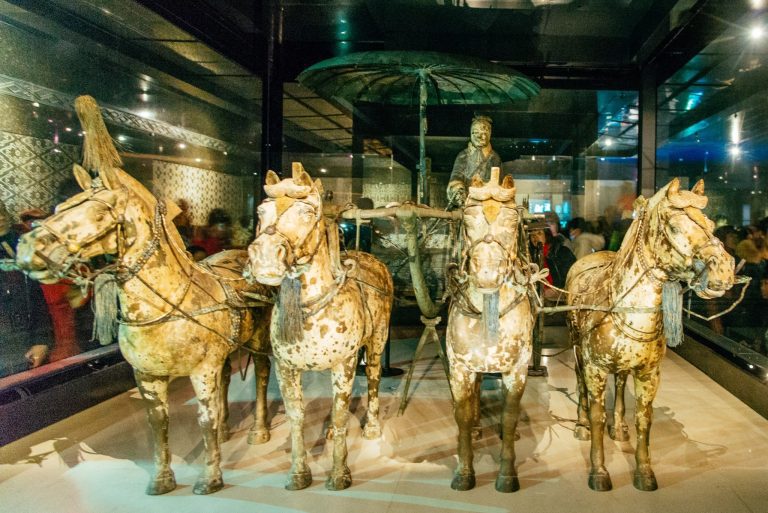
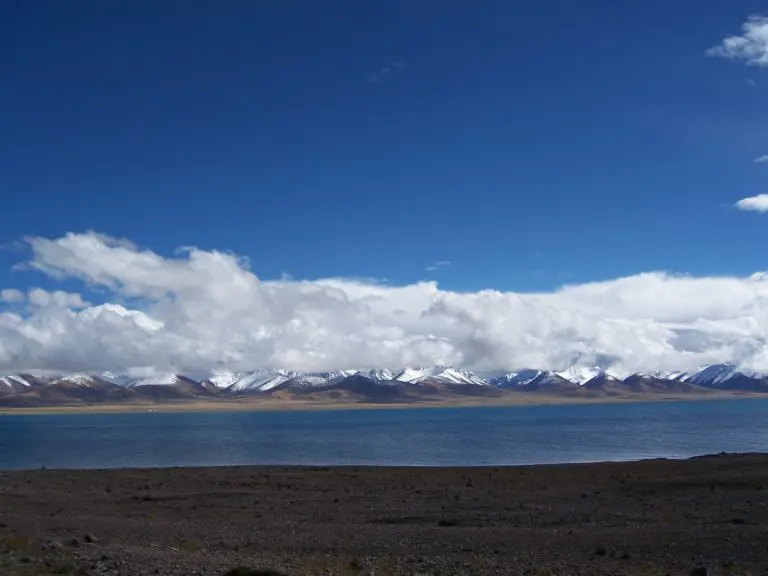
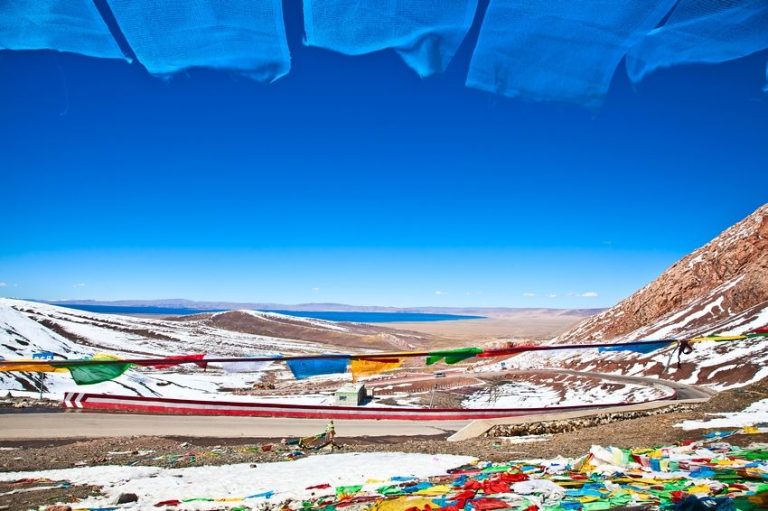

This 11-day Beijing Xi’an Lhasa Train Tour links China’s ancient capitals with Tibet’s cultural heart. Visit the Great Wall and Terracotta Warriors, then take the Qinghai-Tibet Railway to Lhasa to explore the Potala Palace, Jokhang Temple, and the stunning Namtso Lake or Yamdrok tso.

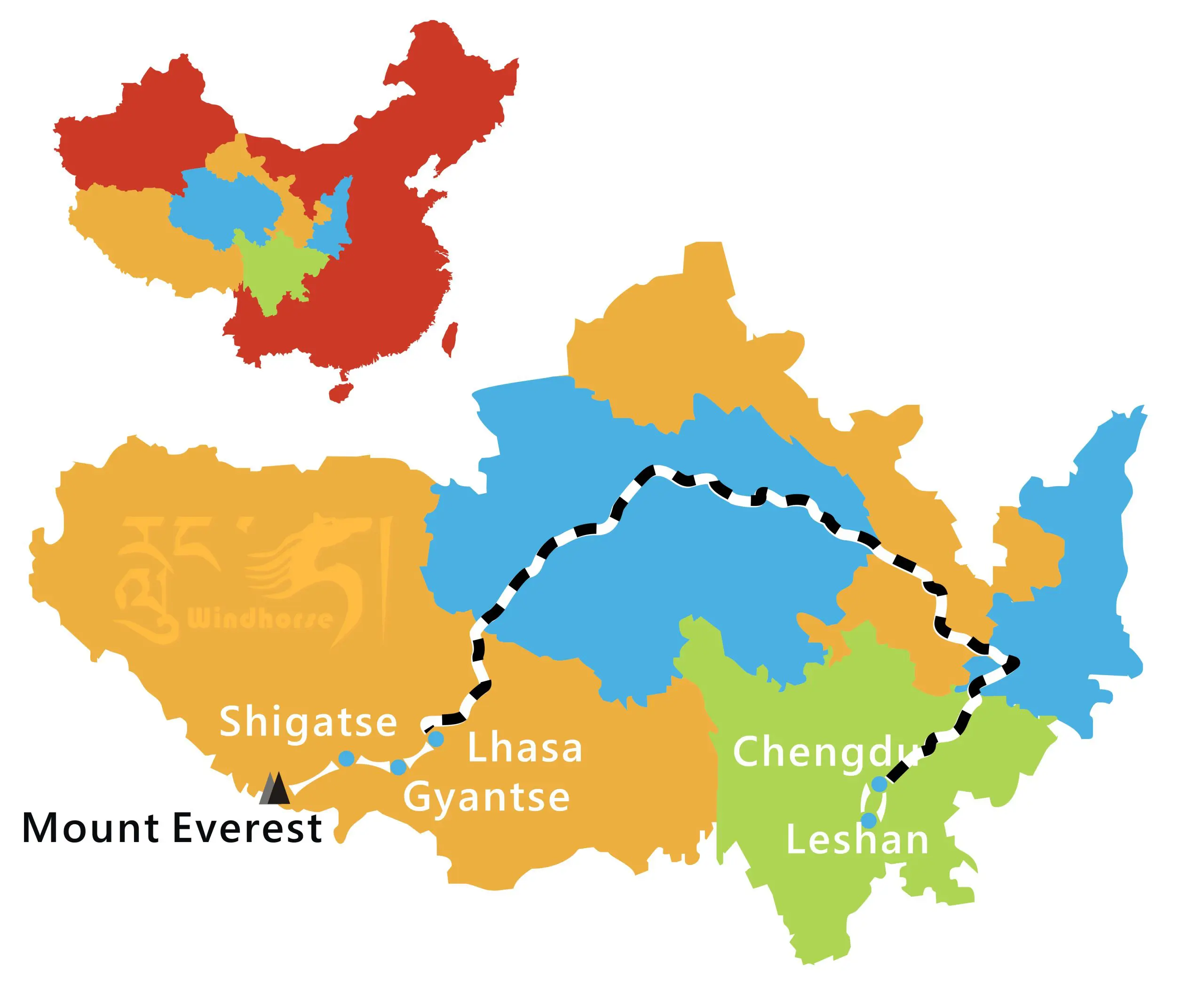
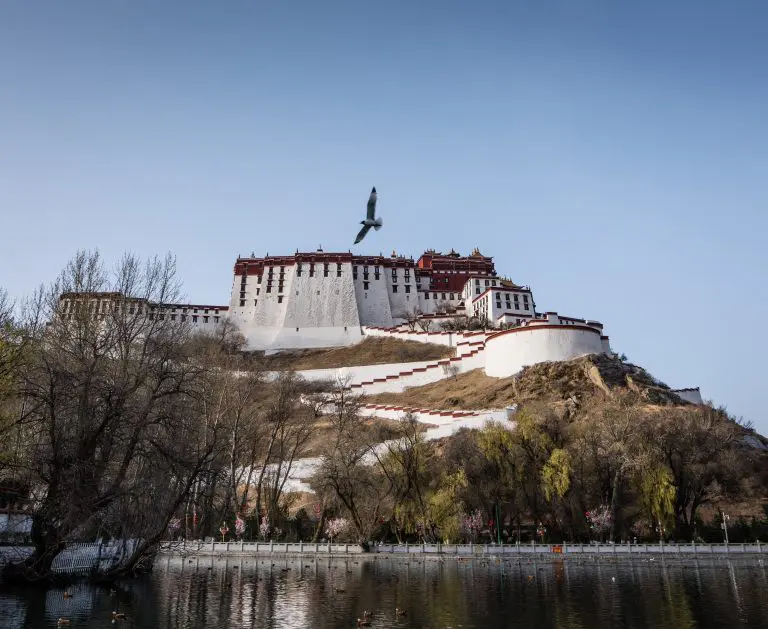
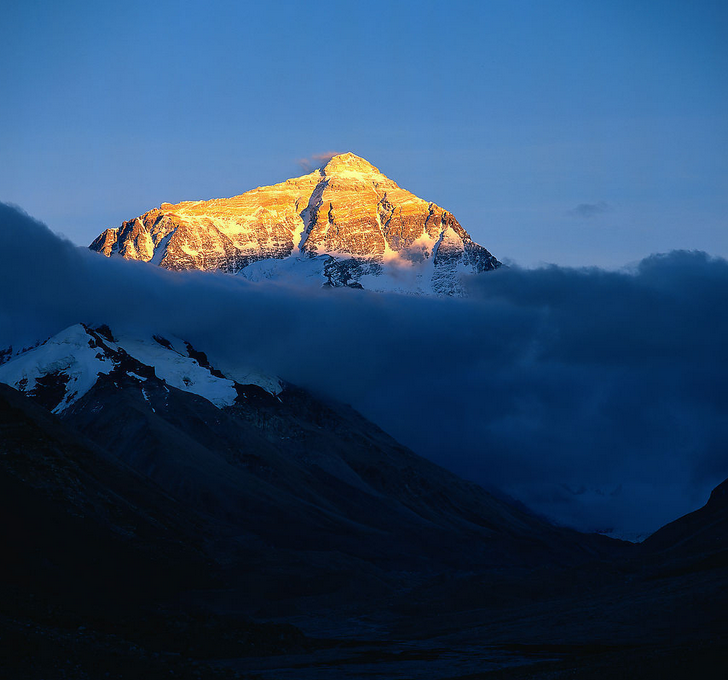
Experience a 12-day Chengdu Tibet Train Tour that links Sichuan’s culture with Tibet’s Himalayan wonders. Visit pandas and the Leshan Giant Buddha, ride the Qinghai-Tibet Railway to Lhasa, explore the Potala Palace, and travel west via Gyantse and Shigatse to Everest Base Camp before returning to Lhasa.
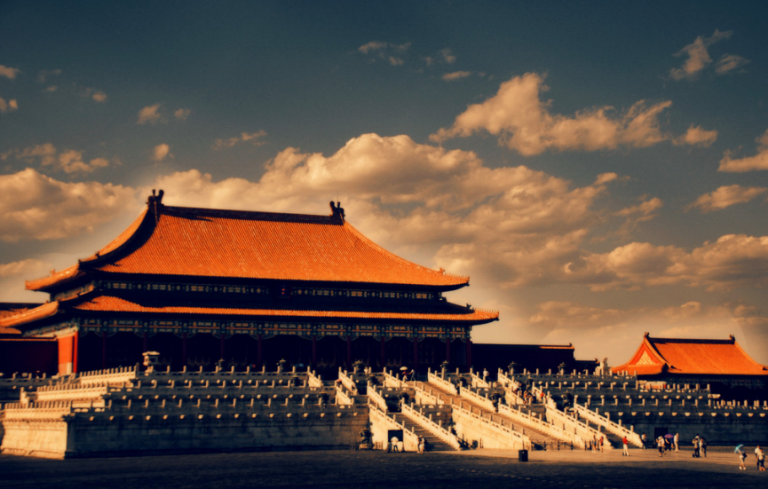
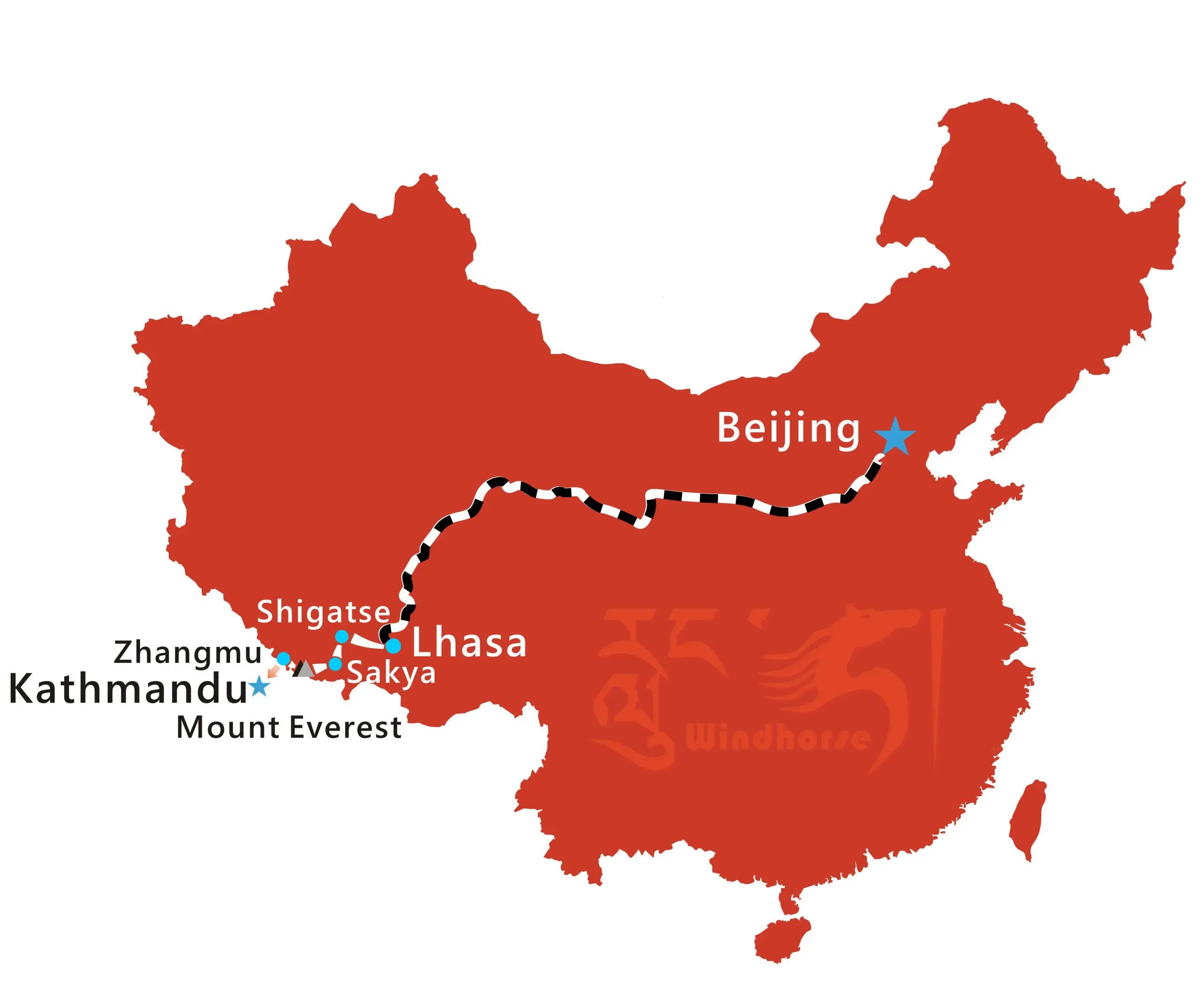
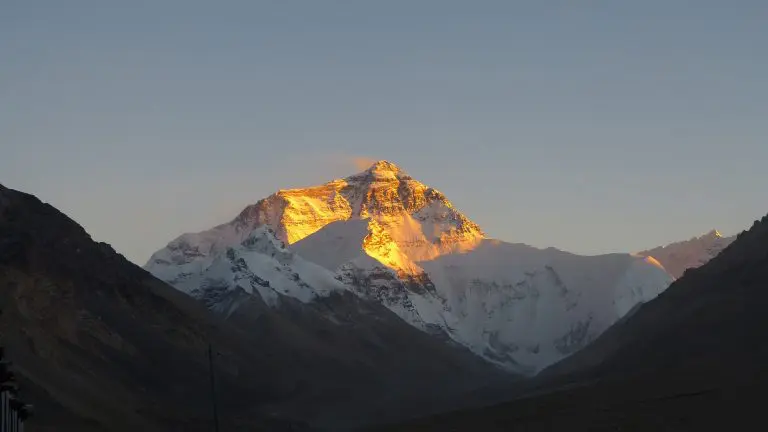

Experience the ultimate overland adventure on this 12-Day Beijing Tibet Train Tour to Kathmandu.
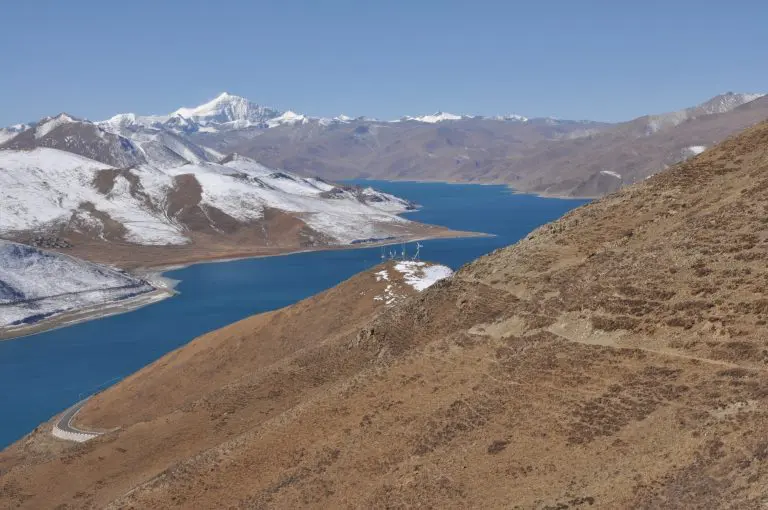
Explore Beijing’s Forbidden City, Temple of Heaven, and the Great Wall before boarding the Qinghai-Tibet Railway to Lhasa. Discover the Potala Palace, Yamdrok Lake, and Everest Base Camp, then continue into Kathmandu valley, where Tibetan culture meets Nepal’s vibrant mountain spirit.
Comments

I am interested your tibet travel train in n fly out,can I have more info on that plan to go either in April or sept.