
China 240-Hour Visa-Free Transit Policy (2026)
As of June 12, 2025, China has allows citizens of 55 countries to stay for up to 240 hours (10 days) without a visa when transiting to a third country or region. This is a significant improvement from the earlier 72- or 144-hour limit. It gives travelers more time to explore China’s rich culture, lively cities, and famous cuisine.
In this guide, you’ll discover all you need to know about China’s 240-hour visa-free transit policy. This includes eligibility requirements, common questions, and useful tips for making the most of your stopover.
You may also like: 30-Day China Visa-Free Entry for 2026 – Full List of Eligible Countries

Table of Contents
1. What is China’s 240-Hour Visa-Free Transit Policy?
On December 17, 2024, the National Immigration Administration announced the extension of China’s visa-free transit policy from the original 72 and 144 hours to 240 hours (10 days). The policy also includes 21 new ports of entry, expanding the total to 65 ports across 24 provinces, municipalities, and autonomous regions.
As of June 12, 2025, travelers from 55 eligible countries, including Russia, the United Kingdom, the United States, Canada, newly added country Indonesia and more, can transit through China to a third country or region without a visa. Visitors may enter through any of the 60 designated ports and stay within the permitted areas for up to 240 hours.
2. Eligibility Requirements for the 240-Hour Visa-Free Transit Policy
To qualify for the 240-hour visa-free transit policy, travelers must meet the following criteria:
- Nationality: Must hold a passport from one of the 55 eligible countries.
- Valid Passport: Must have a passport with at least 3 months of validity remaining at the time of entry.
- Confirmed Onward Ticket: Must have a confirmed onward ticket (with assigned seat and departure time) to a third country or region within the 240-hour time limit.
- Entry Documentation: Must fill out the Temporary Entry Card for Foreign Nationals and pass immigration inspection upon arrival.
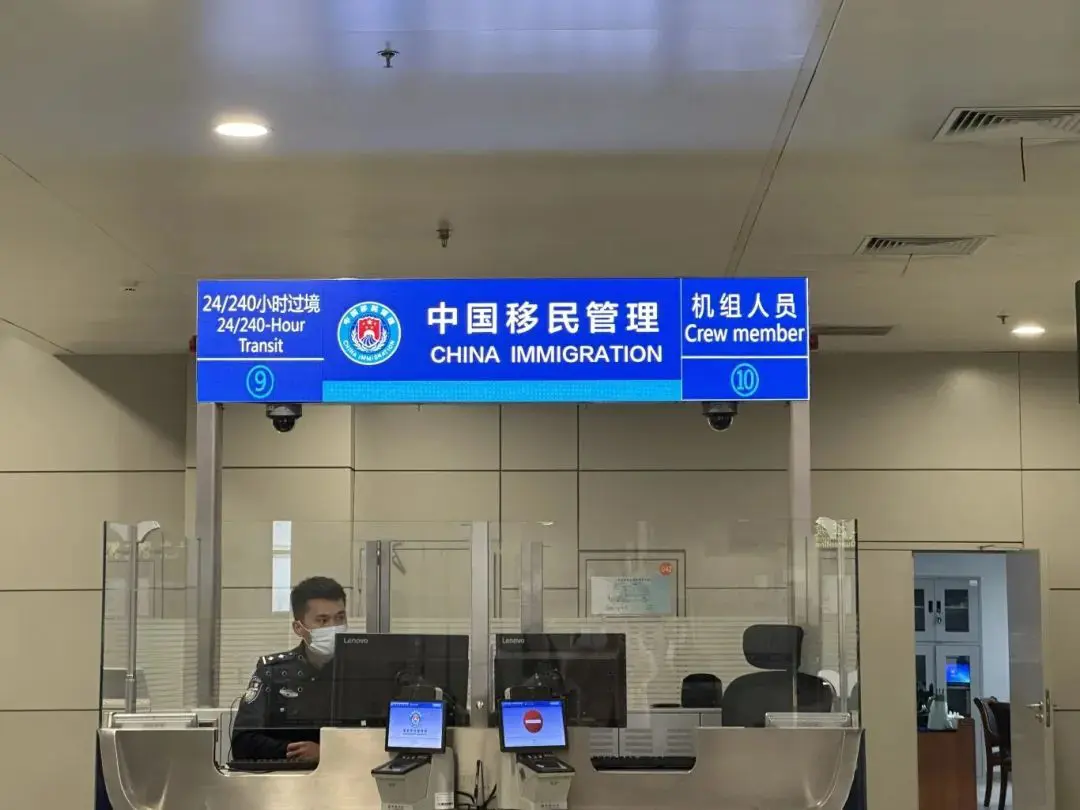
3. Which countries are eligible for the 240-hour visa-free transit policy?
A total of 55 countries are eligible for this policy, categorized as follows:
- European Countries (40): Austria, Belgium, Czech Republic, Denmark, Estonia, Finland, France, Germany, Greece, Hungary, Iceland, Italy, Latvia, Lithuania, Luxembourg, Malta, Netherlands, Poland, Portugal, Slovakia, Slovenia, Spain, Sweden, Switzerland, Monaco, Russia, United Kingdom, Ireland, Cyprus, Bulgaria, Romania, Ukraine, Serbia, Croatia, Bosnia and Herzegovina, Montenegro, North Macedonia, Albania, Belarus, and Norway.
- American Countries (6): United States, Canada, Brazil, Mexico, Argentina, and Chile.
- Oceania Countries (2): Australia and New Zealand.
- Asian Countries (6): South Korea, Indonesia, Japan, Singapore, Brunei, United Arab Emirates, and Qatar.

4. Available Provinces, Cities and Ports for China 240-Hour Visa-Free Transit
The 240-Hour Visa-Free Transit Policy allows eligible foreign nationals to explore 24 provinces, municipalities, and autonomous regions in China without requiring a visa. During their 240-hour stay, travelers can move freely within these designated regions, enjoying the country’s rich culture, historical landmarks, and breathtaking natural scenery. Entry is facilitated through 65 designated ports, including major international airports, railway stations, and cruise terminals. Departures can also be made through any of these 60 ports, with additional open ports available in Guangdong for added flexibility.
Below is a detailed table outlining the regions, ports of entry, and permitted stay areas under this policy.
| Province & City | Available Port | Permitted Visa-free Stay Area |
|---|---|---|
| Beijing | Beijing Capital International Airport Beijing Daxing International Airport | Beijing |
| Tianjin | Tianjin Binhai International Airport Tianjin Port (Cruise) | Tianjin |
| Hebei Province | Shijiazhuang Zhengding International Airport Qinghuangdao Port (Cruise) | Hebei Province |
| Shanghai | Shanghai Pudong International Airport Shanghai Hongqiao International Airport Shanghai Port (Cruise) | Shanghai |
| Jiangsu Province | Nanjing Lukou International Airport Wuxi Sunan Shuofang International Airport Yangzhou Taizhou International Airport Lianyungang Port (Cruise) | Jiangsu Province |
| Zhejiang Province | Hangzhou Xiaoshan International Airport Ningbo Lishe International Airport Wenzhou Longwan International Airport Jinhua Yiwu International Airport Wenzhou Port (Cruise) Zhoushang Port (Cruise) | Zhejiang Province |
| Guangdong Province | Guangzhou Baiyun International Airport Shenzhen Bao’an International Airport Jieyang Chaoshan International Airport Nansha Port Shekou Port Guangzhou Pazhou Ferry Terminal Zhuhai Hengqin Port Hong Kong-Zhuhai-Macao Bridge Port Zhongshan Passenger Port (Ferry) West Kowloon Station (Hongkong) Port of Guangzhou-Shenzhen-Hong Kong Express Rail Link | Guangdong Province (Travelers can exit from all open ports of entry in the entire province.) |
| Sichuan Province | Chengdu Shuangliu International Airport Chengdu Tianfu International Airport | 11 cities in Sichuan Province ( Chengdu, Leshan, Deyang, Suining, Meishan, Ya’an, Ziyang, Neijiang, Zigong, Luzhou, Yibin) |
| Chongqing | Chongqing Jiangbei International Airport | Chongqing City |
| Yunnan Province | Kunming Changshui International Airport Lijiang Sanyi International Airport Mohan Railway Port | Kunming, Lijiang, Yuxi, Pu’er, Chuxiong, Dali, Xishuangbanna, Honghe, Wenshan |
| Guizhou Province | Guiyang Longdongbao International Airport | Guizhou Province |
| Hunan Province | Changsha Huanghua International Airport Zhangjiajie Hehua International Airport | Hunan Province |
| Anhui Province | Heifei Xinqiao International Airport Huangshan Tunxi International Airport | Anhui Province |
| Fujian Province | Fuzhou Changle International Airport Xiamen Gaoqi International Airport Quanzhou Jinjiang International Airport Nanping Wuyishan International Airport Xiamen Port (Cruise) | Fujian Province |
| Jiangxi Province | Nanchang Changbei International Airport | Nanchang, Jingdezhen |
| Hubei Province | Wuhan Tianhe International Airport | Hubei Province |
| Shandong Province | Jinan Yaoqiang International Airport Qingdao Jiaodong International Airport Yantai Penglai International Airport Weihai Dashuipo International Airport Qingdao Port (Cruise) | Shandong Province |
| Henan Province | Zhengzhou Xinzheng International Airport | Henan Province |
| Shaanxi Province | Xian Xianyang International Airport | Shaanxi Province |
| Shanxi Province | Taiyuan Wusu International Airport | Taiyuan, Datong |
| Heilongjiang Province | Harbin Taiping International Airport | Harbin |
| Liaoning Province | Shenyang Taoxian International Airport Dalian Zhoushuizi International Airport Dalian Port (Cruise) | Liaoning Province |
| Guangxi Province | Nanning Wuxu International Airport Guilin Liangjiang International Airport Beihai Fucheng International Airport Beihai Port (Cruise) | Nanning, Guilin, Beihai, Qinzhou, Yulin, Hechi, Liuzhou, Wuzhou, Fangchenggang, Guigang, Hezhou, Laibin |
| Hainan Province | Haikou Meilan International Airport Sanya Fenghuang International Airport | Hainan Province |
5. Frequently Asked Questions About China’s 240-Hour Visa-Free Transit Policy
Does the 240-hour visa-free period start at the time of entry?
No, the 240-hour period starts from midnight (12:00 a.m.) on the day following the traveler’s entry.
For example:
If a traveler enters Guangzhou Baiyun International Airport at 8:00 a.m. on January 1, 2026, the visa-free period begins at 12:00 a.m. on January 2, 2026.
The traveler must depart by 11:59 p.m. on January 11, 2026.
Can I purchase my onward ticket after entering China for this 240-hour visa-free transit?
No, travelers must have a confirmed onward ticket before entering China. Without this, they are not eligible for the visa-free transit policy.
Can I use this policy for round trips (e.g., U.S. → China → U.S.)?
No, the 240-hour visa-free transit policy requires travelers to transit to a third country or region (e.g., U.S. → China → Japan). However, Hong Kong and Macau are considered third regions under this policy. Travelers returning directly to their original point of departure do not qualify for the visa-free transit policy.
Can I qualify for the policy with a train or ferry ticket departing to Hong Kong or Macau?
Yes, a confirmed departing train or ferry ticket to Hong Kong or Macau qualifies as travel to a third region under the policy.
I am a Singaporean citizen. Can I enjoy the 240-hour visa-free transit policy upon entry?
Yes, you are eligible for the 240-hour visa-free transit policy. However, Singapore has a mutual visa exemption agreement with China. As a Singaporean citizen, you can enter China visa-free with your passport and stay for up to 30 days, making the 240-hour visa-free transit policy unnecessary in your situation.
Can I enter China in one city and exit from another?
Yes, both options are permitted. The 240-hour visa-free transit policy allows travelers to travel between provinces within the approved transit region.
Can U.S. citizens travel to China visa-free?
Generally, no. However, currently, U.S. citizens are eligible for the 240-hour transit visa-free policy. Americans can take full advantage of this policy to stay in China for up to 10 days. The transit visa-free policy applies to U.S. citizens the same way it does to other eligible travelers.

6. Practical Tips for the 240-Hour Visa-Free Transit Policy
– What Activities Are Allowed During the 240-Hour Stay?
- Sightseeing, business meetings, visiting relatives, and personal travel are permitted. Activities such as working, studying, or conducting journalism require a valid visa.
– What Should I Do in Case of Emergencies That Extend My Stay?
- Apply for an appropriate stay permit at the Exit-Entry Administration of the local Public Security Bureau.
– Do I Need to Register My Accommodation During My Stay?
- Hotels: Your accommodation will be registered automatically by the hotel.
- Private Residences: If staying in a private residence or non-hotel accommodation, you or your host must register at the local police station within 24 hours of arrival.
Conclusion
China’s 240-hour visa-free transit policy offers an excellent opportunity for travelers to experience the country’s cultural and natural wonders without the hassle of applying for a visa. With access to 60 ports of entry and the freedom to explore 24 regions, this policy provides a convenient and flexible option for short-term visits. Plan ahead, follow the guidelines, and enjoy your journey through China!
WindhorseTour, your trusted local Chinese travel agency, is based in Chengdu with an operation office in Lhasa, Tibet. With over 18 years of experience, we specialize in customized private China and Tibet tours tailored to families and small groups. From designing personalized itineraries to providing expert local knowledge, we’re here to make your China trip unforgettable. Contact our professional team today for a tailored travel itinerary, and don’t forget to recommend us to your friends and family. Let’s create lasting memories together in China!
For more details on China’s expanding visa exemptions, see our China Visa-Free Entry Guide.
Related tours
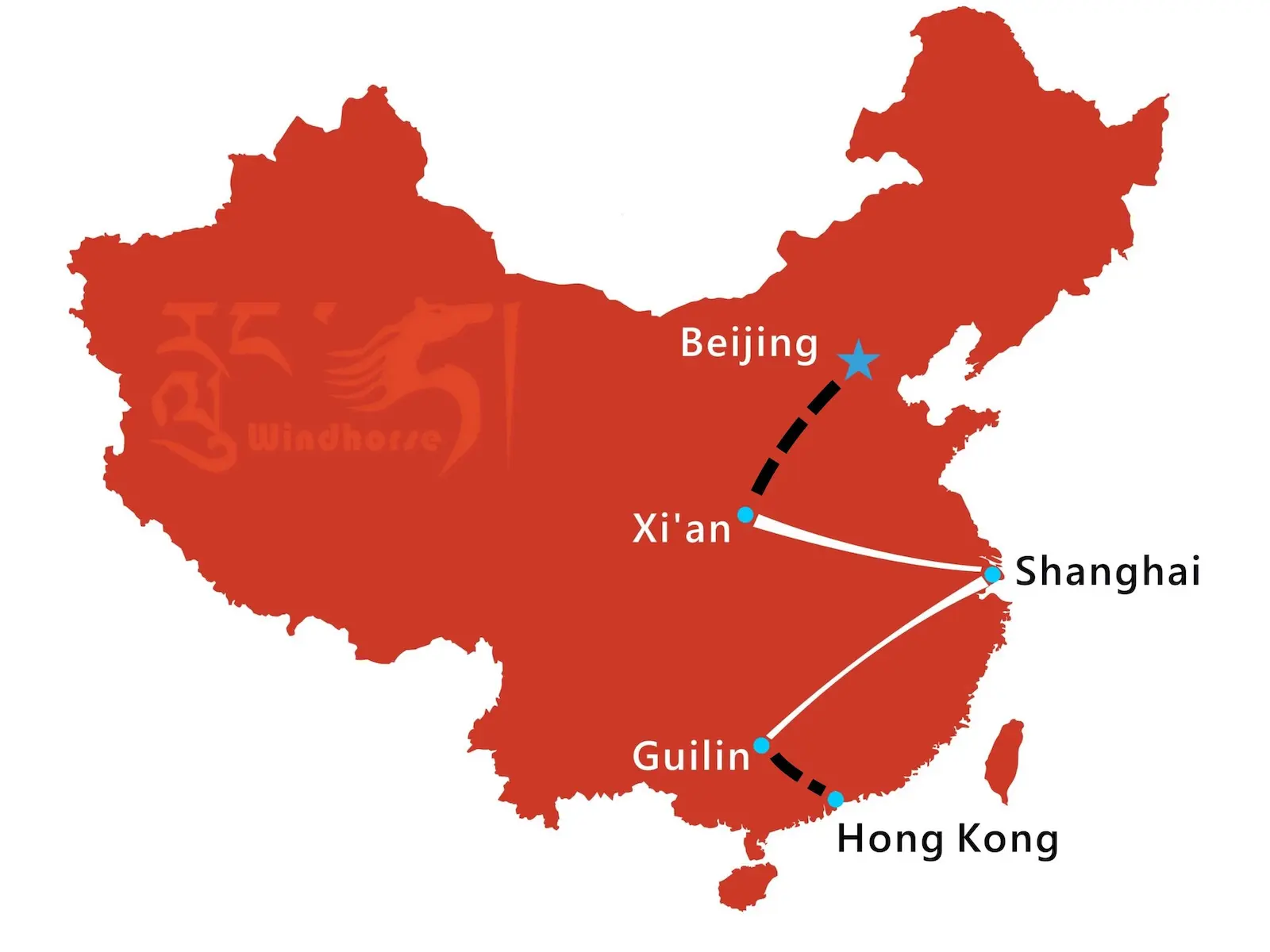



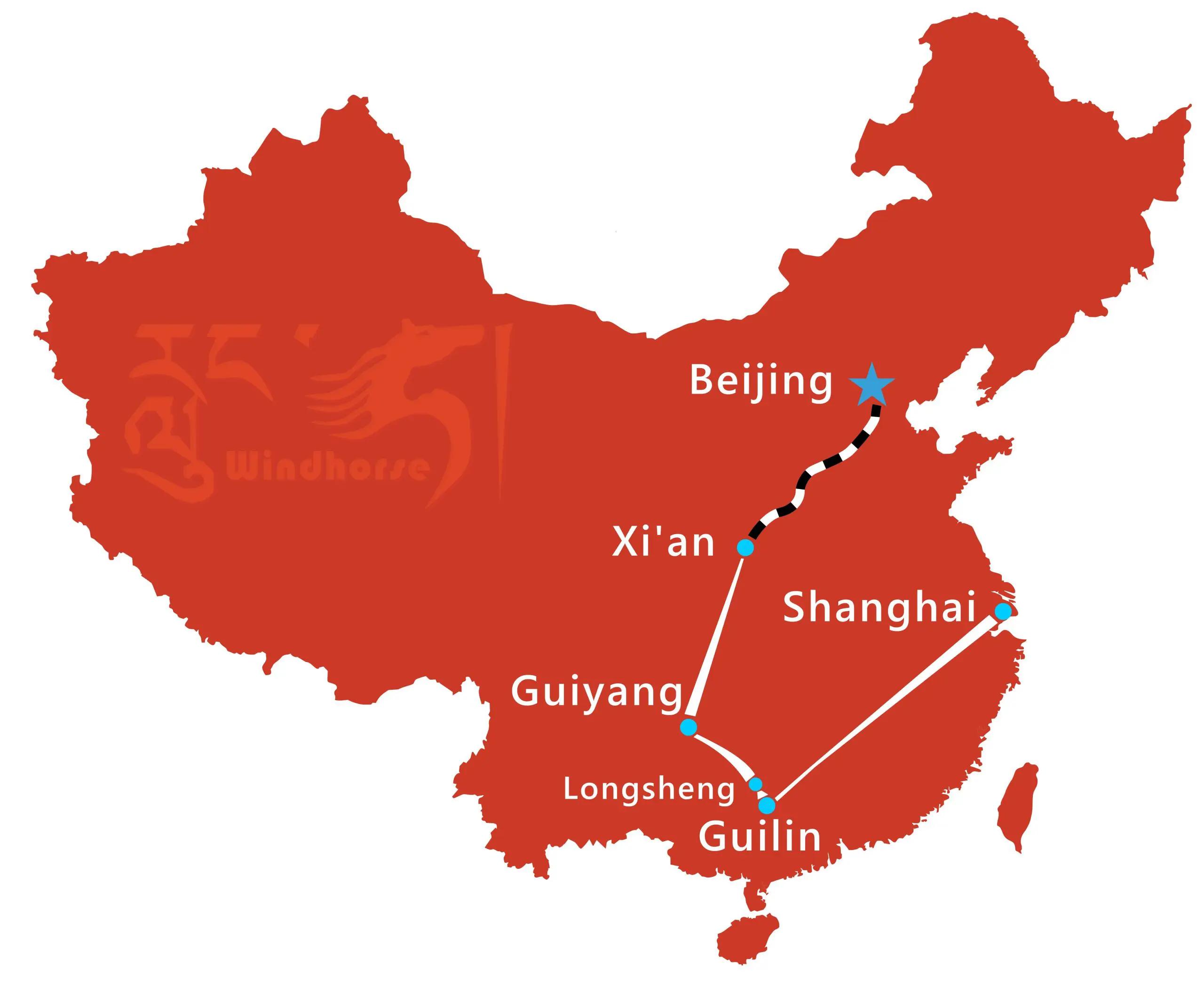
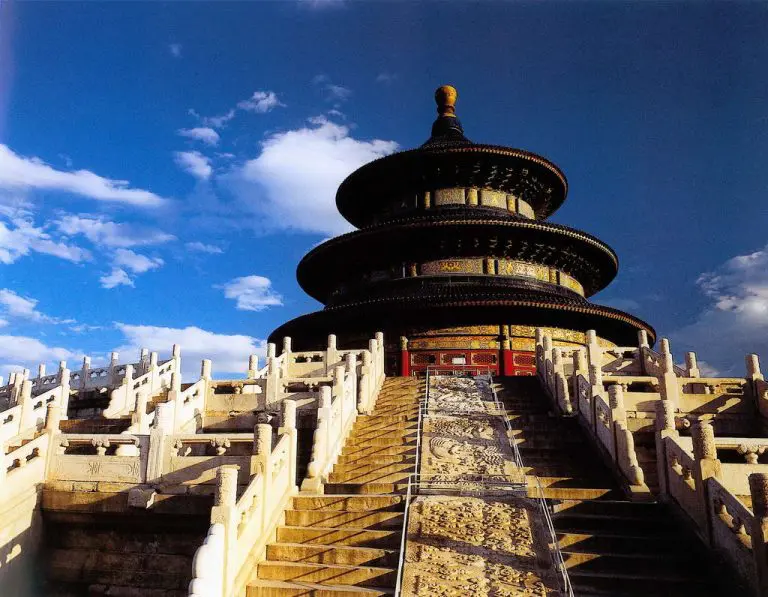
This 2 week China tour from Hong Kong to Beijing explores Guilin’s landscapes, Shanghai’s skyline and nearby Suzhou, Xi’an’s Terracotta Warriors, and Beijing’s imperial landmarks. A well-paced route combining scenery, culture, and China’s must-see cities.






Discover China’s cultural diversity on this 2-week China minority tour. Travel through Guizhou and Guangxi to visit Miao, Dong, and Zhuang villages, while also exploring the classic highlights of Beijing, Xi’an, Guilin, and Shanghai.

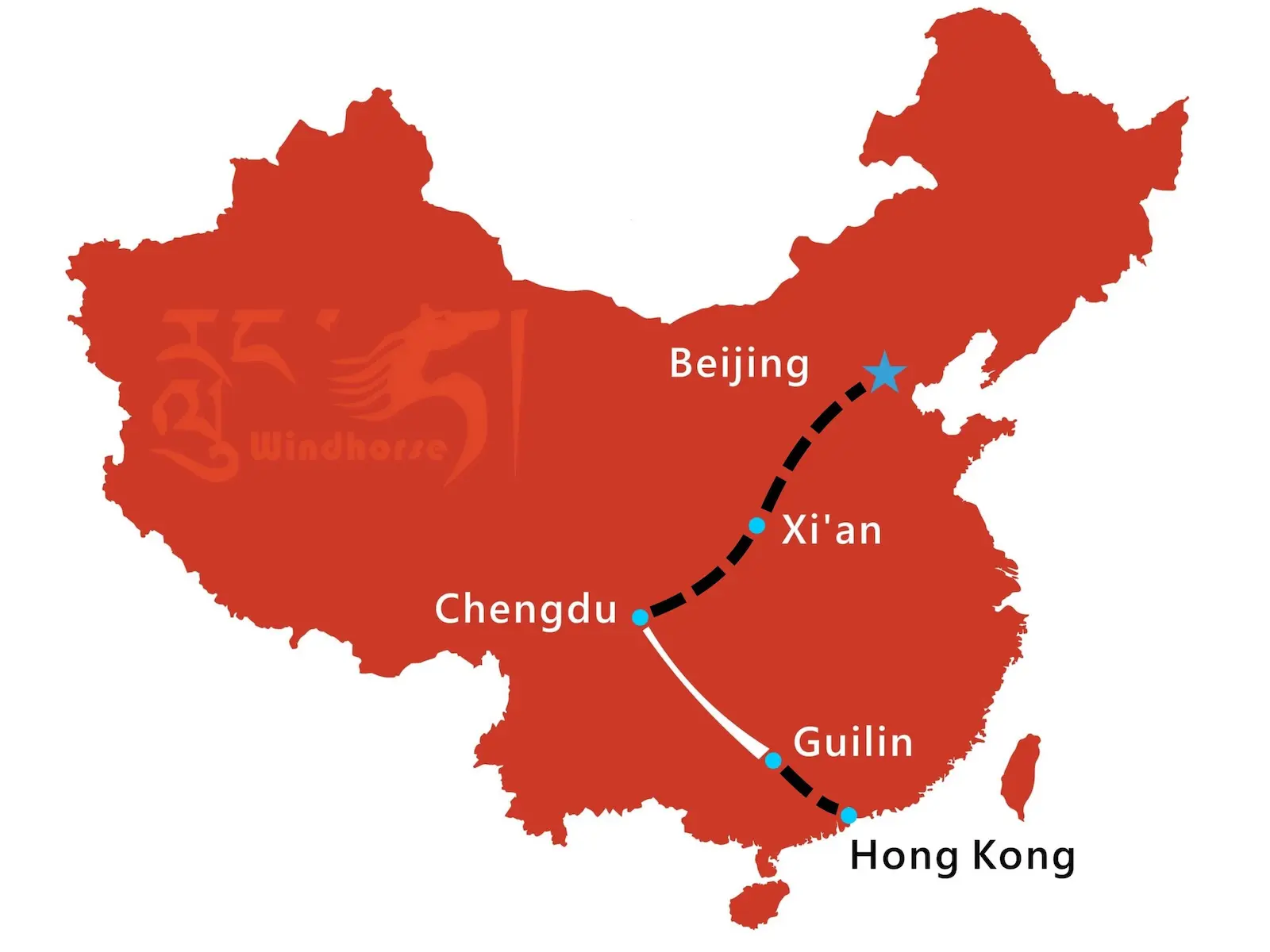

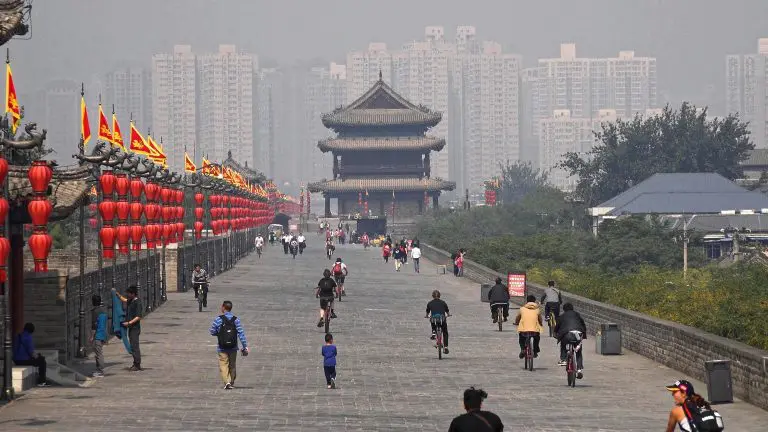


Experience China’s cultural and scenic highlights on this 13-day Essence of China tour from Beijing to Hong Kong. Explore the Great Wall, Terracotta Warriors, Chengdu pandas, Li River landscapes, and finish in vibrant Hong Kong for the perfect mix of history, nature, and modern city life.
Comments

I am Singaporean, traveling from Singapore to Zhangjiajie, and transiting via Guangzhou.
Is it possible for me to apply for temporary entry permit, to exit guangzhou baiyun international airport?

Hi Scott, You do not need to apply for a temporary entry permit. Since you hold a Singapore passport, you may leave the transit area and enter Guangzhou within the allowed duration under the transit visa‑free policy. Therefore, you can freely exit the airport without any special temporary permit.
I've sent you the details via email, please check the details and Let me know if you have further questions or thoughts. Look forward to your reply.
As a Canadian passport holder Am I eligible for the 240 hour free visa to China if I travel from Japan to Hong Kong then travel from Hong Kong to Foshan via rail, than fly from Gaungzhou to Japan. I would have a valid ticket for travel to Japan from Gaungzhou. Would my 240 hour visa start when I entered china via Honk Kong or when I entered Hong Kong from Japan?

Dear Brian,
I have sent the detailed information regarding the 240-hour visa-free policy to your email, and I hope it helps clarify your questions.
If you need further assistance or would like us to help plan your itinerary, please feel free to let me know. I’d be happy to support you and make your trip as smooth and enjoyable as possible.
Best regards,
Jenny
How many times can I use the 240- visa free entry in a year? Can I do HK-Shenzhen-Shanghai then to Japan (all within 10 days) then stay in Japan for a few days, fly to Shanghai then exit to Hong Kong (another 10 days)?
Hello Jane,
China’s 240-hour (10-day) visa-free transit can be used multiple times in a year, as there is no officially stated limit on the number of entries. Each stay must meet the transit rule (Country A → China → Country C) and you must hold a confirmed onward ticket to a third country or region.
In principle, your example itinerary — Hong Kong → Shenzhen → Shanghai → Japan (within 10 days), then after a short stay in Japan, Japan → Shanghai → Hong Kong (another 10 days) can qualify under the 240 hours transit visa-free policy.
will the 240 hr 10 day transit visa free extend thru 2026 for US resident?
Hello,
Yes, that’s correct. China’s 240-hour (10-day) visa-free transit policy, expanded in late 2024, currently does not have a stated expiration date and is considered a long-term upgrade from the previous policies.
Please make sure you have a confirmed onward ticket and that your travel in Mainland China remains within the eligible regions covered by the policy.
Best regards,
Helen
Hello, will the 240 hour visa apply to enter at Futian Port from Hong Kong, return to Hong Kong for a flight next day to Thailand? Fly from US to Hong Kong, enter China at Futian Port for 2 days, return to Hong Kong, Fly to Thailand from Hong Kong airport?
Hello,
Yes, this itinerary does qualify in principle for the 240-hour visa-free transit.
Flying from the US to Hong Kong, entering Mainland China via Futian Port, staying for 2 days, then exiting back to Hong Kong and flying onward to Thailand meets the A–China–B transit requirement (Hong Kong and Thailand are considered different regions).
As long as you have a confirmed onward ticket to Thailand and stay within the permitted areas, you should be eligible. Final approval is always determined by immigration at the port of entry.
Best regards,
Helen
As a US passport holder, am I eligible for the 240 hour free visa to China if I travel to Hong Kong from NY with a 4 day layover to Foshan entering through rail. I then return to Hong Kong and fly to Japan. I would return to NY by flying from Japan to Hong Kong. I don't see the Foshan rail stop as an option for ports of entry.
Your itinerary does not qualify for China’s 240-hour visa-free transit.
Even if you take the high-speed train from Hong Kong to Foshan, your entry into mainland China is processed at West Kowloon Station, which is an approved entry point.
The main issue is your route:
USA → Hong Kong → China → Hong Kong → Japan
This is not valid transit because you return to Hong Kong after visiting mainland China. The policy requires you to continue to a different country or region.
To qualify, your route should be:
USA → Hong Kong → China → Japan
(without going back to Hong Kong)
Otherwise, you’ll need to apply for a China visa in advance.
We are US citizens with US passports. Please let us know if the following itinerary qualify for the China 240-Hour Visa-free Transit Policy:
(1) Fly from the USA to Hong Kong and stay in HK for about 5 to 7 days.
(2) Plan to join a China 11-Day (240-H) tour and fly from HK to Beijing, Xi'an, Guilin, & Shanghai.
(3) Fly from Shanghai back to the USA.
My confusion is I have read that HK is part of the "Greater China" and as such is NOT considered as an international transit. I have also articles stating otherwise.
We would greatly appreciate it if you would guide us to some "authoritative language" that would clarify the status of HK for this 240-Hr Visa-Free Transit Policy. Thank you.
Yes — your itinerary does qualify for China’s 240-hour visa-free transit.
Your route:
USA → Hong Kong → China → USA
This works because Hong Kong is treated as a separate region from mainland China under this policy.
As long as you:
Enter China from Hong Kong (e.g. Beijing)
Exit China directly to the USA (e.g. from Shanghai)
you can use the visa-free transit.
Simple explanation:
Hong Kong counts as a “third region,” so your trip is considered valid transit.
I am a US citizen and plan to travel to Beijing and Shanghai for 8 days. I will be departing from the Philippines and have a return ticket from Shanghai to the Philipppines. Does the 240 hour visa free policy apply ?
No, your itinerary does not qualify for the 240-hour visa-free transit.
Your route:
Philippines → China → Philippines
This does not work because you are entering and leaving China from the same country.
Rule:
You must travel between two different countries or regions.
Example that works:
Philippines → China → Japan
Since your route doesn’t meet this requirement, you will need to apply for a China visa in advance.
Hello, I am a US citizen want to go to travel from US to chongching or Guangzhou then to Hong Kong before returning to US. Can I travek without Chinese visa?
Hello,
Yes, your plan can qualify for visa-free transit.
Your route:
USA → Chongqing / Guangzhou → Hong Kong → USA
This works because Hong Kong is treated as a separate region.
Just make sure:
You have a confirmed ticket from China to Hong Kong
You stay within the allowed transit time
If your flights follow this, you can travel without a China visa.
Best regards,
WindhorseTour Team
Hello, I am a US citizen who will be traveling from Boston to Seoul, and then I would like to go from Seoul to Shanghai for three days, from Shanghai to Hong Kong for four days, and then back to Boston. Will this qualify for the 240-hour visa-free program?
Hello,
Yes, your itinerary qualifies for the 240-hour visa-free transit.
Your route:
USA → Seoul → Shanghai → Hong Kong → USA
This works because:
You enter China from South Korea
You exit to Hong Kong (a different region)
Your 3-day stay in Shanghai is within the allowed time.
As long as you have confirmed onward tickets, you can travel without a China visa.
Best regards,
WindhorseTour Team
Hello,
Yes — your itinerary can qualify for the 240-hour visa-free transit.
Your route:
USA → South Korea → Beijing → Xi’an → Shanghai → USA
Why it works:
You are traveling between two different countries (South Korea → China → USA)
Your stay (8 days) is within the 240-hour limit
Beijing, Xi’an, and Shanghai are within the permitted visa-free regions
Important:
Your itinerary must clearly show South Korea → China → USA as separate flight segments.
If South Korea is only a transit stop on the same ticket (without a clear onward segment), it does not qualify.
What to prepare:
Confirmed onward ticket (China → USA)
Valid passport
Final approval is subject to immigration officers on arrival.
Best regards,
WindhorseTour Team
Hi USA to Guangzhou throug Hunkung then Shanghai to USA will this consider a transfer since I am in transit in Hunkung

Hi Chain,
Thanks for reaching out!
Yes, that is a transfer because even though Hong Kong is part of China, it maintains a separate immigration and customs border.
Let me know if you need any assistance about your trip in China.
Warm regards,Yuki
Hello. I have a US passport. I have not received my visa in time for my flight to Shanghai. I have a round-trip ticket from Ho Chi Minh to Shanghai. To qualify for the 240-hour transit visa, I am going to purchase an alternate return flight leaving from Shanghai back to Ho Chi Minh, but with a 22-hour layover in Hong Kong. I will go through immigration in Hong Kong to stay at a hotel and go on a tour, and return to the Hong Kong airport to catch my connecting flight. Does this qualify? I will be initially going through customs in XMN on my long layover to Shanghai. Thanks!

Hello Michael,
Yes — your itinerary can qualify for the 240-hour visa-free transit.
As long as your route is: Ho Chi Minh → Shanghai → Hong Kong, it meets the rule, since Hong Kong is treated separately from mainland China.
Just make sure you go through immigration in Hong Kong (enter Hong Kong) — not just stay in transit — so it counts as your onward destination. Entering via Xiamen is also fine.
Best regards,
Jenny
Hello, I am us citizen . I want to know if following applies for the 240 hour visa
- USA to Guangzhou via Air
- Guangzhou to Hong Kong via train/bus
- Hong Kong to USA
All within in China for 5 days
Hello Nancy,
Yes — your itinerary can qualify for the 240-hour visa-free transit.
Your route: USA → Guangzhou → Hong Kong → USA
This works because Hong Kong is treated as a separate region from mainland China under the policy, so it meets the requirement of traveling between two different regions.
As long as you have a confirmed onward ticket from Guangzhou to Hong Kong and your stay in mainland China is within 240 hours, you should be eligible.
Kind Regards,
Helen
Hi, I'm an US Citizen. I'm traveling from San Francisco(USA) - Hong Kong - Chengdu - Yunnan - Hong Kong - San Francisco(USA). I was wondering if I'm qualified for 240 hrs. Visa free program. However, if I'm not qualified for 240 hrs. Visa, then this is my alternate plan. San Francisco(USA) - Hong Kong - Chengdu - Yunnan - Singapore - San Francisco(USA). Please let me know when you have a chance. Thank you so much!
Respectfully,
Ryan W.
Hi Ryan! This is a great itinerary, visiting the pandas in Chengdu and the landscapes of Yunnan is a fantastic trip.
I regret to share taht the first plan USA → Hong Kong → China does not qualify for any visa-free transit, however, your alternate plan USA → Hong Kong → Chengdu/Yunnan → Singapore → USA qualifies! Because you are flying from Region A (Hong Kong) to Mainland China and then departing to Region C (Singapore), you are officially "transiting.
Under the new rules, travelers entering through major hubs like Chengdu (Tianfu Airport) are now permitted to travel within the 24 provincial-level regions that participate in the program. Both Sichuan (Chengdu) and Yunnan (Kunming/Lijiang/Dali) are included in the permitted areas and you are allowed to travel between these two provinces during your 240-hour window.
Please feel free to reach out if you need any assitance for this upcoming trip to Chengdu and Yunnan.
Warm regards,
Yuki
Hello I'm traveling from Japan - Beijing - 3 hr layover in Xiamen - USA am i eligible for 240 hours pass ?
Hi Diosa,
I’ve checked the 2026 regulations for your trip. Since you’re traveling on a US passport and have two stops in China (Beijing and Xiamen), here is the deal:
You do not qualify for the 240-hour pass because you are traveling between two different Chinese regions. Instead, you will be processed under the 24-hour Transit Without Visa (TWOV).
This allows for multiple stops within China (Beijing then 3-hour layover in Xiamen) as long as your total stay is under 24 hours.
When you land in Beijing, head to the "24-Hour Transit/Temporary Entry Permit" desk. Show your confirmed flight to the USA to get your entry stamp.
Please ensure you have a printed copy of your full itinerary. Since your Xiamen layover is only 3 hours, you’ll likely need to stay airside or move quickly between gates.
Safe travels!
Warm regards,
Yuki
Hi, As a USA citizen I would like to book a vacation for our family for one week in Beijing. Would this following itinerary work from Los Angeles for the 240 hour Visa:
USA (LAX) > Beijing > back to the USA with a layover in Hong Kong or Canada (not getting out of the airport)?
Meaning - does a layover/connecting flight in another country satisfy the A-B-C requirement?
If not - are we able to exit the airport in Hong Kong or Canada with a long layover, go through customs, stamp our passports, and then re-enter the airport for a flight home to the USA?
Second question:
Can we do the same in the reverse? Connecting flight to Beijing via Hong Kong > then directly home to USA.
Hi Anya,
It’s great that you’re planning a family trip to Beijing! The short answer is yes, both of your proposed itineraries work perfectly for the 240-hour visa-free transit!
Under the "A-B-C" rule, a layover or connecting flight in a third country/region (like Canada or Hong Kong) qualifies as a separate destination.
Just a few quick tips for your family:
-
Confirmed Tickets: Ensure you have printed copies of your onward flights to show at check-in and immigration.
-
Passport Validity: Ensure all family members have at least 3 months of validity remaining on their passports.
-
Transit Area: Since you are using the Beijing transit, ensure your flights into and out of China are direct to/from Beijing (no additional stops within Mainland China).
Feel free to reach out if you need any assistance for your week tour in Beijing.
Best regards,
Yuki
Good morning,
I am a US passport holder. I am planning to take my wife for the following trips. She is also a us passport holder. Do you see any issues with our following plan on 240 hours TWOV?
Flying from Hanoi to Beijing and stay for 4 days.
Taking speed train from Beijing to Shanghai and stay for 4 days.
Flying from Shanghai to Hong Kong. Thanks

Hello Joe,
Thank you for sharing your travel plan. This is Vivian from WindhorseTour.
Based on your itinerary, both of you (as US passport holders) are eligible to use China’s 240-hour visa-free transit (TWOV) policy.
Your route Hanoi - Beijing - Shanghai - Hong Kong is generally in line with the current regulations, as long as you have confirmed onward tickets to Hong Kong and your travel documents are well prepared. So you can also take high-speed train from Beijing to Shanghai.
Please also note that final entry approval is always subject to the immigration officers at the port of entry. We will be happy to assist you in reviewing your itinerary and ensuring everything is well arranged for a smooth trip.
For more details, I have already sent you an email with itinerary suggestions and travel information. Please feel free to take a look and let me know if you have any questions. I'd be happy to help you create the perfect itinerary for your trip.
Best regards,
Vivian
We are US citizens. Can we start from Dallas to Chongquin via hongkong stopover and go back to Dallas from Chengdu also via hongkong stopover with visa free transit policy? Thanks
Dear Eddy,
Thanks for your inquiry! This is Jenny from WindhorseTour responding to your email.
WindhorseTour is an experienced local travel agency based in Chengdu and Lhasa, China. We specialize in customizing tours throughout China and Tibet, drawing upon 20 years of experience. You may read our clients' reviews on the WindhorseTour TripAdvisor page.
I have shared the detailed explaination about 240 hours visa-free policies your inquire via email. Please take your time to check.
If you would like us to arrange a tour for you, let me know and I am glad to help!
Jenny