
How to Travel in China by Train: The Ultimate 2026 Guide
Traveling by train is one of the most practical, efficient, and comfortable ways to explore China. In 2026, China operates the world’s largest and most advanced railway network, with modern high-speed trains connecting nearly every major city.
On many routes, train travel is faster door to door than flying. City-center stations, minimal check-in time, and frequent departures make high-speed rail a preferred option for both first-time and repeat visitors. This guide explains how train travel in China works in 2026, how to book tickets, and how to navigate the country’s fully digital rail system.
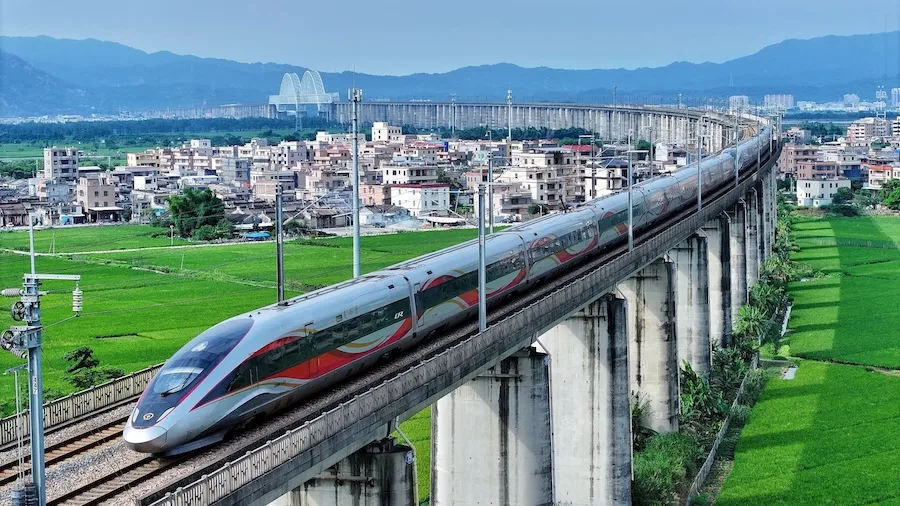
Table of Contents
When to Train vs. Fly: The 5-Hour Rule
For most visitors, high-speed rail is the best way to travel between China’s major cities. Trains depart from central stations, avoid long airport transfers, and require far less advance arrival time.
High-speed rail is generally the best choice for:
- Journeys of up to 4–5 hours, such as Beijing–Xi’an, Shanghai–Hangzhou, or Xi’an–Chengdu
- Routes with frequent departures and modern stations
- Travelers who want to avoid airport transfers and check-in delays
Flying usually makes more sense for:
- Very long distances that would take over 7 hours by train
- Remote regions without direct high-speed connections
Check more information about Practical Guide on China High-Speed Rail vs. Flying.
Digital-First: Your Passport is Your Ticket
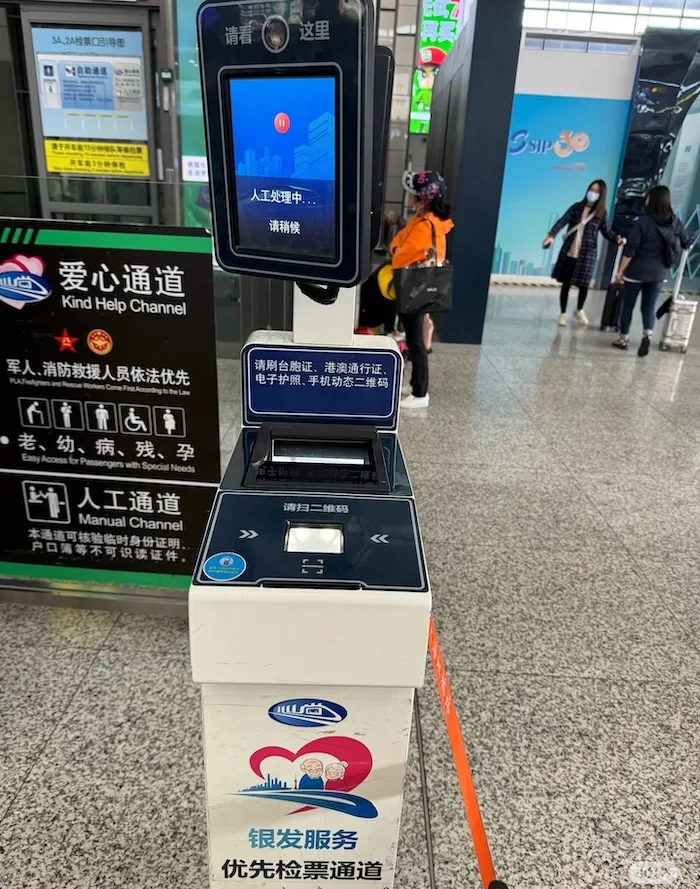
China’s train system is now fully digital, which is one of the biggest changes for travelers in recent years. In 2026, there are no paper tickets and no QR codes. Your train tickets booking is digitally linked to your passport information.
You enter the station, board the train, and exit the station simply by scanning your passport at automated gates.
Note: If the machine fails to read your passport, look for the Manual Channel (a staffed booth) at either end of the gate line. They will scan your passport manually and let you through.

China Train Types and Routes Used by Travelers
China’s railway system includes several train categories, but most international travelers will only use high-speed trains or a small number of long-distance services on specific routes.
On routes such as Beijing–Xi’an, Shanghai–Hangzhou, Xi’an–Chengdu, and Guangzhou–Guilin, high-speed trains are almost always the preferred option due to speed, comfort, and frequency.
- G / D / C trains
Modern high-speed trains operating at 200–350 km/h. These are the standard choice for most travelers and form the backbone of China’s main tourist corridors. - Z / T / K trains
Traditional long-distance services used mainly for overnight or scenic routes where high-speed rail is not available. Examples include the Qinghai–Tibet Railway (Xining–Lhasa) and certain Silk Road routes, such as Kashgar–Urumqi, often chosen when time or budget is limited.
Planning insight: On a well-designed itinerary, high-speed rail replaces most short domestic flights.
China Train Seat & Sleeper Classes Explained
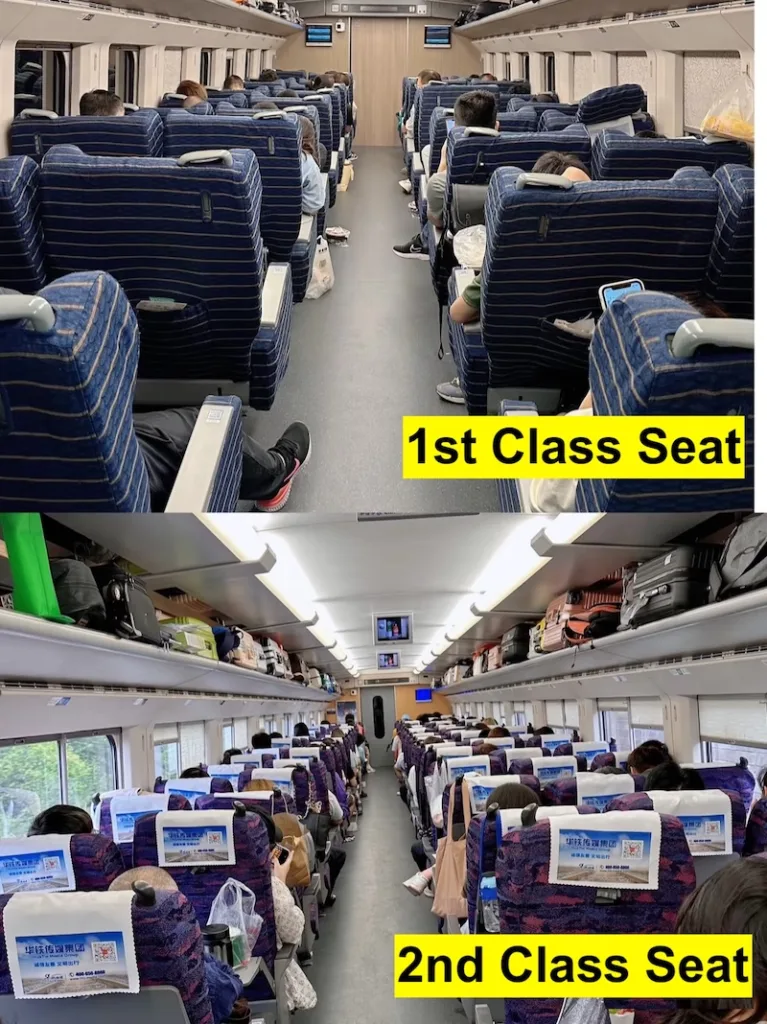
Chinese trains offer several seating and sleeper classes. For daytime high-speed routes, Second Class and First Class are the most commonly used. For overnight journeys, Soft Sleeper is strongly recommended for comfort and privacy.
| Class | Layout | Best For |
| Business Class | 1+2 pods | Maximum comfort, flat-bed seats, lounge access |
| First Class | 2+2 | Journeys over 3 hours, quieter and more spacious |
| Second Class | 3+2 | Best value, still more spacious than economy flights |
| Soft Sleeper | 4-berth cabin | Private, lockable cabins for overnight journeys. |
| Hard Sleeper | 6-berth cabin | Budget overnight travel |
| Hard Seat | Open seating | Not recommended for international travelers unless you want the experience |
Traveler tip: Second Class seats on China’s high-speed trains are often more comfortable than economy class flights.
When and How to Book Train Tickets (The 15-Day Window)
Train tickets in China are released exactly 15 days before departure. On popular routes and during busy travel periods, tickets can sell out within minutes.
There are several ways to buy train tickets, depending on how comfortable you are with local systems.
Online booking
Tickets can be purchased through China’s official railway website 12306.cn or app 12306. Registration and identity verification are required, including passport upload and face verification. This process can take 24–72 hours and should be completed before the booking window opens.
Third-party platforms such as Trip.com offer pre-booking train tickets service, usually with a small service fee.
At the train station
Tickets can be purchased at station ticket counters. A passport is required, and tickets can be bought for routes nationwide. English service is often available at major stations, though self-service machines typically require Chinese ID cards.
Through your travel agency
For first-time visitors or multi-city itineraries, using a travel agency such as WindhorseTour is the simplest option. Tickets are arranged in advance, payment and language issues are handled, and train schedules are coordinated with hotels, guides, and transfers. This is especially useful during peak travel seasons.
At the Station: Step-by-Step Navigation
Check the Station Name
Large Chinese cities often have multiple train stations. Always check the full station name on your booking. Directional characters include: 南 (Nan) – South, 西 (Xi) – West, 北 (Bei) – North, 东 (Dong) – East.
Going to “Beijing South” instead of “Beijing West” is a common 1-hour mistake.
If you are traveling on one of our China tours, your driver (w/ guide) will handle the station transfer for you, ensuring you arrive at the correct location well in advance.
Arrival Time
Plan to arrive 30–45 minutes before departure. Major stations are large, and the walk from security to your gate can take 10–15 minutes.
Boarding a Train in China
China’s train stations are large, but the boarding process follows a clear and structured sequence once you know what to expect.
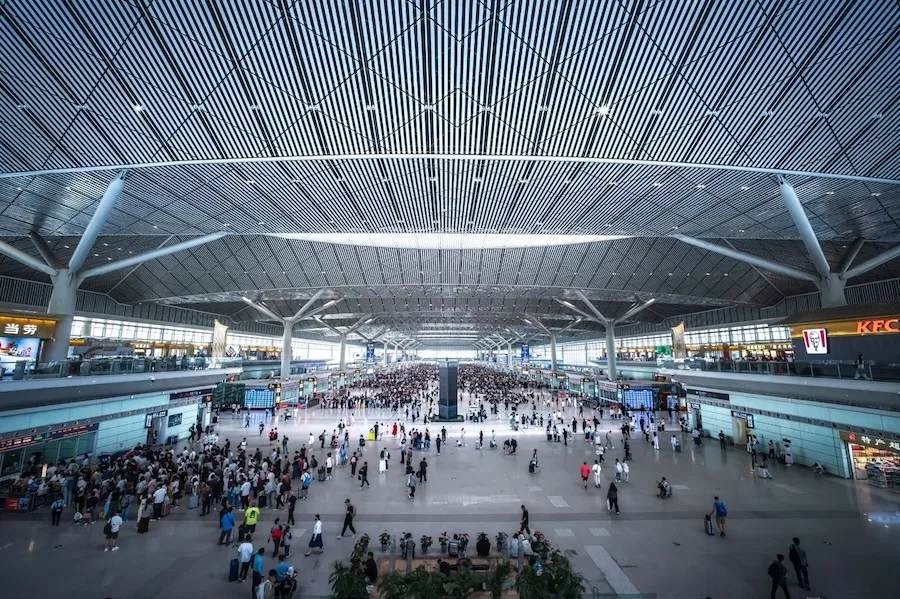
At the station entrance, passports are scanned and all luggage passes through X-ray security. Inside the station, large LED boards display train numbers and gate assignments, such as Gate 12A. Passengers wait in the assigned hall until boarding is announced.
When boarding opens, passports are scanned face-down at the gate. The system verifies the booking automatically, and the gates open without any paper ticket or QR code. On the platform, colored floor markings indicate carriage positions, allowing passengers to board in an orderly way.
For travelers with heavy luggage, staff known as “Red Cap” porters can assist for a small fee, typically ¥10–¥30 per bag, and often access priority elevators before general boarding begins.

Onboard Comfort on Modern Chinese Trains
China’s high-speed trains are designed for long-distance comfort, making them ideal for travelers moving between multiple cities.
Seating & Space: Seats recline, aisles are wide, and overhead racks accommodate standard luggage. Ride quality is smooth even at high speeds.
Power & Charging: G-series trains have universal power outlets under every seat. No adapter is needed for most two-prong plugs.
Food & Seat Delivery: Dining cars and snack trolleys are available. On many routes, meals can be ordered through the 12306 app and delivered directly to your seat at selected stations.
Toilets & Cleanliness: Modern trains feature clean toilets, often Western-style. Carrying tissues is recommended.
Luggage Limits: The official limit is 20 kg, but enforcement is rare as long as you can carry your own bag. Prohibited items include pocket knives (blades over 6 cm) and large aerosols.

Qinghai–Tibet Railway (Special Route)
The Qinghai–Tibet Railway is one of the most remarkable rail journeys in the world, connecting Xining and Lhasa across high-altitude plateaus. Large sections of the route lie above 4,000 meters, with oxygen-supplied carriages designed to reduce altitude discomfort. Keep in mind traveling to Tibet requires a Tibet Travel Permit and guided tour.
Oxygen Supply: Carriages are pressurized and equipped with individual oxygen outlets at every seat/berth to prevent altitude sickness.
Planning insight: Train tickets to Tibet often sell out the moment booking opens, especially Soft Sleeper berths during peak season. We strongly recommend arranging this train as part of a full tour package so permits and tickets can be secured together in advance.
China Train Travel FAQs
Do I need a physical ticket to board a train in China in 2026?
No. China’s railway is 100% paperless. Your passport is your ticket. Your booking is digitally linked to your passport number, and you enter the station, board the train, and exit simply by scanning your passport at automated gates.
What if the automated gate doesn’t read my passport?
This is common and nothing to worry about. Look for the Manual Lane (a staffed booth), usually at the far left or right of the gate line. Show your passport to the attendant, and they will manually verify your booking and let you through.
How early should I arrive at the train station?
We recommend arriving 30-45 minutes before departure, especially at major hubs like Shanghai Hongqiao or Beijing South, 45 minutes is recommended. These stations are very large, and the walk from security to the boarding gate can take 15 minutes or more. Boarding typically closes about 5 minutes before departure.
Is the 12306 train app easy for foreign travelers to use?
The 12306 app offers an English version, but foreign passport holders must complete a Face Verification step. This process can be unreliable and may take 24–72 hours to approve. It is essential to complete verification well before the 15-day ticket release window opens, or use a travel agency to avoid technical issues.
How do I make sure I’m going to the correct train station in a big city?
Always check the directional character in the station name on your booking. Large cities often have multiple stations that can be an hour apart in traffic, such as Beijing South and Beijing West. Watch for these characters: 南 (South), 北 (North), 西 (West), 东 (East).
Is Wi-Fi available on Chinese trains?
Wi-Fi is available on many high-speed trains, but access to Google, Facebook, Instagram, and similar services still requires a VPN.
When are the busiest train travel periods in China?
Chinese New Year and National Day (October 1) are the peak travel periods. Tickets on popular routes often sell out quickly during these times.
Conclusion: Planning Train Travel in China
Train travel is one of the most efficient ways to explore China, especially on multi-city itineraries. With high-speed rail, digital ticketing, and city-center stations, trains often offer a smoother experience than flying.
The key is planning well: choosing the right routes, booking at the right time, and understanding how the system works. When everything aligns, train travel becomes simple and stress-free. [Plan Your China Trip with Local Experts]
Related tours

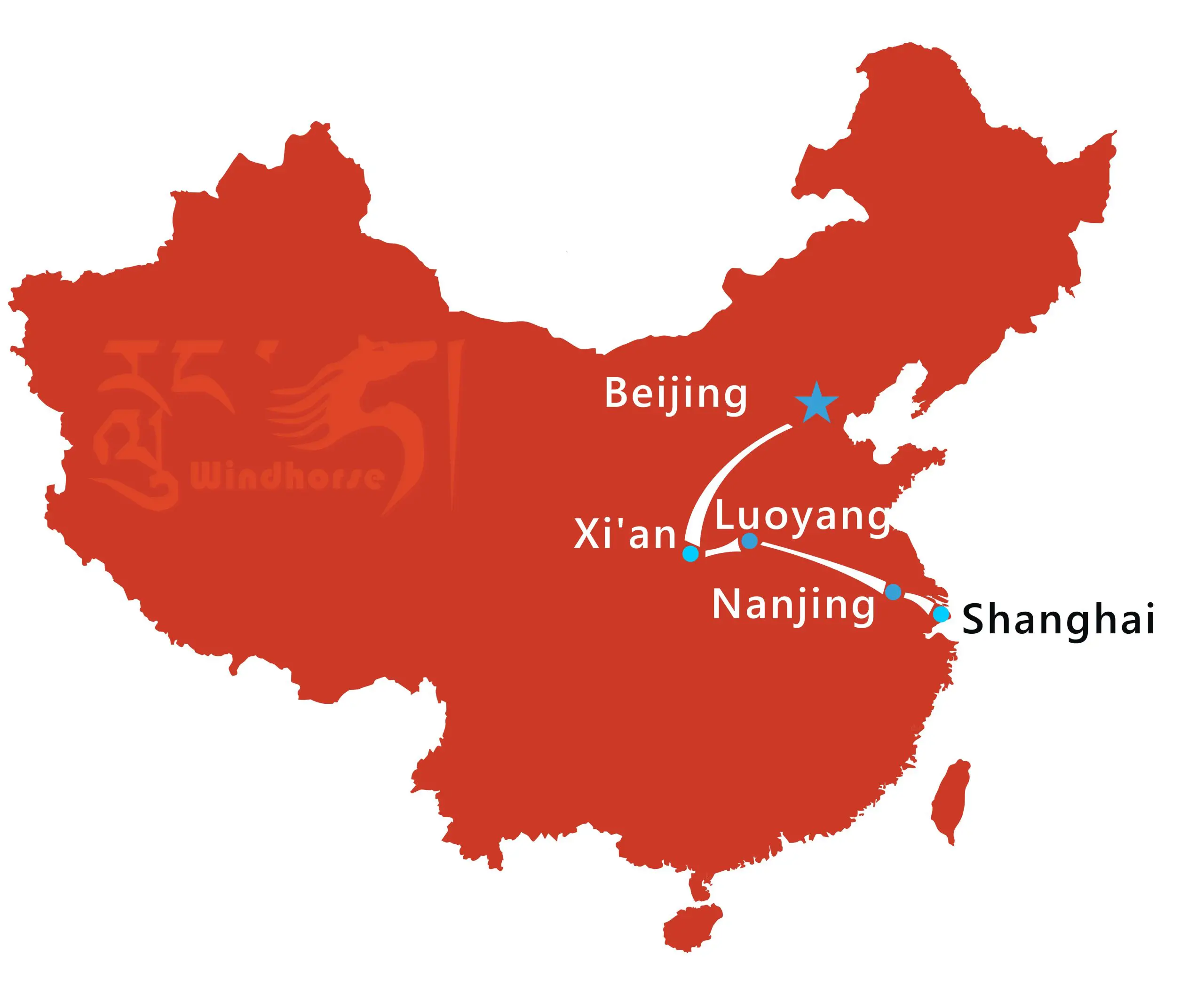




Explore China’s ancient capitals in 15 days with visits to Beijing, Xi’an, Luoyang, Kaifeng, and Nanjing. Discover imperial sites, Buddhist grottoes, classic gardens, and enjoy a Shaolin Temple Kung Fu show before ending in Suzhou and Shanghai.

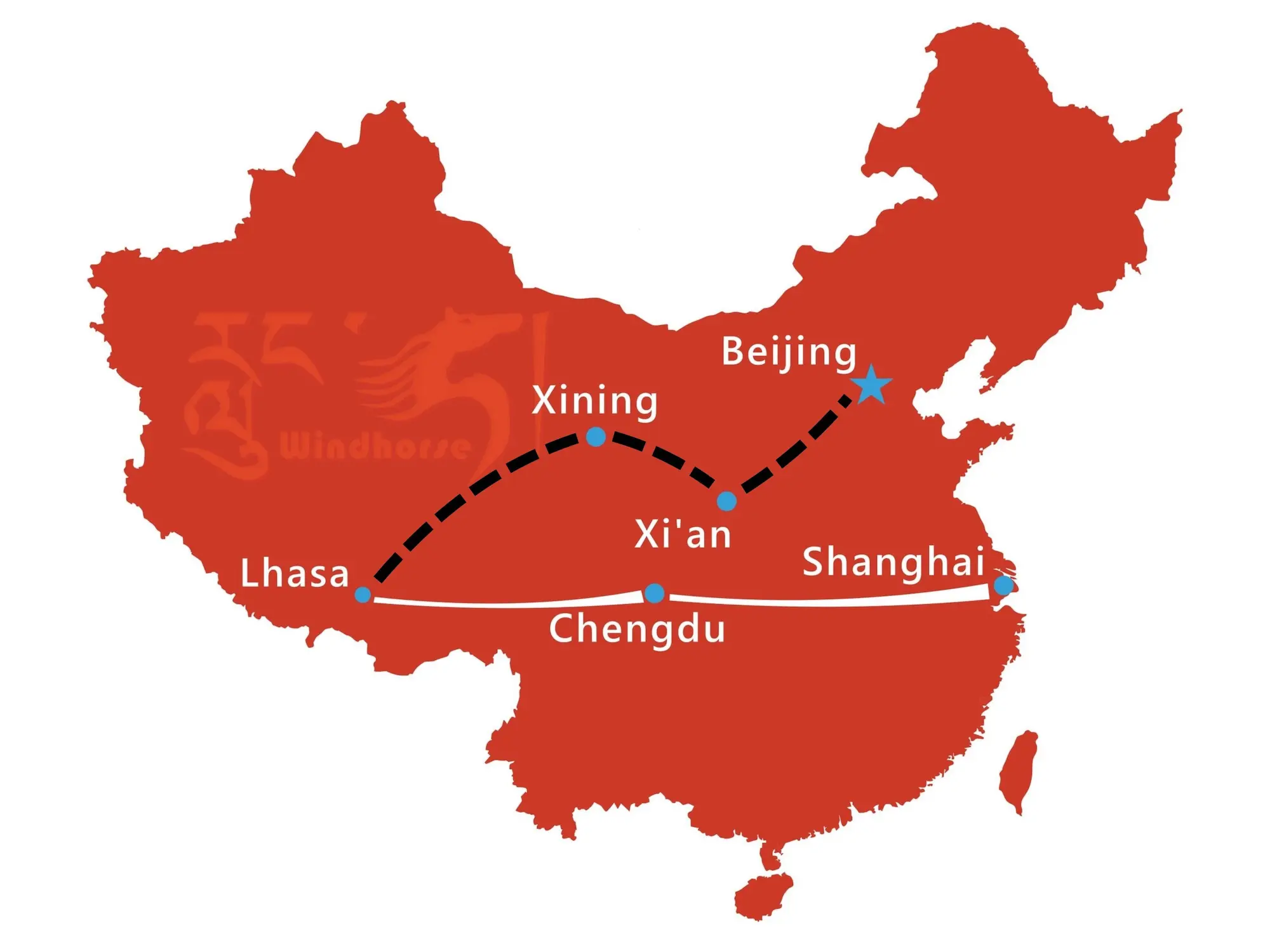






Experience a 16-day China Tibet train tour from Beijing. Ride the Qinghai-Tibet Railway to Lhasa, explore the Potala Palace and Namtso Lake, visit the Great Wall and Terracotta Warriors, meet pandas in Chengdu, and end your journey in modern Shanghai.

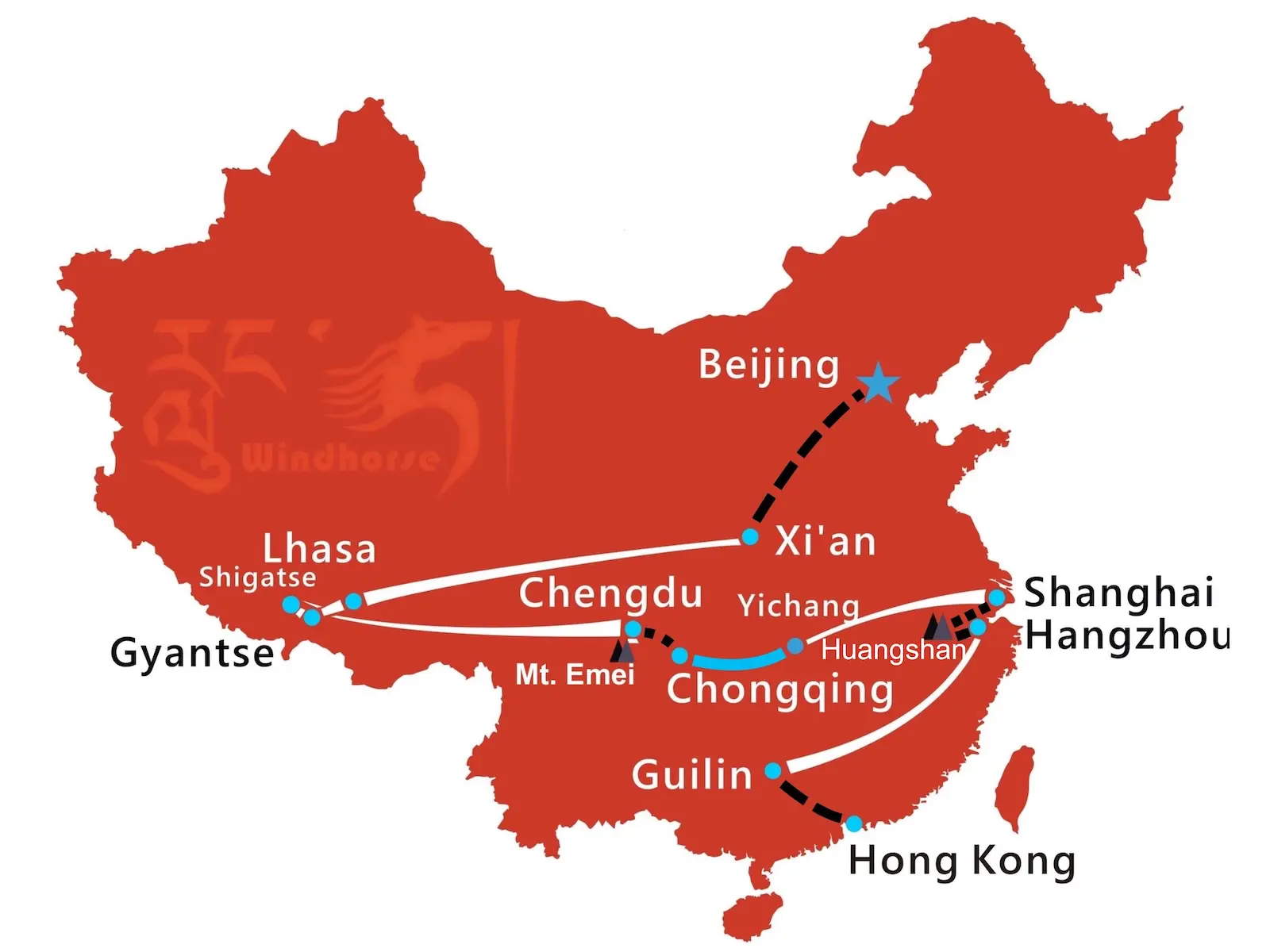





Explore China in 4 weeks on this Grand China Tour with Tibet & Yangtze Cruise. Visit Beijing, Xi’an, Lhasa, Chengdu, Mt. Emei, Yangtze River, Hangzhou, Huangshan, Shanghai, Guilin, and Hong Kong for a month-long cultural and scenic adventure.